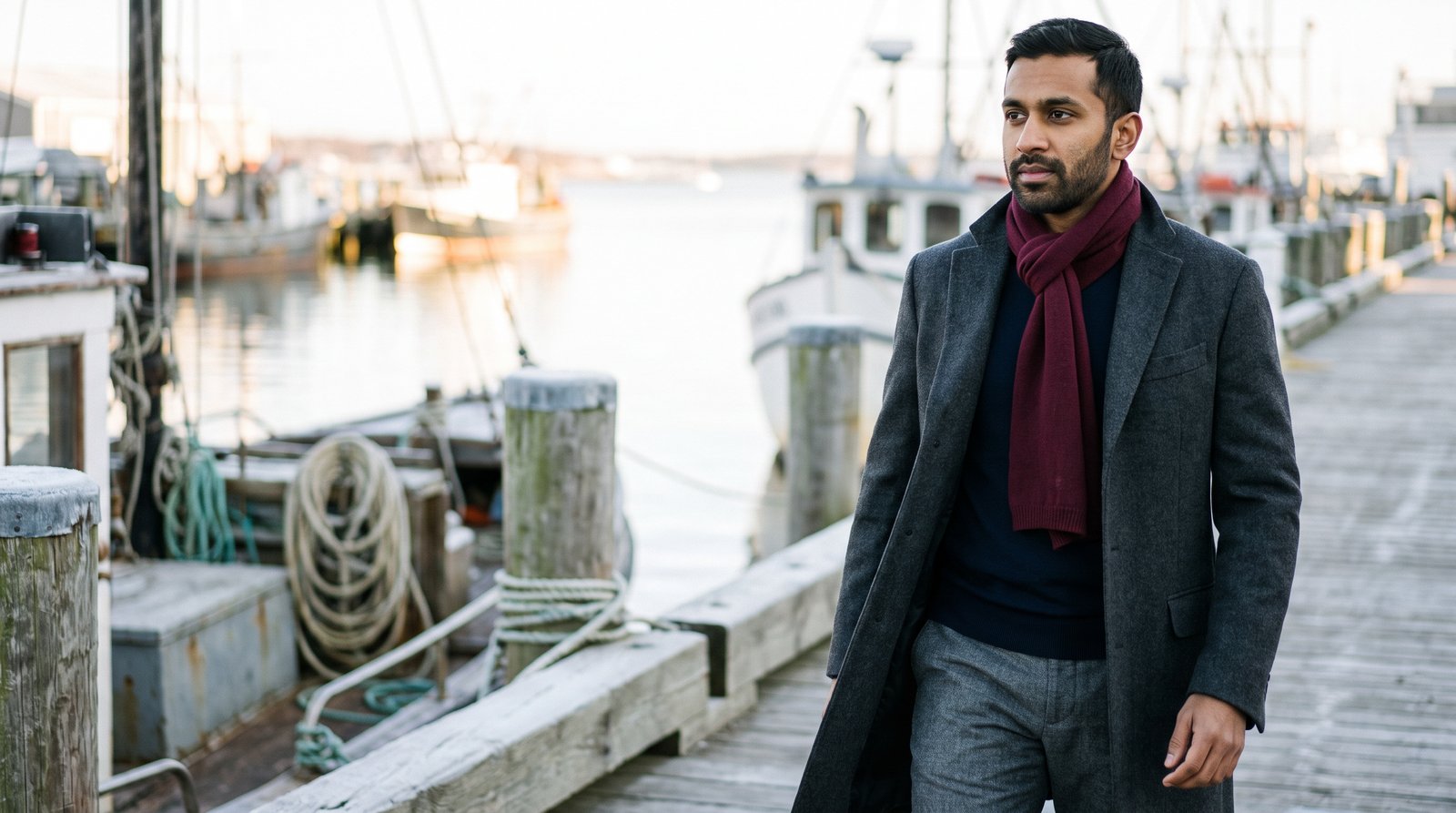
Knowing how to wear a scarf for men comes down to three choices: the right scarf, the right knot for the weather, and whether it sits inside or outside your coat. A wool or cashmere scarf around 70 inches long covers almost every situation, and six simple knots take you from a mild fall commute to a windy January morning. Here is how to tie each one and when to use it.
Choose the Right Scarf: Fabric, Length and Width
The scarf matters before the knot does. A knot that looks neat in fine merino turns bulky in a chunky hand knit, and a short scarf simply will not wrap twice.
- Fabric. Merino wool is warm, soft and easy to care for. Cashmere is lighter and warmer for its weight, and it drapes beautifully over a wool topcoat. Thick lambswool or cable knits suit casual jackets. Silk and fine cotton are for cool spring evenings, not winter.
- Length. Around 70 to 75 inches handles every knot below. Taller men, or anyone who wants to double wrap, should look closer to 80 inches. A 60-inch scarf works for the drape and the Parisian knot but little else.
- Width. Ten to twelve inches is the versatile middle. Narrower scarves sit cleanly under a suit collar; wider ones give more warmth and fold well for the Parisian knot.
6 Ways to Tie a Scarf for Men
These six knots run from lightest to warmest. Learn the first three and you will be covered for most of the season.
1. The Drape
No knot at all. It adds color and texture to an open coat when the weather is cool but not cold.
- Hang the scarf around the back of your neck.
- Let both ends fall straight down your chest at equal length.
2. The Once-Around
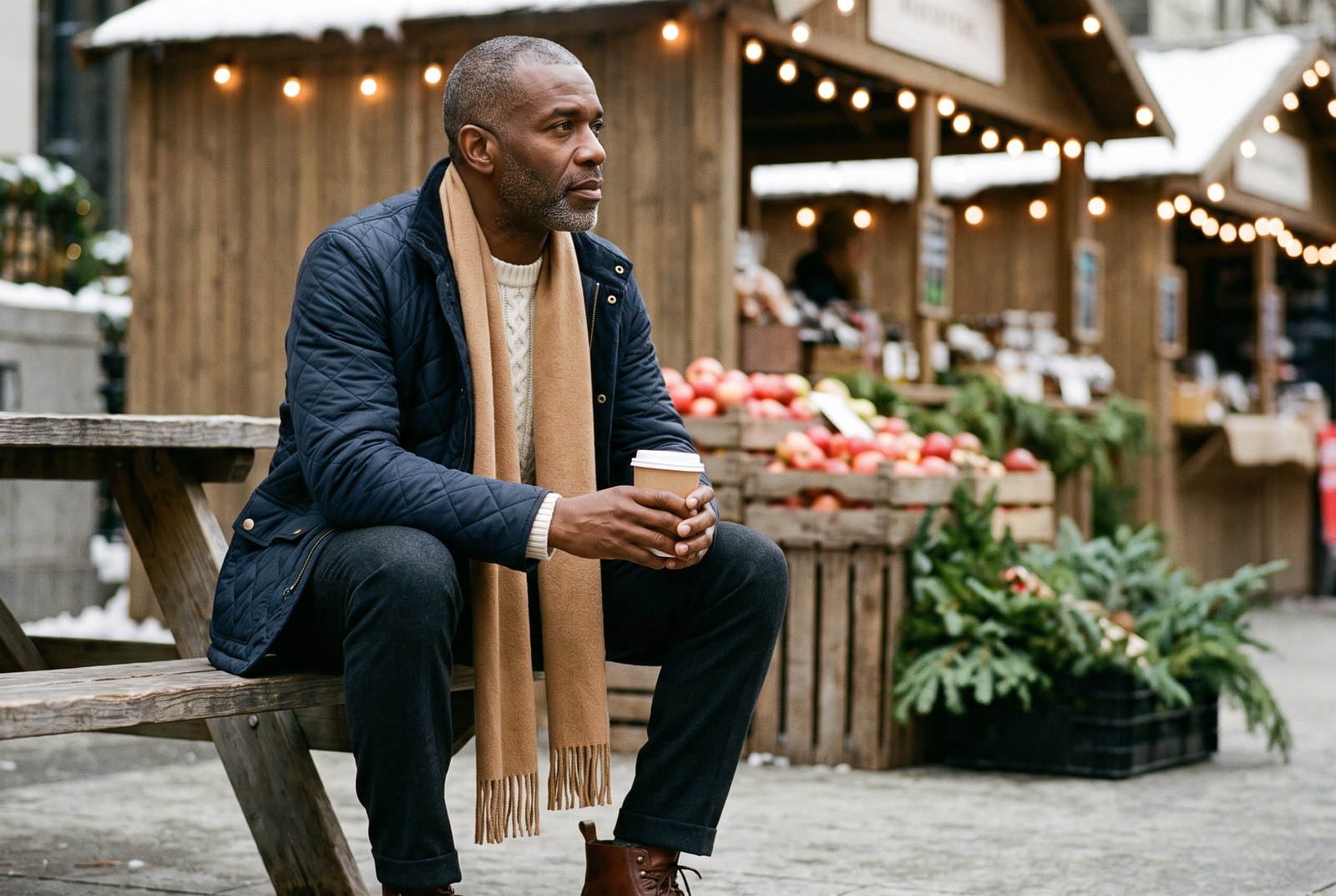
The everyday knot. It is quick, warm enough for most days and works with any coat, from a field jacket to a men’s outerwear staple like a quilted vest.
- Drape the scarf with one end about twice as long as the other.
- Wrap the long end once around your neck.
- Let both ends hang down the front and adjust them to roughly even lengths.
3. The Parisian Knot
Also called the European loop, this is the knot most men picture when they think of a sharp scarf. It sits flat, seals out wind and pairs especially well with a tailored overcoat.
- Fold the scarf in half lengthwise so the two ends meet.
- Drape it around your neck with the folded loop on one side and the loose ends on the other.
- Pull both loose ends through the loop.
- Tighten gently so the knot rests at the base of your throat.

4. The Reverse Drape Tuck
A polished option for an overcoat worn buttoned. It keeps your chest warm without any bulk at the collar.
- Drape the scarf around the back of your neck with both ends in front.
- Cross one end over the opposite shoulder so it hangs down your back.
- Repeat with the other end over the other shoulder.
- Button your coat over the crossed fabric at your chest.
5. The Four-in-Hand
Tied like the most common necktie knot, it gives a slim, upright knot that works best with a thinner scarf.
- Drape the scarf with one end slightly longer.
- Cross the long end over the short end, then loop it behind.
- Bring it across the front once more and up through the neck opening.
- Pull it down through the front loop and tighten.
6. The Twice-Around
The warmest of the six, for real cold and long days outdoors. You need a scarf of at least 75 inches.
- Drape the scarf with one end much longer than the other.
- Wrap the long end around your neck twice.
- Tuck the ends inside your coat or let them hang.
Should a Scarf Go Over or Under Your Coat?
Both are correct; the difference is warmth versus style. Worn under the coat, with the ends tucked inside the lapels, a scarf traps heat against your chest and looks tidy, which is why it is the usual choice with a buttoned overcoat. Worn over the coat, the scarf becomes the visible accent, a good fit for an open coat or a casual jacket on a milder day. For more on choosing the coat itself, see our men’s overcoat guide and our comparison of trench coats and peacoats.
How to Wear a Scarf With a Suit
A scarf with a suit should look like part of the outerwear, not part of the outfit underneath. Choose a fine merino or cashmere scarf so it lies flat over your lapels, and stick to the drape, the Parisian knot or the reverse drape tuck. Bulky wraps crush the shirt collar and tie knot. Wear the scarf outside your suit jacket and inside your topcoat, and take it off with your coat when you arrive. A scarf is outerwear; it should not stay on indoors with your suits and tailoring.
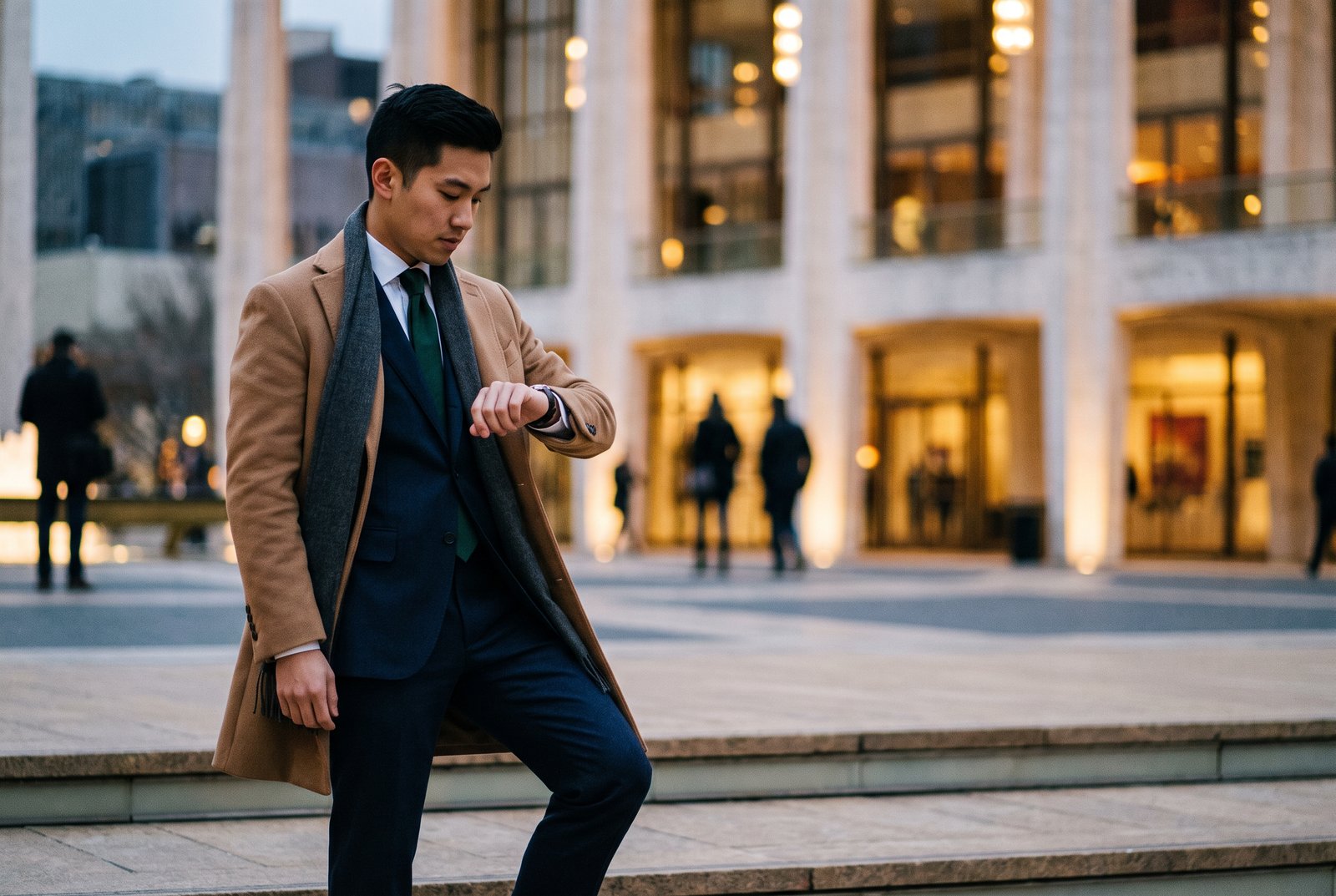
The same rules apply over a sport coat. A herringbone or tweed jacket pairs naturally with a textured wool scarf, and a turtleneck under the jacket lets you skip the scarf indoors while keeping the same warm, layered look.

Matching a Scarf to Your Coat and Outfit
The simplest rule is contrast with your coat and harmony with everything else. A burgundy, forest green or camel scarf lifts a charcoal or navy coat. A grey or navy scarf calms down a camel coat. Solid colors are the most versatile; a subtle check, stripe or herringbone adds interest without fighting a patterned suit or sport coat. If your tie or pocket square is already patterned, keep the scarf solid. For the layers underneath, our guide to wearing a sweater over a dress shirt covers the knits that sit well under a coat and scarf.
Start with one well-made wool scarf in a color that works with your coat, learn the once-around and the Parisian knot, and you will have an answer for nearly every cold morning this winter.