The trench coat and the peacoat are two of the most enduring coats in men’s outerwear. Both are wardrobe classics. Both have strong silhouettes. But they solve different problems, work in different weather, and suit different outfits. Knowing which one you need — or which to buy first — comes down to understanding what each coat is actually designed to do.
Trench Coat vs Peacoat at a Glance
| Feature | Trench Coat | Peacoat |
|---|---|---|
| Length | Mid-thigh to knee | Hip to mid-thigh |
| Material | Cotton gabardine (lightweight) | Heavy wool |
| Structure | Belted; double-breasted; epaulettes | Double-breasted; no belt |
| Warmth | Light to moderate | Moderate to warm |
| Best weather | Rain, light cold, spring/fall | Cold and wind; winter |
| Formality | Business formal to smart casual | Smart casual to casual |
| Origin | British military (WWI) | Naval uniform |
What Is a Trench Coat?
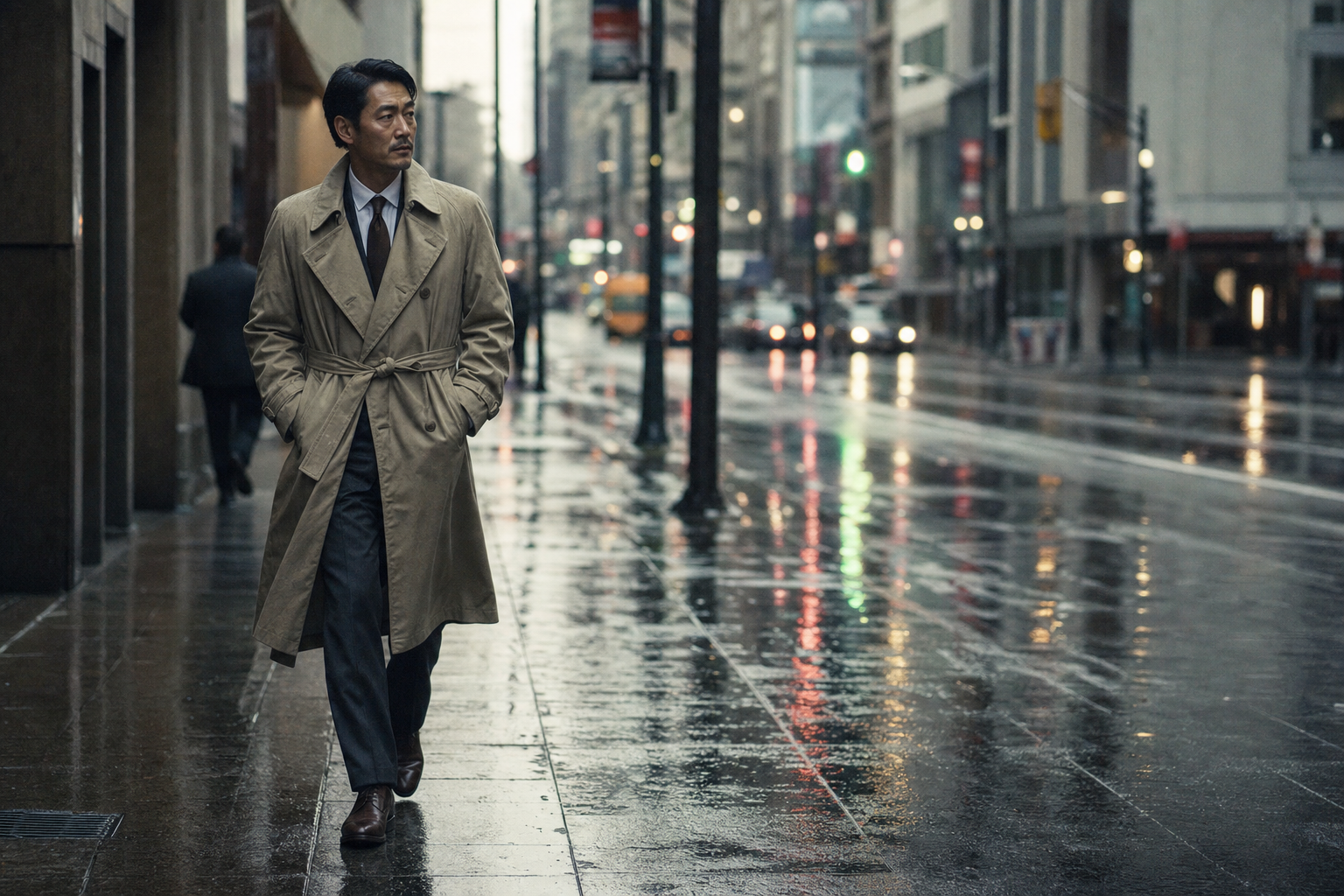
A trench coat is a mid-thigh to knee-length overcoat with a belted waist, double-breasted button front, and typically epaulettes at the shoulders. The classic material is cotton gabardine — lightweight but tightly woven and water-resistant, though not waterproof in heavy rain. The belt distinguishes it visually from any other coat silhouette.
The trench coat was developed as military field wear and refined for British officers in World War I. Its water-resistant cotton construction, long length for protection, and structured front were all practical military features that translated directly into civilian formal and business wear.
The trench coat is the most formal outerwear option that is not a traditional wool overcoat. It works over a suit, over a blazer, and in layered smart casual outfits. The classic color is tan or camel; navy, black, and grey are more modern options. All four work in city and business contexts.
What Is a Peacoat?
A peacoat is a hip-to-mid-thigh length coat in heavy wool with a double-breasted button front and large lapels. There is no belt. The cut is shorter and stockier than a trench coat, which is by design: the peacoat was naval outerwear, built for sailors working on deck in cold and wind at sea.
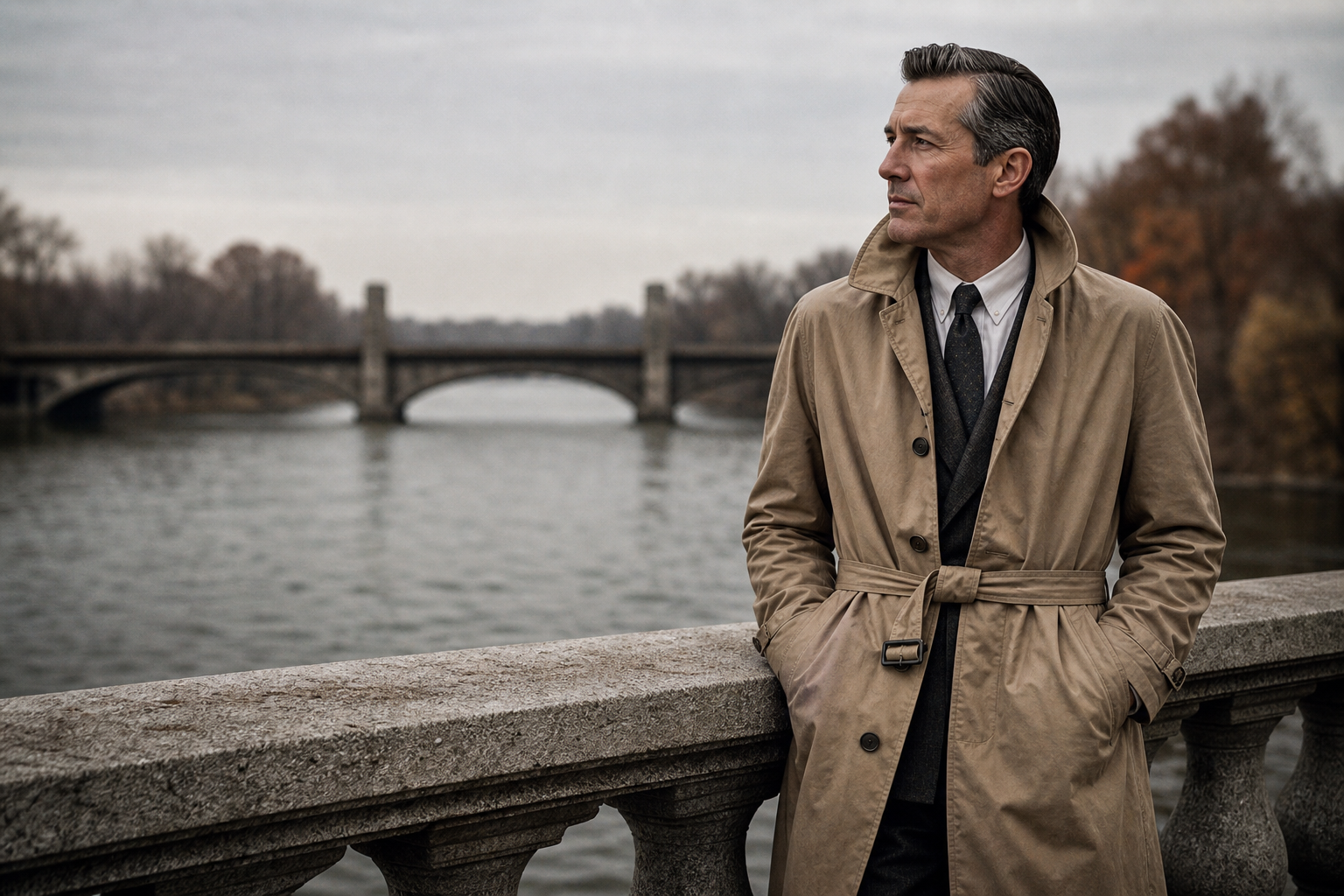
The peacoat is warm. The heavy wool construction insulates well, and the shorter length makes it more practical for active wear than a knee-length overcoat. Its formality level is lower than a trench coat — it reads as smart casual to casual rather than formal or business. The classic color is navy; black, grey, and camel are common contemporary versions.

Trench Coat vs Peacoat: Which Do You Need?
Choose a trench coat if: You wear suits regularly, need a coat that works over formal and business attire, want protection from light rain, or need a coat appropriate for business formal and smart casual contexts. The trench coat is more versatile across formality levels and is the better choice if you need one coat that covers professional and social occasions.
Choose a peacoat if: You want warmth above all else, primarily wear casual or smart casual outfits, and prefer a shorter, less formal silhouette. The peacoat is warmer than the trench coat and is the better choice for cold winters when warmth is the priority over formality.
If you can own one: The trench coat is the more versatile purchase. It covers more occasions and formality levels than the peacoat, including all the casual contexts where a peacoat works and the formal and business contexts where a peacoat does not.
If you can own both: The trench coat becomes your suit coat and the peacoat becomes your weekend and casual coat. They serve different purposes without overlapping.
For a broader look at all men’s coat styles, see the men’s overcoat guide.
How to Wear a Trench Coat
Over a suit: Belt closed or tied (not buckled tightly, but snugged loosely). Lapels flat. Tie and shirt collar visible. Dress shoes. This is the primary formal use of the trench coat and the look it is designed for.
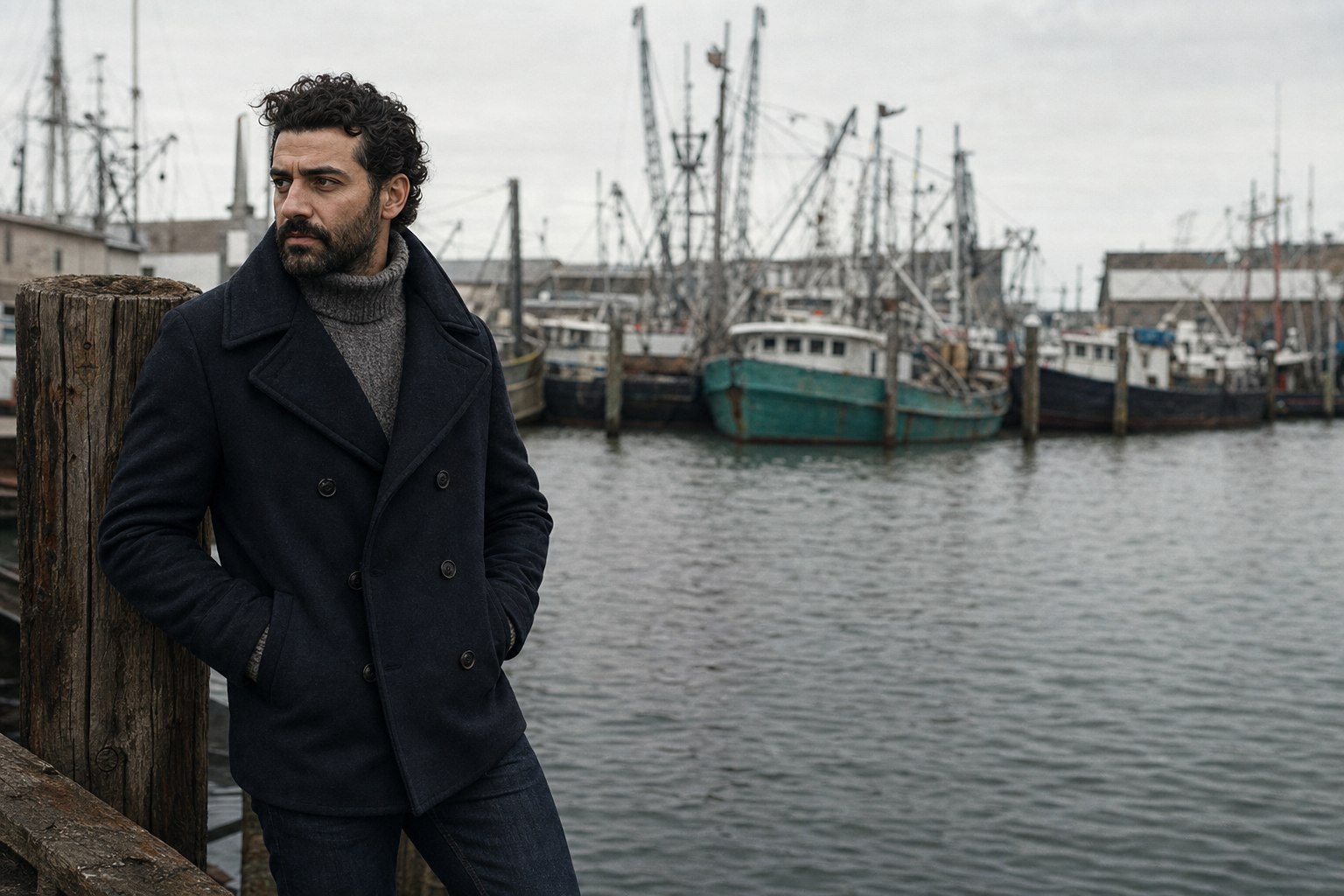
Smart casual: Unbelted or loosely belted over chinos and a sweater or blazer. The trench coat adds a formal layer to casual clothes without requiring a suit underneath.
Fit: The belt should sit at the natural waist when tied. Sleeves should allow about an inch of jacket or shirt cuff to extend past the coat’s sleeve when arms are at the side. Length: typically knee-length for the most formal version; mid-thigh is more relaxed.
How to Wear a Peacoat
Over a blazer or sport coat: A peacoat worn over a blazer in a smart casual outfit is a natural combination. The peacoat acts as the outer layer over a more formal inner layer. Keep the blazer collar and lapels visible over the peacoat’s large lapels.
Casual cold-weather outfit: Over a sweater or heavy shirt with dark jeans. This is the peacoat’s most natural context and where it looks most intentional.
Fit: The peacoat should close cleanly across the chest with enough room to layer a sweater or light jacket comfortably underneath. Sleeves should hit at the wrist bone. The double-breasted front should lie flat; if it pulls at the buttons, the coat is too small.
Frequently Asked Questions
Is a trench coat warmer than a peacoat?
No. A peacoat is warmer than a trench coat. The peacoat’s heavy wool construction provides significantly more insulation than the cotton gabardine of a trench coat. The trench coat is designed for rain and light cold, not deep winter temperatures. For warmth in cold weather, the peacoat is the better choice. For transitional weather and light rain protection, the trench coat performs better.
Can you wear a trench coat in winter?
Yes, but with layering. A trench coat over a heavy wool suit with a thick sweater underneath provides reasonable warmth in temperatures above freezing. In very cold climates (consistently below freezing), a heavier wool overcoat or a down coat is a more practical choice. The trench coat’s strength is transitional and rainy weather, not deep winter cold.
What is the difference between a peacoat and an overcoat?
An overcoat is a general term for any long coat worn over a suit or formal attire, typically reaching the knee or below. A peacoat is a specific type of shorter, double-breasted wool coat with a particular silhouette and naval origin. A peacoat is not an overcoat in the traditional sense because it is shorter and less formal. An overcoat, in the traditional sense, refers to knee-length formal outerwear like a Chesterfield or camel overcoat.