Destination wedding attire for men raises a problem most dress code guides skip: the packing decision is harder than the outfit decision. You already know a suit is required. What you need to know is which suit, in which fabric, for which climate – and how to get it there without destroying it in a garment bag inside an overhead bin. Here is how to think through destination wedding dressing by location type.
Read the Location Before the Dress Code
The invitation sets the formality. The location sets everything else. A “cocktail attire” destination wedding in the Dominican Republic calls for very different choices than a cocktail attire wedding in Milan or a mountain resort in Colorado. The dress code tells you whether to bring a suit or a tuxedo. The location tells you what fabric, what color, and what shoes will actually work when you get there.
The core rule: match the dress code but adapt the fabric and color to the setting. A dark heavy wool suit is technically correct at a cocktail event – but in a resort in Cancun at 3 PM in August, it is the wrong call in every practical sense.
Tropical and Beach Destination Weddings
Tropical destination weddings are where fabric choice makes the biggest practical difference. Heat and humidity punish the wrong materials.
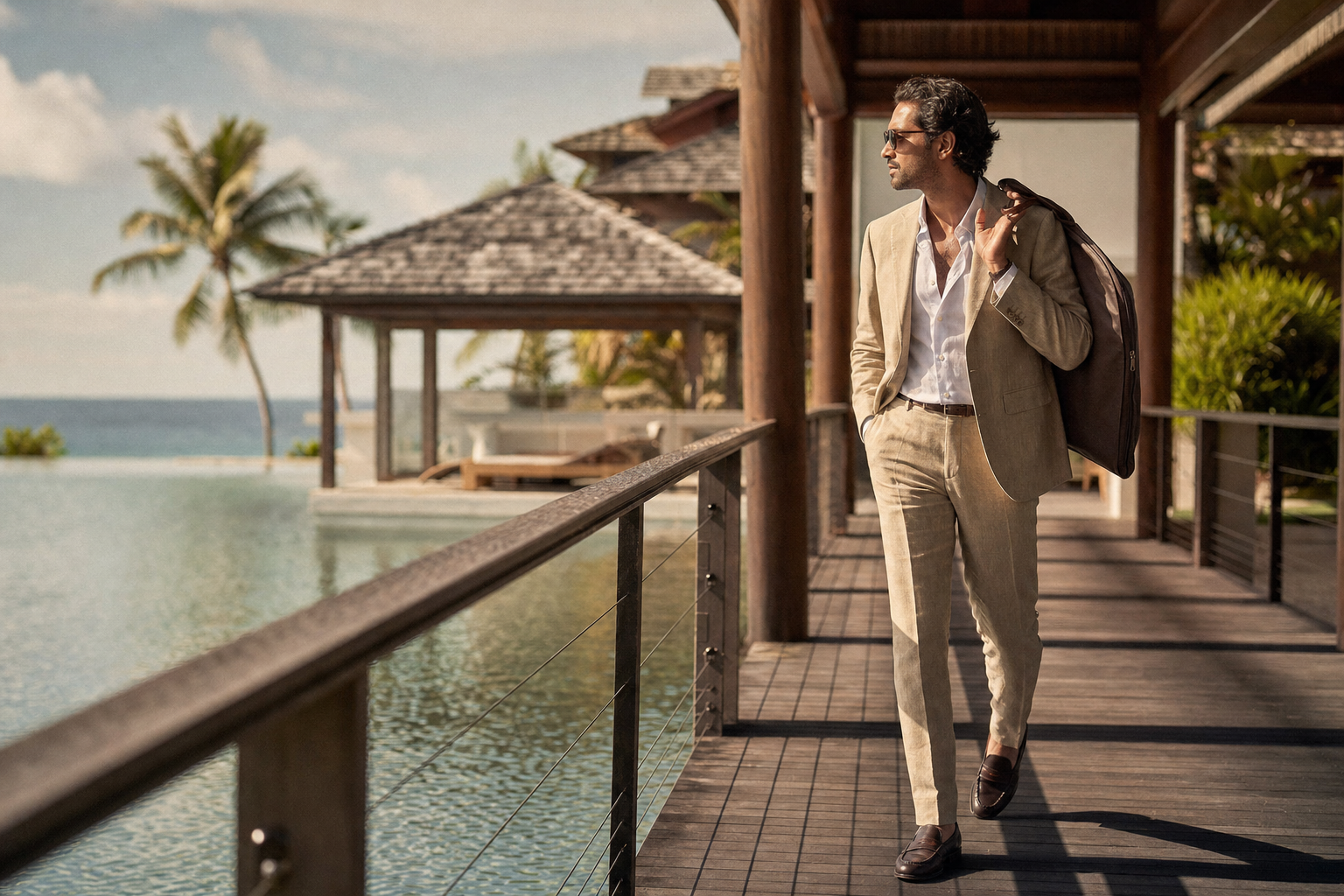
- Best fabrics: Linen or cotton-linen blend. Linen breathes better than any suiting fabric and reads appropriately relaxed for tropical settings. A linen suit is the strongest call for any destination wedding in a warm climate.
- Colors that work: Tan, ivory, light grey, stone. These lighter tones photograph well against beach and tropical settings and do not absorb heat the way dark colors do.
- Skip: Heavy wool, dark charcoal, and black at tropical daytime events. They absorb heat, look seasonally mismatched, and show sweat.
- Shoes: Leather loafers are the most practical choice for mixed terrain – beach venues, resort walkways, and outdoor ceremony sites. Heavy cap-toe oxfords are over-engineered for sand and cobblestone alike.
For a deeper look at beach wedding attire specifically, the beach guide covers fabric, footwear, and color decisions for sand-and-sun settings in more detail.

European or City Destination Weddings
A city destination wedding – whether in Rome, Paris, London, or a domestic urban venue – functions like any formal city wedding. The main adjustment is the travel factor, not the dress code itself.
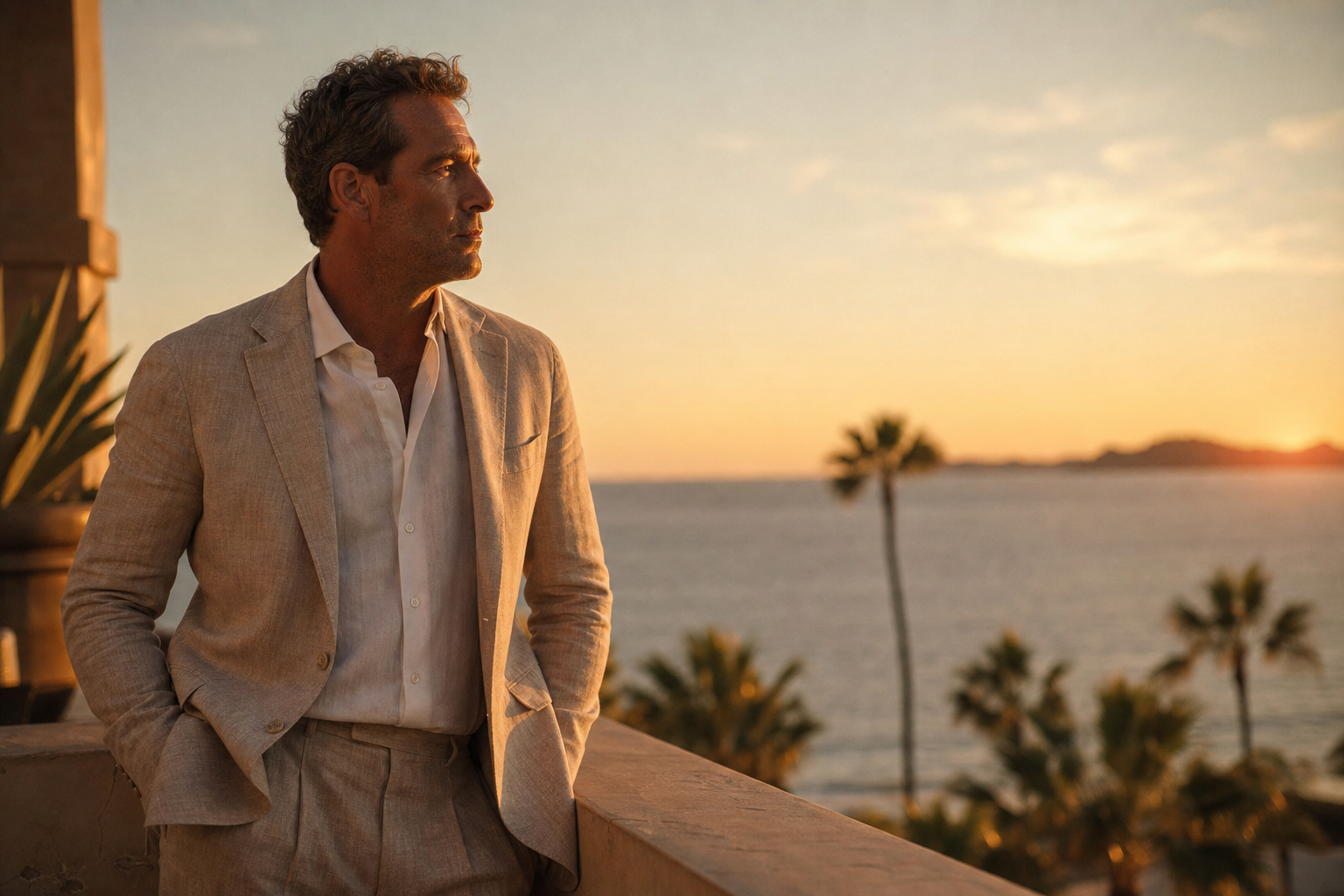
- Fabrics: Lightweight wool or a travel-ready suiting blend. These hold structure better than linen and work in cooler European climates where linen can read too casual or light.
- Colors: Navy and charcoal remain the most reliable choices for a European city wedding. These read appropriately formal in most settings and photograph well in urban environments.
- Shoes: Polished oxfords or derbies. European city weddings often involve significant walking on cobblestone – a full leather sole or a leather-composite sole handles this better than thin-soled dress shoes.
- Climate note: Northern European destinations in spring or fall can be cool. Keep the jacket on through the ceremony and bring a light overcoat for outdoor moments.
Mountain or Rustic Destination Weddings
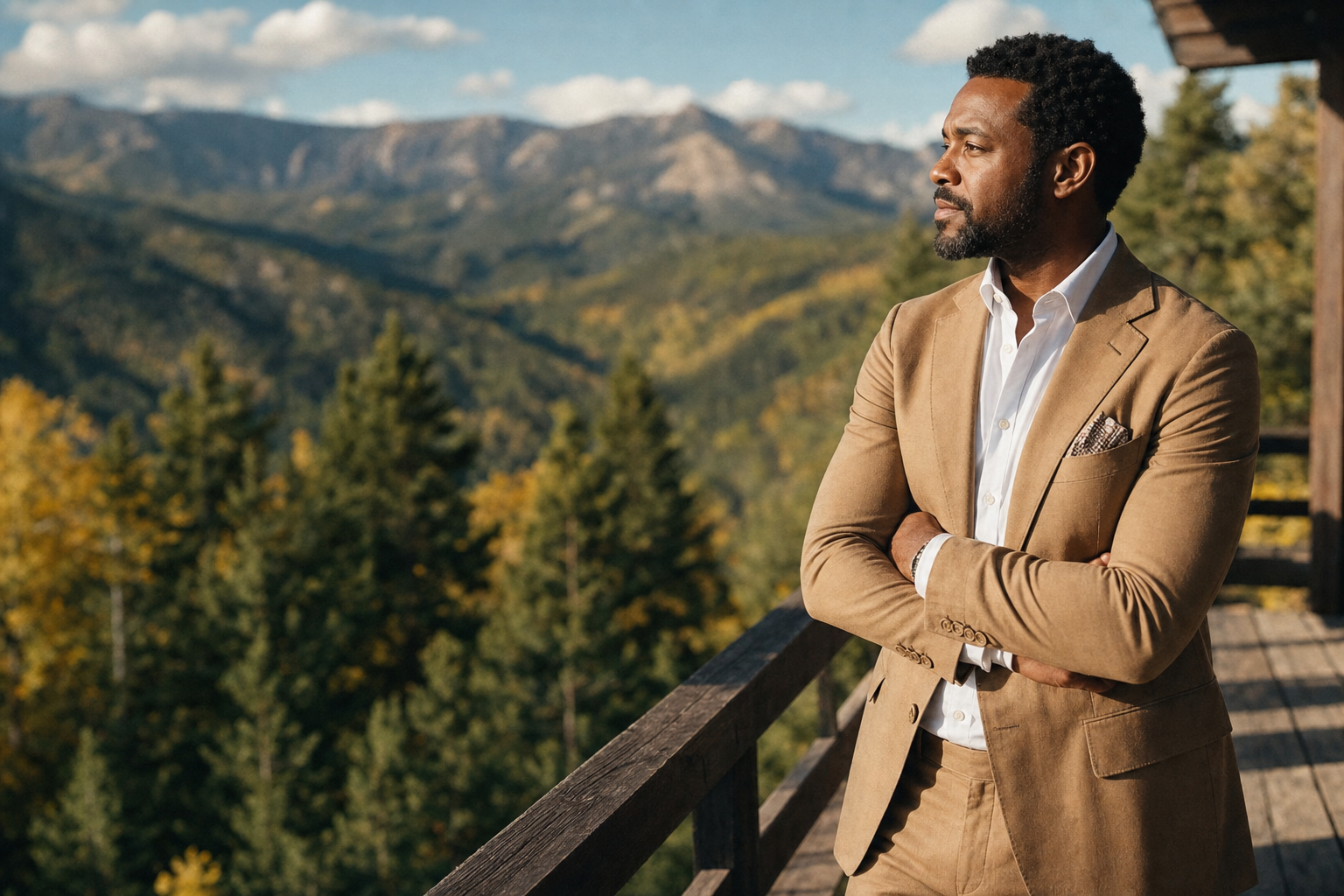
Mountain resort and rustic destination weddings – Colorado, Vermont, Montana, the Carolinas – call for a different visual register than tropical or city weddings. Earth tones photograph beautifully against natural landscapes.
- Colors that work: Olive, brown, tan, warm grey, and earth tones. These read naturally against outdoor mountain and rustic settings and photograph well against stone, timber, and fall foliage.
- Layering: Mountain weather changes quickly. A waistcoat under the suit jacket adds warmth and visual polish for outdoor ceremonies. A light wool overcoat works for arrivals and departures.
- Shoes: Leather-soled or leather-composite dress shoes with enough grip for outdoor terrain. Avoid suede in any setting where wet grass or mud is possible.
The principles for dressing at mountain and rustic venues overlap with outdoor wedding guidance – particularly around footwear and fabric choices that handle variable terrain and weather.
What to Pack for a Destination Wedding
Packing strategy is the detail most destination wedding guides skip. Here is how to pack a wedding outfit without destroying it in transit.
- Bring one versatile suit, not two event-specific ones. A suit that works for the rehearsal dinner and the ceremony is the right travel investment. Wrinkle-resistant fabrics are worth their added cost here – they recover from garment bags and overhead bins better than standard wool.
- Use a garment bag. Carry it on if possible. Checking a garment bag risks wrinkles, damage, or lost luggage. If you must check it, pack the jacket and trousers separately with tissue paper inside to hold the structure.
- Pack accessories separately. Ties, pocket squares, and dress shoes can be checked in a standard bag. The suit itself is the only garment worth protecting in the cabin.
- Consider shipping ahead. For longer international trips, shipping the suit in a flat garment box to your hotel’s concierge is a legitimate option. Confirm with the hotel first and ship with tracking.
- Steam, do not iron. Most hotels offer garment steaming, and it is far safer than ironing on a suit jacket. A travel steamer is a worthwhile investment if you attend destination events regularly.
The summer wedding attire guide covers a complementary set of fabric and color decisions for warm-weather weddings, whether they are local or destination.
A destination wedding asks more of your wardrobe than a local one. Choose fabrics that travel, colors that fit the location, and a suit that works from the rehearsal dinner through the last song of the reception.