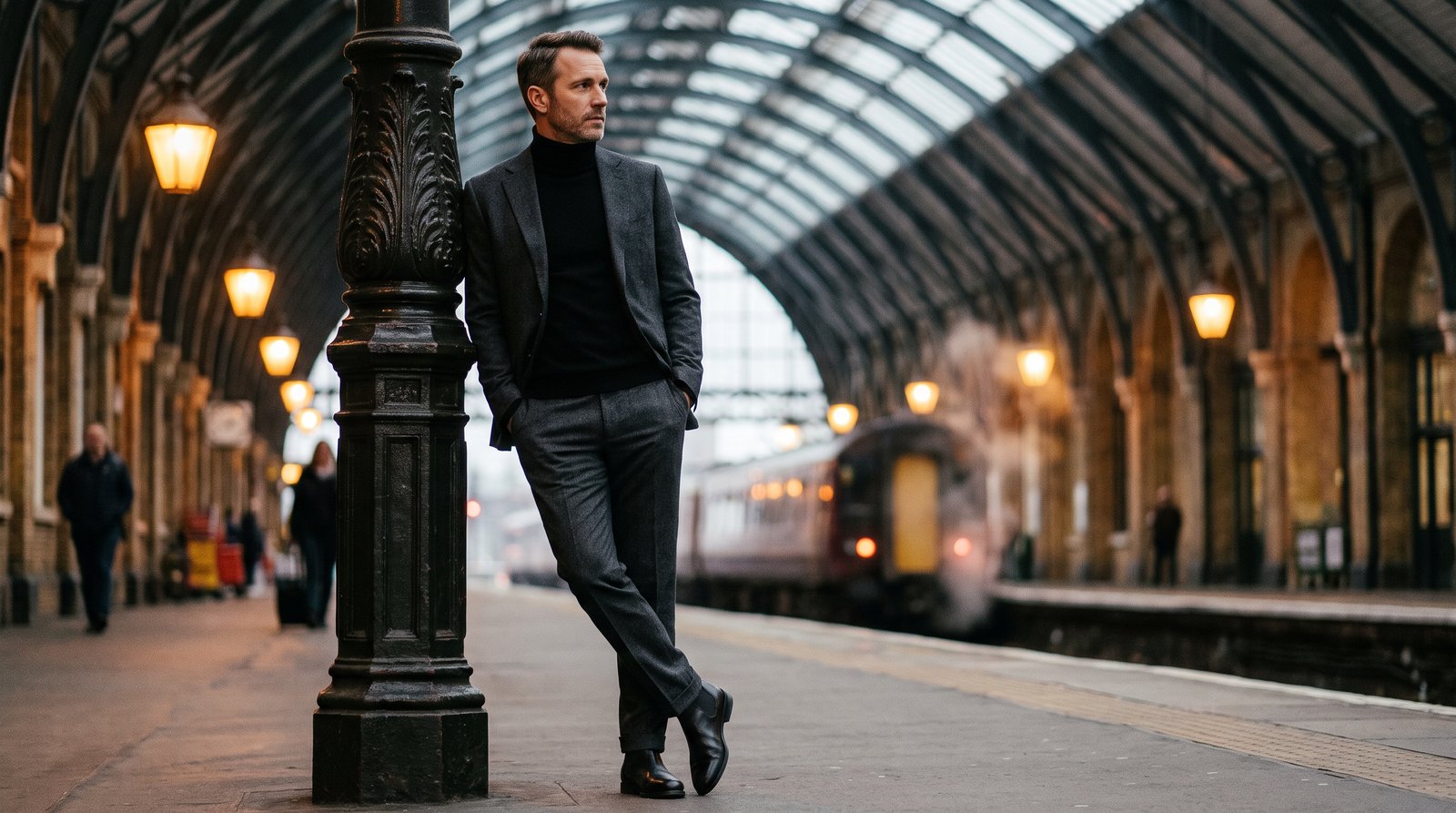
A turtleneck with a suit is a sharp cold-weather alternative to a dress shirt and tie. It works best with a fine-gauge merino or cashmere turtleneck, a suit in flannel or textured wool, and dark leather shoes or boots. Wear it to dinners, holiday parties, creative offices and evening events, and go back to a shirt and tie when the dress code is formal business or black tie.
Is a Turtleneck With a Suit Formal?
It sits between business casual and cocktail attire. The turtleneck replaces both the shirt and the tie, so the outfit reads as relaxed but deliberate. It is not a passing trend either. The grey flannel double-breasted suit with a turtleneck that keeps coming up on Reddit is a vintage reference that still looks current when the jacket fits well.
Where it works:
- Holiday parties, winter dinners and nights at the theater
- Creative or relaxed offices, and client dinners where ties are optional
- Cold-weather events with a cocktail dress code
Where to skip it:
- Job interviews, especially in finance, law and other conservative fields
- Formal business settings where everyone else wears a tie
- Black tie. A tuxedo calls for a dress shirt and bow tie. Only a “creative black tie” invitation leaves room for a black turtleneck.
Choose the Right Turtleneck: Fabric, Weight and Fit
The sweater matters more than the suit. A fine-gauge knit in merino wool or cashmere is thin and smooth, so it lies flat under a tailored jacket without adding bulk at the shoulders or armholes. Save chunky cable knits for a roomy sport coat or an overcoat. Start with the fine-gauge options in our men’s sweaters.
Fit the neck carefully, because it is the part everyone sees. The fold should rise about halfway up your neck and sit just inside the jacket collar, roughly where a shirt collar would. It should feel snug, not tight. If a turtleneck feels like it is choking you, fold the collar once rather than twice, look for a slightly wider neck opening, and never pop it up. The body should follow your torso, the hem should reach your belt, and the cuffs can show past the jacket sleeve by about as much as a shirt cuff would.
Skip the dress shirt underneath. A collar under a turtleneck adds bulk and fights the fold. A thin crewneck undershirt is fine for warmth, and it keeps the knit cleaner between washes.


Turtleneck and Suit Color Combinations That Work
Because the turtleneck stands in for both shirt and tie, it controls how much contrast the outfit has. Tonal pairings look sleek and modern. Lighter knits against a dark suit look classic and a little softer. A navy or charcoal wool suit covers almost every combination below.
- Navy suit with a black turtleneck: crisp and evening-ready.
- Navy suit with a cream turtleneck: softer and better in daylight.
- Charcoal suit with a camel turtleneck: warm and easy to wear, one of the best winter pairings.
- Charcoal suit with a black turtleneck: the most formal-looking version of the look.
- Grey flannel suit with a navy or burgundy turtleneck: the vintage double-breasted look.
- Brown or tan suit with a cream or navy turtleneck: relaxed and earthy.
- Black suit with a black turtleneck: a monochrome evening look. Keep the shoes black.
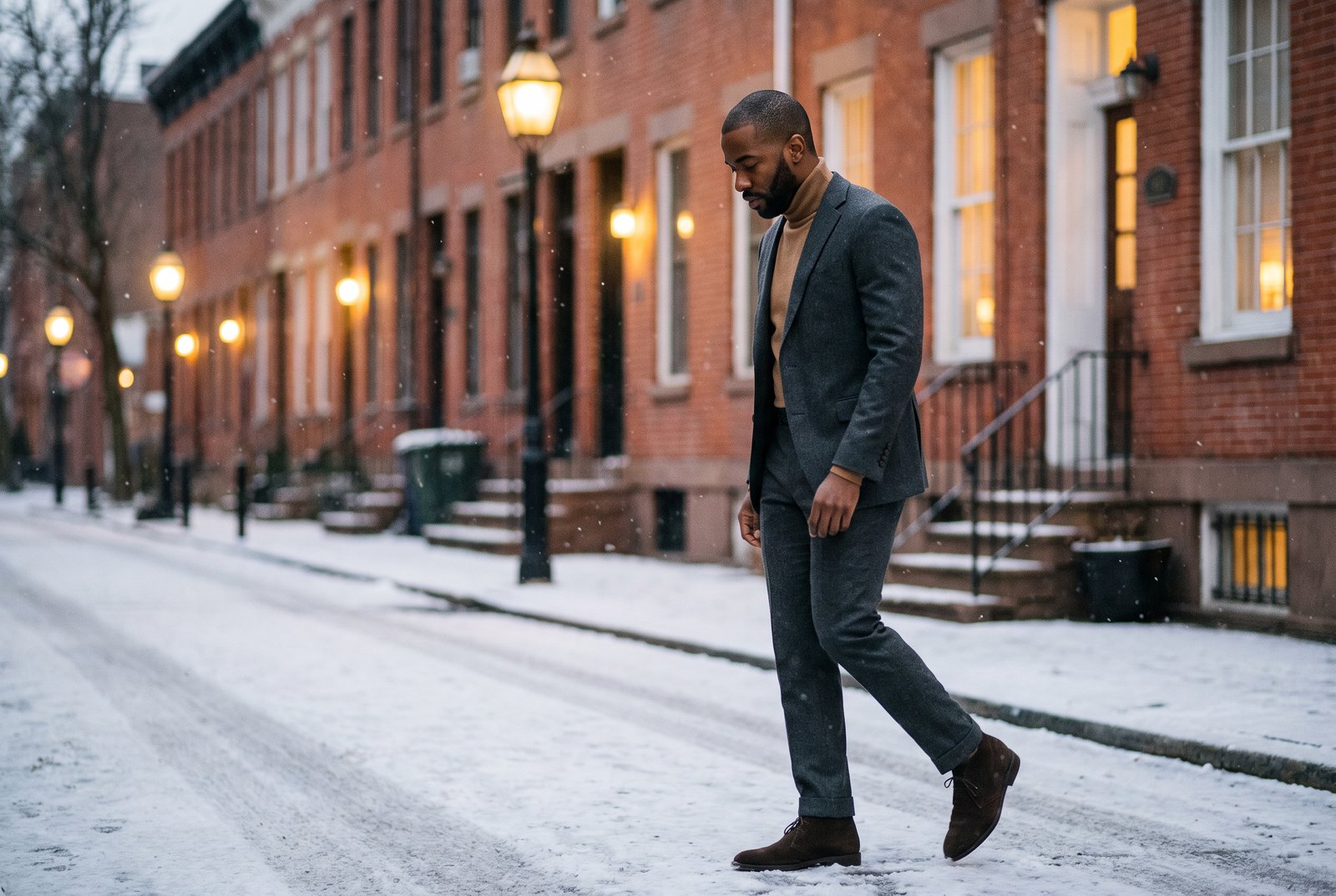
How to Wear a Turtleneck With a Blazer or Sport Coat
The turtleneck is even easier to wear with a blazer or sport coat, because the jacket and trousers do not have to match and texture can do more of the work. Tweed, herringbone and flannel jackets are natural partners for knitwear. Our guide to wearing a blazer casually touches on the turtleneck as one option. These are the combinations to build on:
- Navy blazer, grey or cream turtleneck, grey flannel trousers: the most versatile version, right for the office or a weekend dinner.
- Brown tweed sport coat, navy turtleneck, mid-grey trousers: warm and textured, ideal for cold days.
- Camel sport coat, black turtleneck, charcoal trousers: sharp enough for an evening out.
Pair the jacket with wool dress pants for work, or dark denim on the weekend. A slightly heavier knit works here if the jacket has room for it, which most sport coats do. Browse our sport coats and blazers for textured options, and see sportcoat vs. blazer vs. suit jacket if you are unsure which you own. For a broader look at the dress code this outfit fits into, read our men’s smart casual guide.
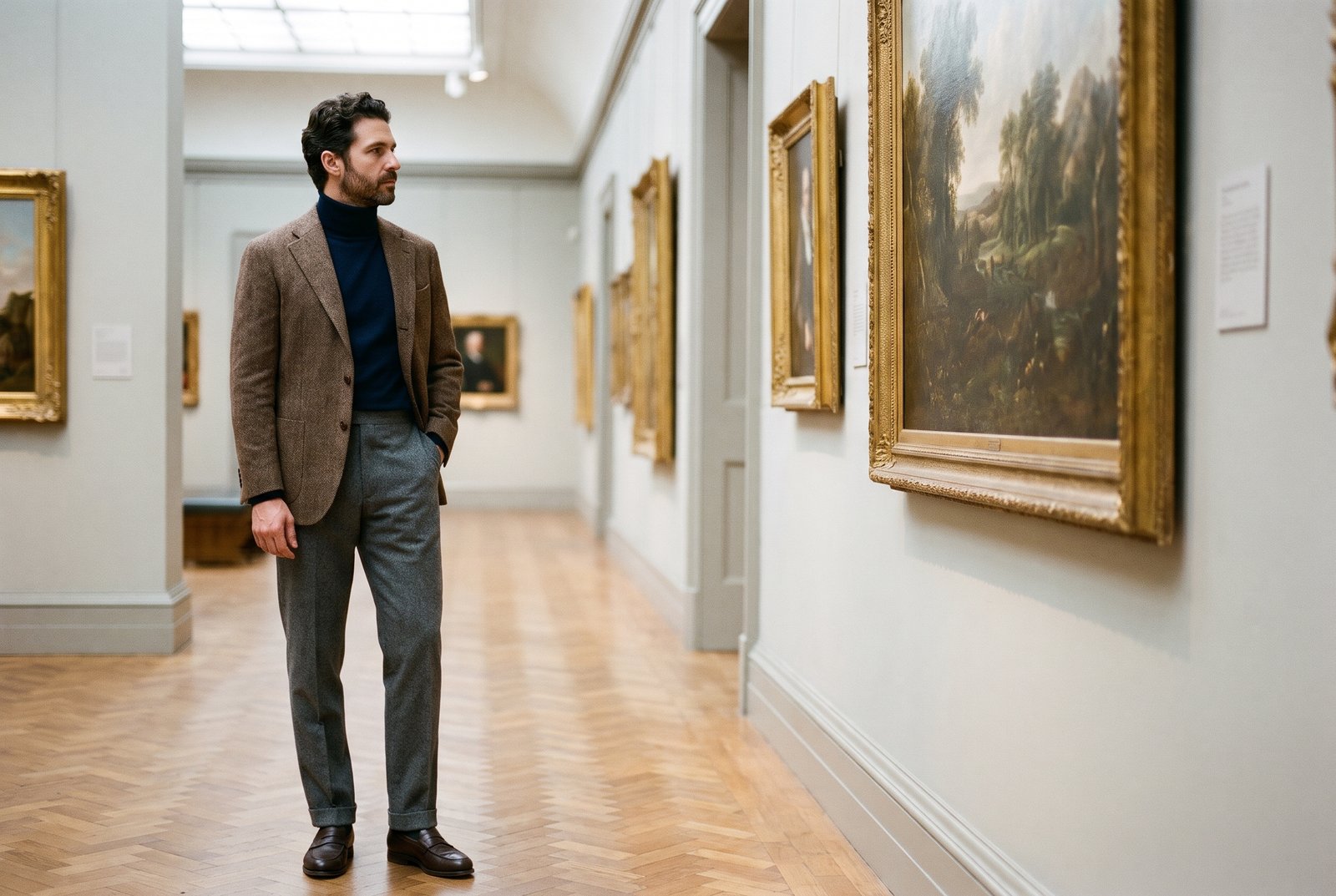

Turtleneck vs. Mock Neck
A mock neck has a short collar that stands about an inch up the neck without folding over. It looks cleaner and more minimal, and it suits men with shorter necks or anyone who finds a full turtleneck confining. It pairs especially well with a sport coat. The full turtleneck is warmer and looks more finished under a suit in the depths of winter. No one is ruled out of the look; if a full roll feels crowded, try a mock neck or a thinner turtleneck folded once.
Shoes and Accessories
Choose dark leather. Chelsea and chukka boots suit the season, and loafers, derbies or plain dress shoes work year-round. Match black shoes to black, charcoal and grey outfits, and brown shoes to navy, brown and camel. Keep accessories simple: a good watch, a plain pocket square if you like, and a thin chain only if it sits close to the collar.
Common Mistakes to Avoid
- A chunky knit under a fitted suit. It bunches at the shoulders and pulls the jacket open.
- A loose, slouchy neck. It collapses outside the jacket collar and looks tired.
- A shirt collar peeking out. Pick the turtleneck or the shirt, never both.
- A hem that shows below the jacket. Tuck a fine-gauge turtleneck in or choose one that ends at the belt.
- Pilled or faded knitwear. A turtleneck sits close to the face, so the knit has to look fresh.
- Wearing it where a tie is expected. Interviews and formal business still call for a shirt and tie.
Get the knit, the neck and the colors right, and a turtleneck with a suit is one of the easiest ways to look put together all winter.