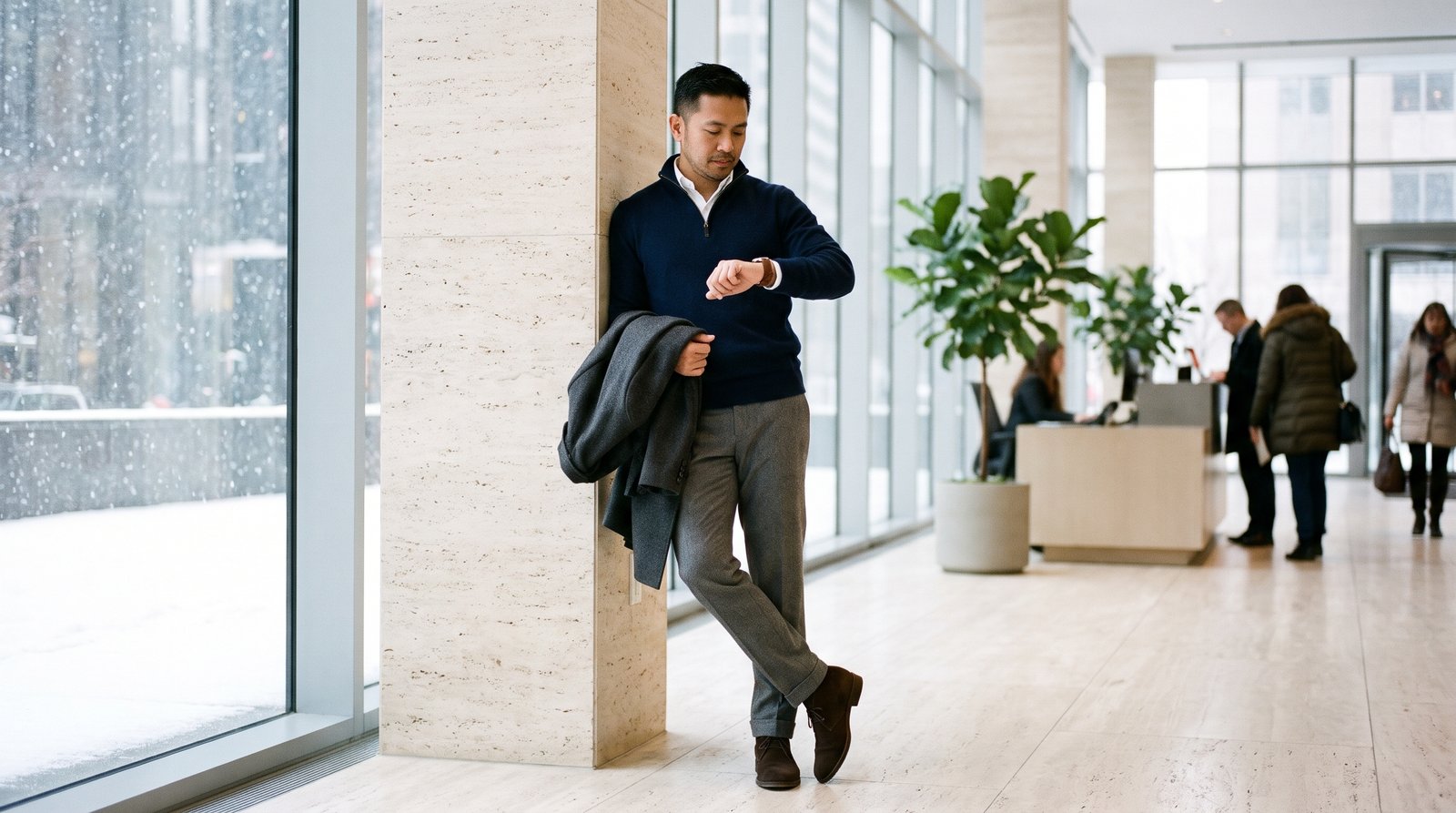
Winter business casual for men has two jobs: keep you warm on the commute and keep you looking professional once the coat comes off. The rules of business casual don’t change in December, but the fabrics, layers and shoes do. Below is what winter business casual means, how to layer for a cold commute and a warm office, eight outfits that work all season, and the outerwear and footwear that finish them.
What Is Business Casual for Men in Winter?
Business casual sits between a suit and weekend clothes. In most offices, that means a collared shirt, tailored trousers or chinos, leather shoes and, often, a jacket or sweater. In winter, the same framework simply moves to heavier materials: flannel instead of tropical wool, merino and cashmere knits, corduroy and moleskin trousers, tweed and herringbone jackets, and boots in place of loafers. If you want a refresher on the basics, our business casual guide covers the year-round rules.
What winter business casual does not mean is a puffer jacket worn all day at your desk, a hoodie under a blazer, or snow boots in a client meeting. The goal is to look as polished as you would in spring while staying comfortable in the cold.
The 3-Layer Rule for the Office
The easiest way to handle winter at work is to dress in three layers you can adjust through the day:
- Base: a dress shirt, an oxford cloth button-down or a fine knit polo. Choose cotton or a breathable blend so you don’t overheat indoors.
- Middle: a sweater, a quilted vest or a sport coat. This is the layer that defines the outfit once your coat is off.
- Outer: a wool topcoat, a peacoat or a smart quilted jacket for the commute.
The middle layer does the most work. A thin merino sweater under a sport coat is warmer than a heavy coat over a shirt alone, and it means you never have to choose between freezing on the platform and sweating at your desk.
8 Winter Business Casual Outfits
1. The Quarter-Zip and Oxford
A navy or charcoal quarter-zip over a white or light blue oxford, with grey wool trousers and brown leather shoes, is the most reliable winter office outfit there is. The zip collar frames the shirt collar neatly and can be opened when the heating is on. Our quarter-zip sweater guide covers fit and colors in more detail.
2. Sport Coat Over a Crewneck
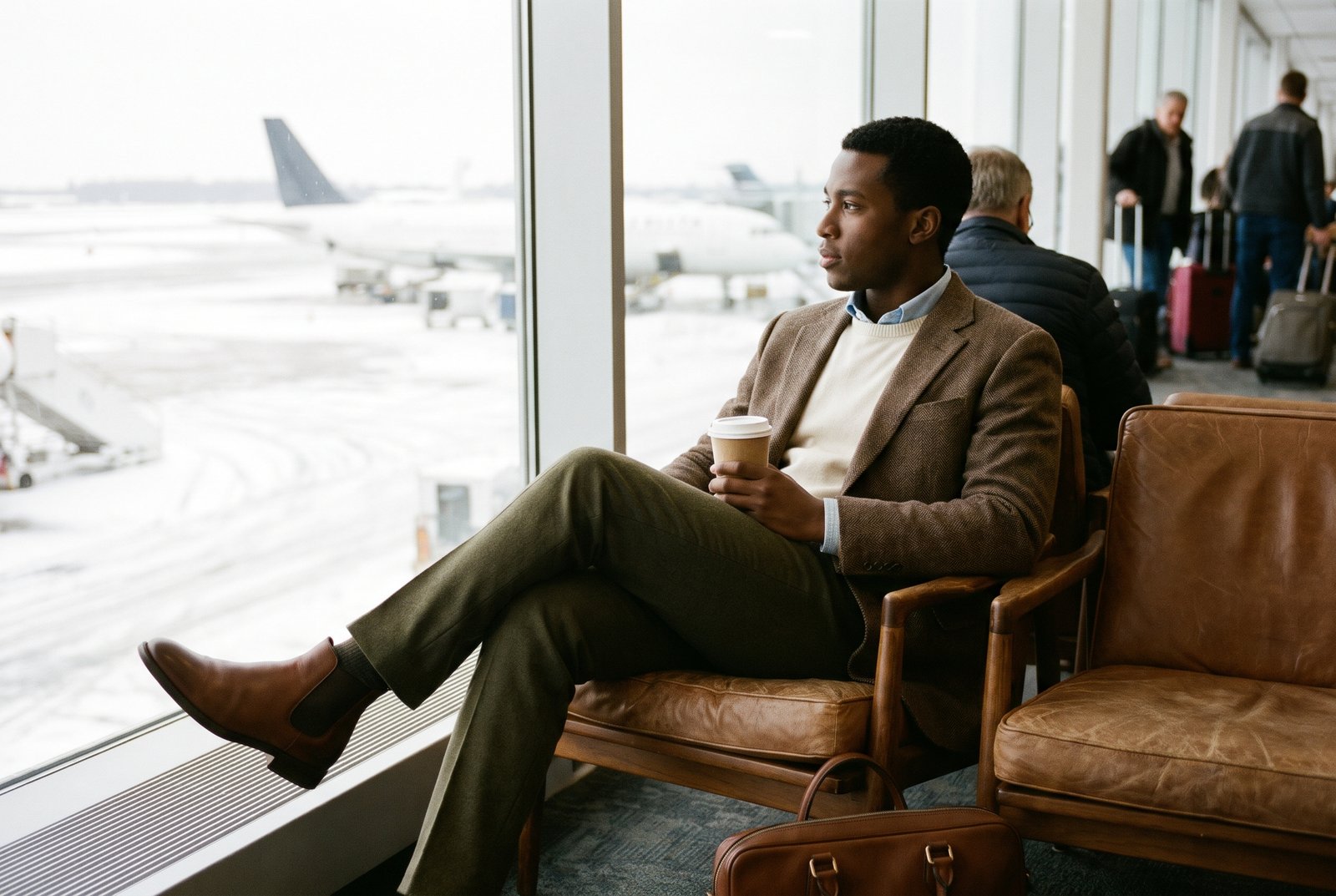
A tweed or herringbone sport coat over a fine merino crewneck and a collared shirt reads as sharp without a tie. It works for client lunches, presentations and any day you want to look one step above the rest of the office.

3. Turtleneck and Blazer
A fine-gauge turtleneck in black, charcoal, navy or cream under a navy blazer is warm, modern and works in both creative and traditional offices. Keep the knit thin so the jacket still fits properly. See our guide to wearing a turtleneck with a suit for the details that keep it sharp.
4. Sweater Over a Dress Shirt and Tie
For more formal offices, a V-neck sweater over a dress shirt and tie keeps the polish of a suit while adding warmth. Let the shirt collar sit inside the neckline and keep the tie knot small. Our guide to wearing a sweater over a dress shirt shows which necklines work best.
5. Corduroy and Flannel
Swap your usual trousers for corduroy pants in olive, navy or brown, and pair them with a brushed flannel shirt and a crewneck. It is the warmest outfit on this list and right for casual Fridays and relaxed offices.
6. Flannel Trousers and a Cardigan
Grey flannel dress pants with a shawl-collar or button cardigan over an oxford shirt look relaxed but deliberate. The cardigan acts like a soft jacket, so you can wear it in meetings without looking underdressed.
7. The Quilted Vest
A slim quilted vest over a sweater or a button-down adds core warmth without bulky sleeves. Choose navy, olive or charcoal, and keep it trim so it reads as office wear rather than outdoor gear. Pair it with chinos and suede boots.
8. The Winter Suit Without a Tie
On days when you need more polish, a flannel or heavier worsted suit in charcoal or brown, worn with a fine knit polo or an open-collar shirt, sits comfortably between business casual and business formal. It is a strong choice for interviews and big meetings in winter.
Colors and Fabrics for Winter Office Wear
Winter is the season for deeper colors and more texture. Build around charcoal, navy, brown, olive, burgundy and cream, and let fabric do the work:
- Flannel trousers and suits are soft and warm and drape well.
- Merino and cashmere knits are thin enough to layer under a jacket.
- Tweed and herringbone jackets add texture and pair easily with solid knits.
- Corduroy brings warmth and a relaxed feel to casual days.
Avoid very light summer fabrics such as linen and seersucker, which look out of season, and keep patterns to one item per outfit.
Coats and Shoes for Winter Business Casual
Your coat is what everyone sees on the way in, so make it count. A camel or charcoal wool topcoat is long enough to cover a sport coat and works with every outfit above. Our overcoat guide explains how a topcoat differs from an overcoat and a peacoat. A navy peacoat or a smart quilted jacket suits more casual offices. Add a wool scarf and leather gloves for the coldest days.

For shoes, leather or suede boots are the practical winter choice: chukkas and chelsea boots look polished with trousers and handle wet sidewalks. Keep a pair of leather loafers or oxfords at your desk if your commute means snow and slush. Darker socks in wool keep your feet warm and blend with winter trousers.
Staying Warm at a Cold Desk
Not every office is overheated. If yours runs cold, keep a spare layer at work: a navy cardigan or a merino quarter-zip on the back of your chair looks far better than a fleece and goes with every outfit above. Wool trousers and wool socks make a bigger difference than most men expect, and a thin merino undershirt adds warmth with no visible bulk. In very cold buildings, a quilted vest under a sport coat keeps your core warm while the jacket keeps the outfit professional.
Common Winter Business Casual Mistakes
- Bulky layers. A thick sweater under a jacket strains the buttons and shoulders. Choose fine knits for layering.
- Wearing your outdoor gear indoors. Ski jackets and fleece pullovers belong on the commute, not in the meeting.
- Salt-stained shoes. Wipe leather and suede after every snowy commute and condition them weekly.
- Ignoring fit. A winter wardrobe has more layers, so it is worth checking that your jackets have room for a sweater before the season starts.