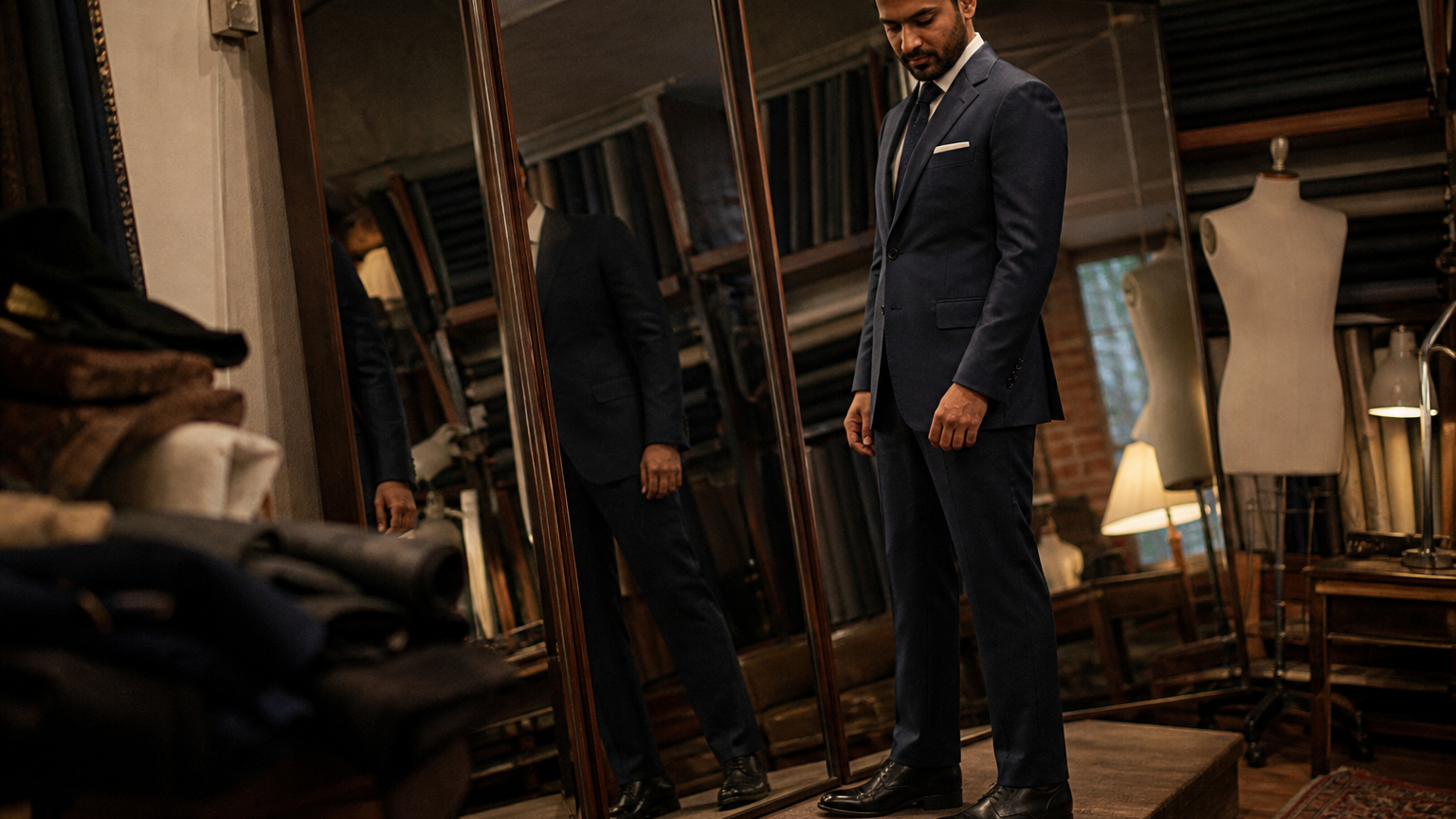
A wedding suit should fit closely at the shoulders, follow the body through the chest and waist without pulling, and end at a trouser length that just touches the shoe. Every other detail is adjustable by a tailor, but the fit is what people notice in photographs years later. This guide goes point by point through what a correct fit looks like, what a tailor can and cannot change, and how far ahead to start if the suit needs work.
Start With the Shoulders
The shoulder is the one part of a jacket a tailor cannot easily rework, so it has to be right off the rack. The seam should sit at the edge of your shoulder, where the arm begins. If it extends past that point, the jacket is too big. If it digs in or the fabric ripples below the collar, it is too small. Buy the jacket that fits the shoulders and have the rest taken in.
The Jacket Body and Length
Button the top button and check the front. A small amount of shaping through the waist is correct; an X-shaped pull across the button means it is too tight. The jacket length should cover your seat and roughly reach the knuckle of your thumb when your arms hang straight. The collar should rest against your shirt collar with no gap.
Sleeve length matters more than most men think. The jacket sleeve should end at the wrist bone and show about a quarter to half an inch of shirt cuff. This is a standard, inexpensive alteration.

The Trousers
The waistband should hold without a belt cinched tight. The seat should be smooth, not straining or sagging. For the leg, a slim or tailored trouser skims the leg without gripping the thigh. The hem is a personal call: a slight break, where the fabric touches the shoe with one soft fold, is the safe choice for a wedding. No break looks sharp but is less forgiving if you are on your feet all night.
The Shirt Underneath
A dress shirt that fits changes how the whole suit looks. The collar should allow one finger between the fabric and your neck. The shoulder seam should sit at your shoulder, and the cuff should stay at the base of your hand when you reach forward so it shows past the jacket sleeve. A billowing shirt body ruins an otherwise good suit; have it taken in if needed.
What a Tailor Can Change
- Take in the jacket waist and sides
- Shorten or lengthen the sleeves
- Slim the trouser leg and set the hem
- Adjust the trouser waist and seat
- Taper a shirt body
What a tailor should not attempt on a budget: reshaping the shoulders, changing the jacket length significantly, or moving the buttoning point. If those are wrong, choose a different suit.
Timing
Start six to eight weeks out. That leaves time for a first fitting, the alterations themselves, and a second fitting to confirm. For a group of groomsmen ordering together, add another two weeks so everyone is measured and adjusted before the rehearsal. Coordinating a party is easier when the suits share one fit and one tailor, which our guide on coordinating groom and groomsmen attire covers in full.

A wedding suit does not need to be expensive to look right. It needs correct shoulders, a clean chest and waist, sleeves and hems set by a tailor, and a shirt that fits under it. Get those five things done and the suit will hold up in every photo. For the wider planning picture, see our wedding suit color combinations guide or browse wedding suit packages.