Semi-formal wedding attire for men raises more confusion than any other dress code on a wedding invitation. Is it a suit with a tie? A suit without one? A blazer? What about a tuxedo? The good news is that the answer is simpler than the debate around it suggests: a well-fitted suit is the right call, and the rest of the decisions – tie, shirt, shoes – are a matter of how much polish you want to add above that baseline.
What Does Semi-Formal Mean for a Wedding?
Semi-formal wedding attire sits between cocktail attire (more formal) and smart casual (less formal). For a wedding specifically, it means a suit and dress shirt is the floor and a tuxedo is above the ceiling.
A common source of confusion: “semi-formal” is sometimes used interchangeably with “cocktail attire” on wedding invitations. When you see either term and are unsure how the couple is interpreting it, dress toward the more formal end. You will never be wrong arriving in a well-fitted suit with a tie when the dress code is semi-formal. You may be underdressed without one.
The practical rule: a suit is always right at a semi-formal wedding. The tie is optional. The blazer-and-jeans look is not appropriate. Smart casual is below the dress code. Semi-formal has a floor.
Semi-Formal vs. Cocktail Attire at a Wedding
These two dress codes are often conflated, but they are not identical. Here is where the line sits.
- Cocktail attire: A suit with a tie or bow tie is standard. Polished dress shoes are expected. This is the more structured of the two dress codes – the tie is expected, not optional.
- Semi-formal: A suit with or without a tie. A dress shirt with an open collar is acceptable. The latitude is slightly wider, particularly around the tie and collar.
- What both have in common: A suit is required. Neither dress code allows jeans, khakis without a jacket, or casualwear. Both are clearly above smart casual.
For a deeper look at how these codes fit within the full spectrum of formal dress codes, the formal events guide maps every level from smart casual to black tie.
Semi-Formal Wedding Suit Options
Suit color is where semi-formal gives you real flexibility. These are the colors that work and when to use them.
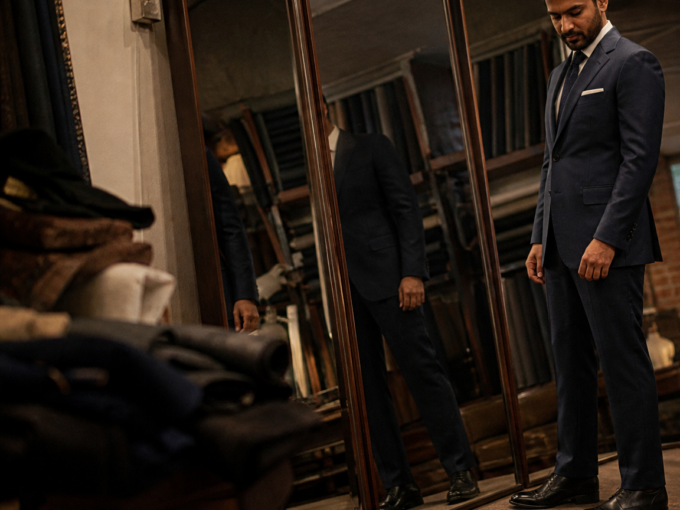
- Navy: The most reliable semi-formal wedding suit color. Works across every season, every venue, and every time of day. Pairs with almost any shirt and tie combination and photographs cleanly against white wedding attire.
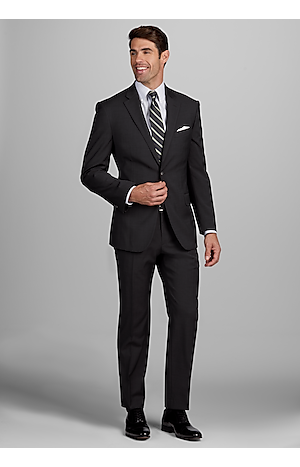
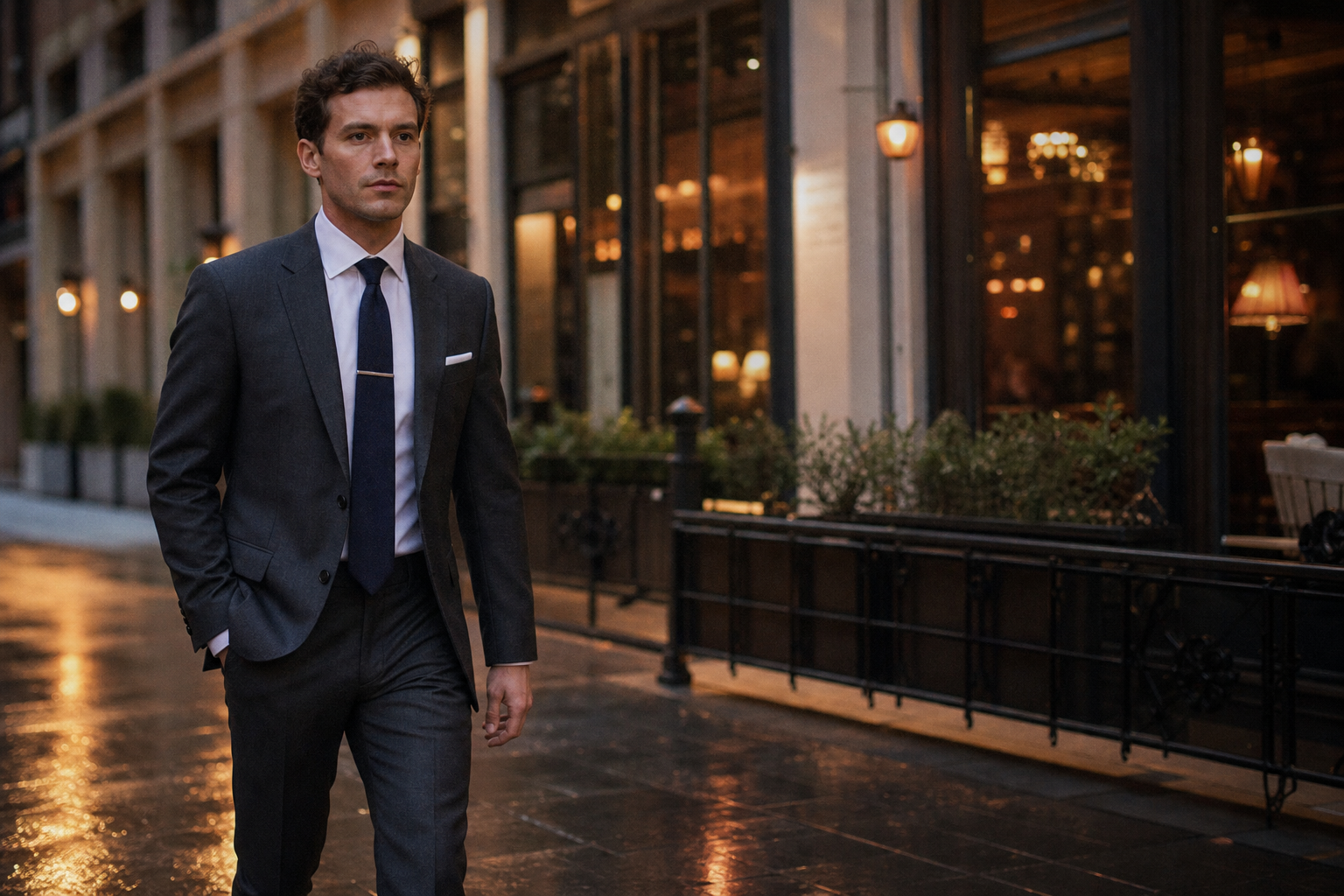
- Charcoal grey: Slightly more formal than navy. Excellent for evening semi-formal weddings and fall or winter events. Pairs well with a white dress shirt and a dark or burgundy tie.
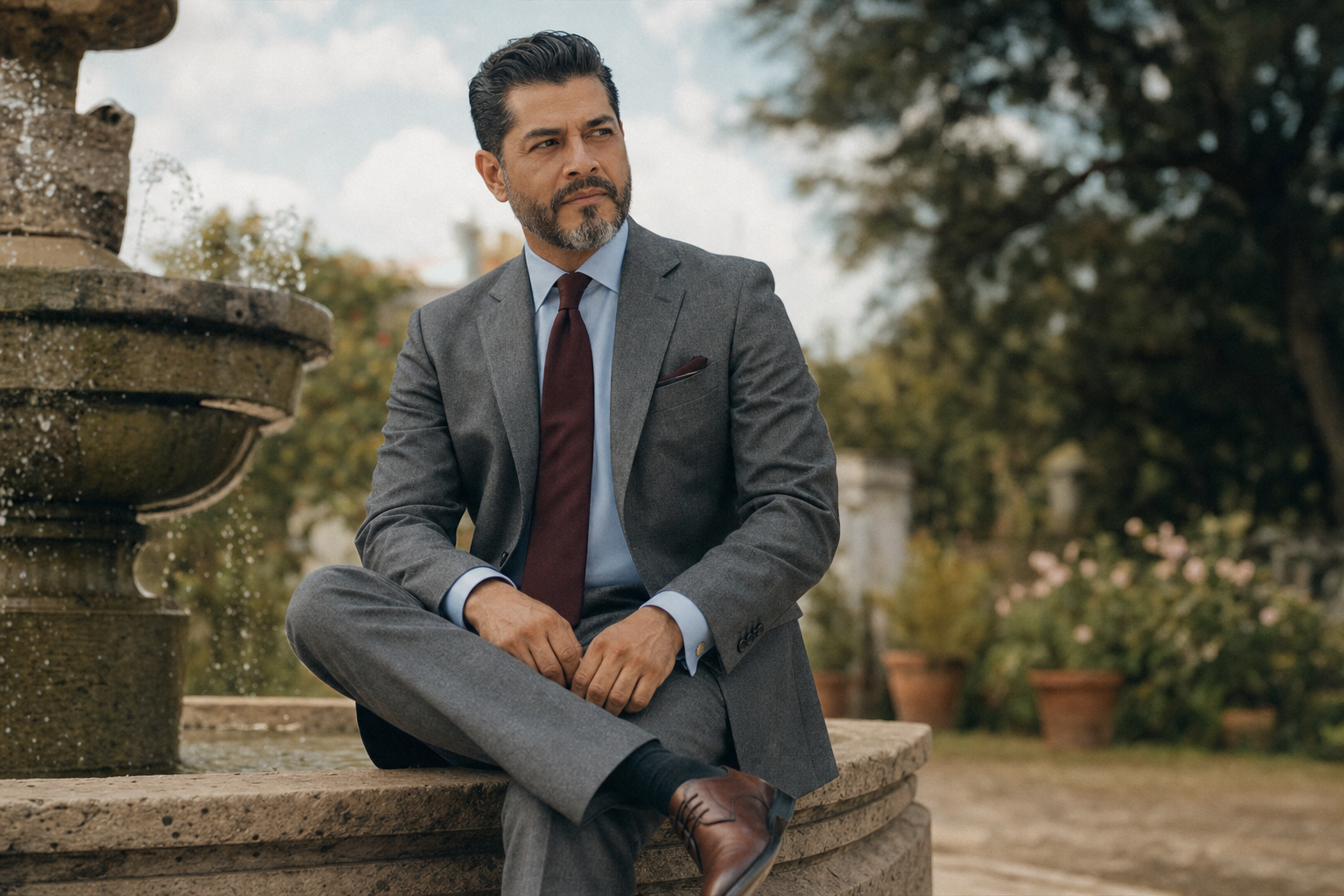
- Medium grey: The daytime and spring-summer option. Less formal than charcoal, reads appropriately seasonal at lighter, outdoor semi-formal events. A light blue shirt with medium grey is one of the cleanest semi-formal combinations available.
- Tan or stone: Acceptable at outdoor or summer semi-formal events, particularly garden party or beach-adjacent settings. A grey suit in medium tone is often a safer choice if you are uncertain about how formal the event will feel.
- Avoid: Very light grey or ivory suits unless the invitation specifies a daytime or outdoor semi-formal setting. These read too casual at evening semi-formal events.
What to Wear with a Semi-Formal Wedding Suit
The components below the suit are where you calibrate the level of polish within the semi-formal range.
- Dress shirt: White or light blue are the most reliable choices. A point collar or spread collar both work. Avoid novelty prints or loud patterns at a semi-formal event.
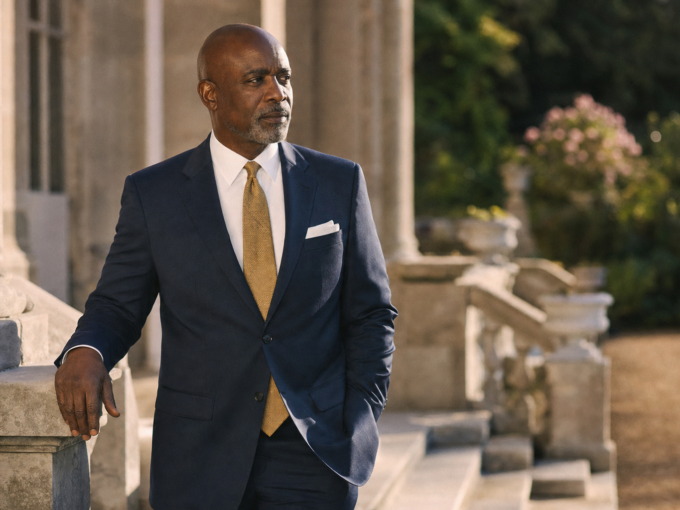
- Tie: Optional at semi-formal, but recommended. A solid or subtle pattern in a complementary color adds visible polish, especially in photographs. If you skip the tie, ensure the suit fit is impeccable – a poorly-fitted suit without a tie reads careless, not intentional.
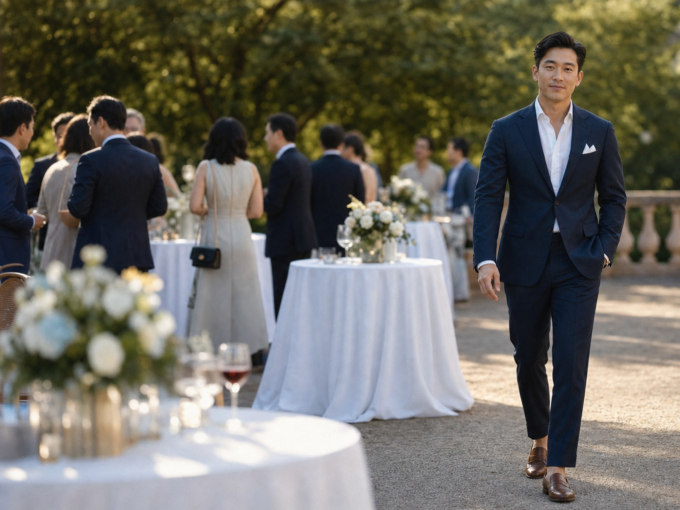
- Pocket square: The best replacement for a tie if you are going open-collar. A simple white or complementary-color pocket square adds structure and polish without requiring a tie.
- Belt or suspenders: Either is appropriate. Match the belt to the shoe color. Keep suspenders dressy, not novelty.
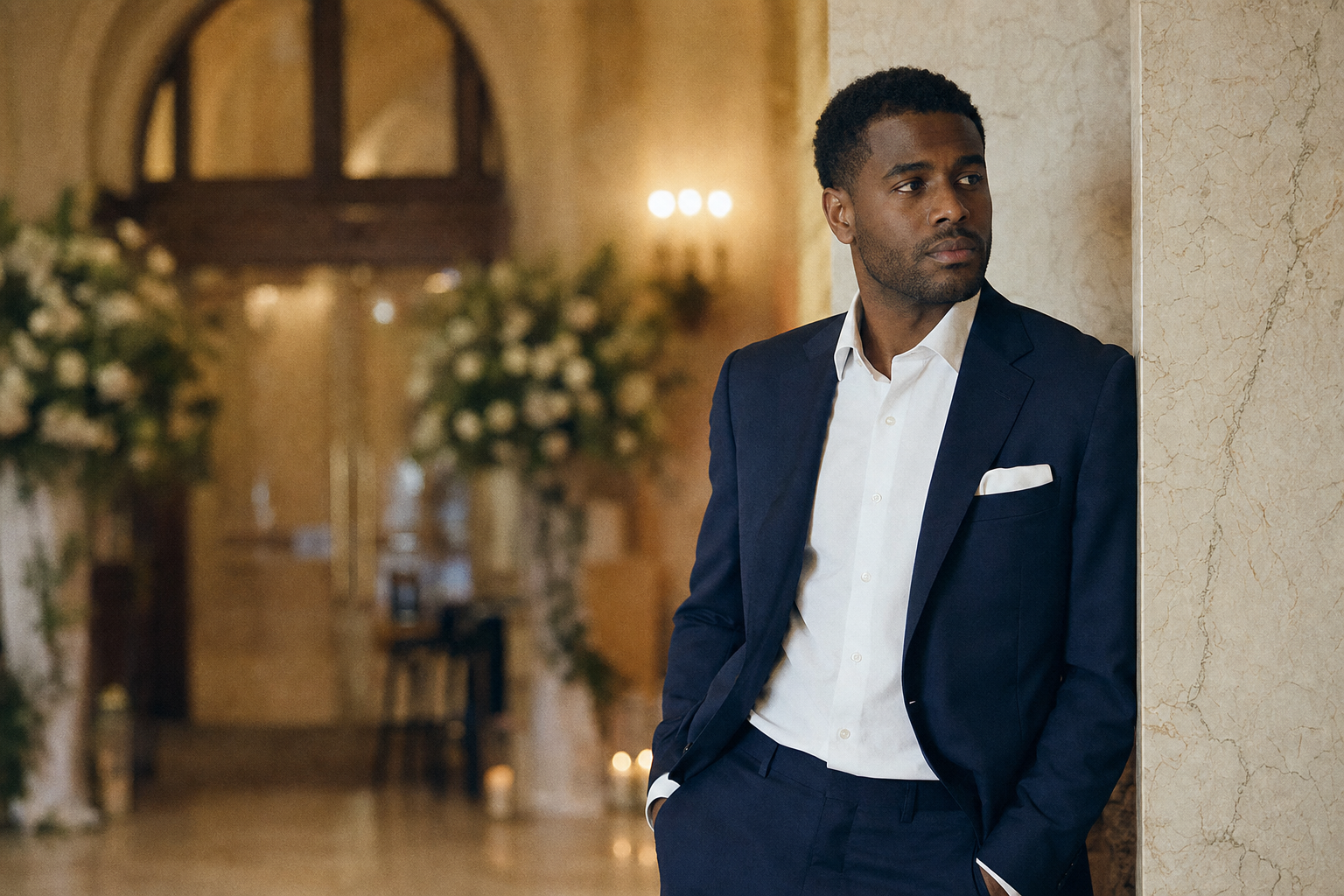
A navy suit with a white dress shirt and no tie is one of the cleanest modern semi-formal looks available – it reads polished and intentional without being overdressed for the occasion.
Semi-Formal Wedding Shoes
Footwear at a semi-formal wedding should read formal without being stiff. These options cover the range.
- Oxford or derby in black or dark brown: The standard choice. Black works with charcoal and navy. Dark brown adds a modern touch with navy and pairs naturally with earth-tone suits.
- Loafers: Acceptable, especially at daytime or outdoor semi-formal events. A leather loafer in black or dark brown reads polished without being heavy.
- Monk straps: A good elevated choice with a modern look. The hardware adds a subtle detail that works well at semi-formal events.
- Avoid: Chelsea boots (reads too casual), sneakers (not appropriate at any formal or semi-formal wedding), and open-toed sandals.
Accessories and Final Details
The details are where a good semi-formal outfit becomes a polished one.
- Watch: A dress watch with a leather strap. Leave the sport or casual watch at home for wedding events.
- Tie bar: If you are wearing a long tie, a tie bar is a clean, modern detail that keeps the tie in place and adds visual structure.
- Sunglasses: Fine for transit and outdoor moments between events, but remove them during the ceremony.
- Jacket during the ceremony: Keep it on. Removing the jacket is appropriate at the reception when the dancing starts, not during the ceremony itself.
For broader guidance on what to wear to a wedding across all dress codes, the general wedding attire guide covers the full spectrum from casual to black tie.
Semi-formal at a wedding means a well-fitted suit. Everything else is a matter of how much polish you want to bring to the occasion.