Chinos and khakis get used as interchangeable words, and in casual conversation that is fine. But they are not the same pant, and the difference matters once you are standing in front of a closet trying to decide what covers a Friday at the office, a dinner out, and a Saturday errand run without three separate pairs. Chinos are the tailored, slim-through-the-leg cousin cut from twill. Khakis are the looser, more relaxed original, named for the drab color the fabric was dyed before “khaki” became a catch-all term for any tan pant. Here is what actually separates them, a point-by-point comparison, and which one to reach for first.
What Are Chinos
Chinos are a cotton twill pant with a close, tapered fit through the thigh and leg, a flat or slightly finished front, and a finer weave than most casual trousers. The twill weave gives the fabric a subtle diagonal texture and a bit more structure than plain cotton, which is why chinos hold a crease and drape cleanly instead of bagging at the knee by midday.
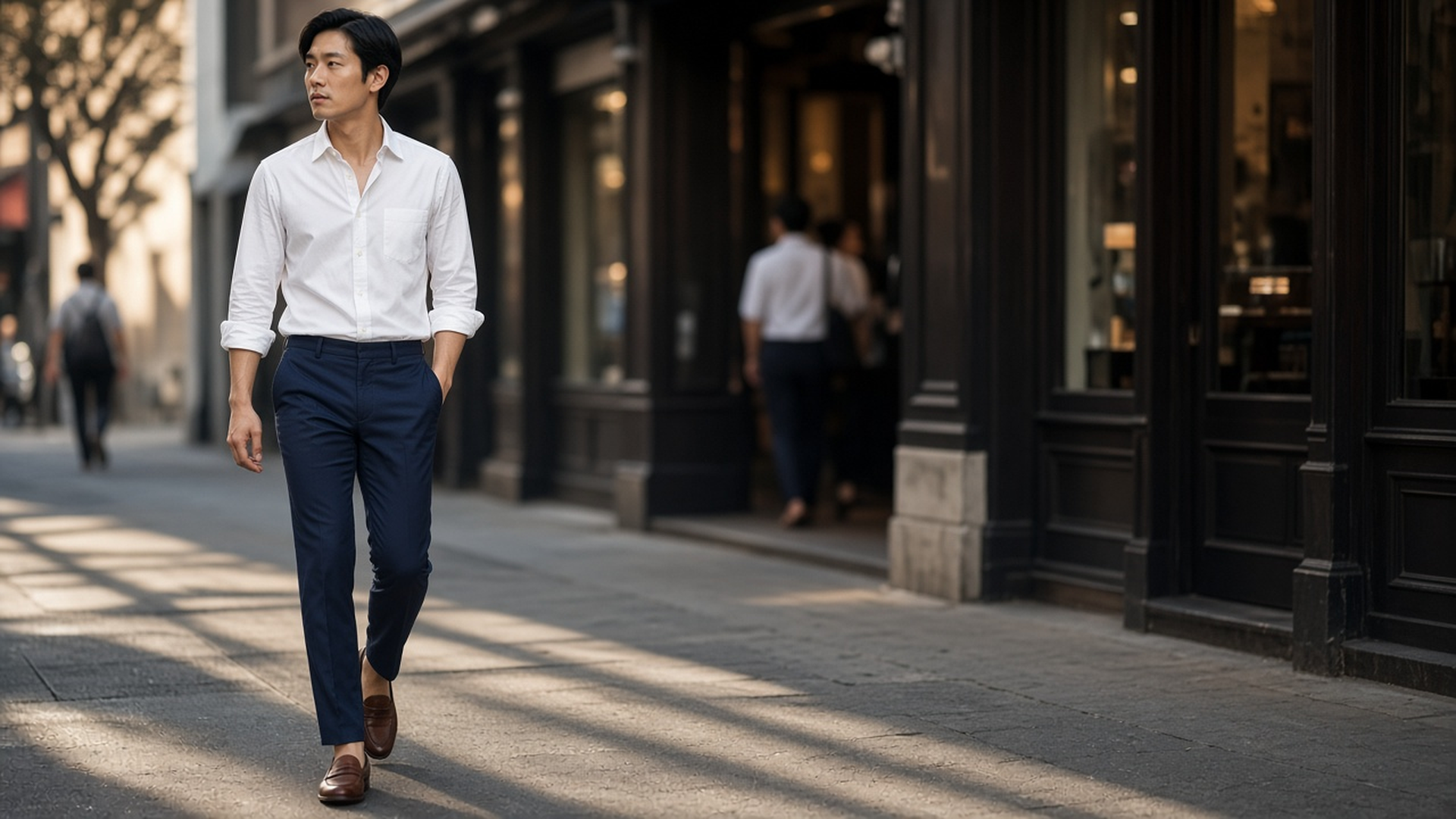
The cut is the real signal. Chinos are built closer to dress-pant proportions, with a slimmer rise and leg than the original military khaki, which lets them move between a blazer and a t-shirt without looking like they belong to two different outfits. Color range runs wide too: navy, stone, olive, and black chinos are all standard, not just the tan the name suggests.
What Are Khakis
Khakis are the pant chinos descended from: a cotton twill trouser first issued to British and American soldiers in South Asia in the 1840s, dyed with a dust-colored pigment the Hindi and Urdu word “khaki” describes. That military cut was fuller through the seat and thigh, built for movement and durability rather than a clean line.
In modern retail, “khakis” usually means that looser, more relaxed silhouette in the classic tan or olive shade, sometimes with a bit more room in the rise. The fabric is still cotton twill, often a heavier weight than a dress chino, which is part of why khakis read as more casual even in the same color.

Chinos vs. Khakis: Point by Point
Laid side by side, the differences come down to fit, weight, color range, and where each one is appropriate. Neither is more “correct,” they just solve different problems in a wardrobe.

| Attribute | Chinos | Khakis |
|---|---|---|
| Fit | Slim to straight, tapered leg | Fuller seat and thigh, relaxed leg |
| Fabric weight | Lighter, finer twill | Heavier, more durable twill |
| Color range | Navy, stone, olive, black, tan | Tan and olive, mostly |
| Best with | Blazer, dress shirt, loafers | Polo, casual button-down, sneakers |
| Setting | Business casual, dinner, date night | Weekend, yard work, travel |

Which One Should You Buy
If you only own one pair, buy a slim or straight-fit chino in navy or stone. It is the more versatile pant of the two: dressy enough for a business casual office and relaxed enough for dinner or a weekend outing, and it holds its shape through a full day in a way a looser khaki does not. For a full breakdown of styling chinos up or down, see our guide on how to wear chinos.
Khakis earn their place for anything that puts the fabric through real wear: yard work, travel days, or a casual weekend where you want room to move and do not need a tailored line. The heavier twill takes abuse better than a finer chino cloth, and the fuller cut is more comfortable for long stretches of standing or walking.
Fit matters more than the label either way. A chino that is too slim through the thigh looks costume-y, and a khaki that is too loose reads sloppy rather than relaxed. Try both cuts before deciding which name actually fits your build, and check the rise, not just the waist, since that is where most off-the-rack pants go wrong first.
Styling Both Correctly
Chinos pair naturally with a sport coat and an oxford shoe for anything approaching business casual, or with a crewneck sweater and clean sneakers for an off-duty look that still reads intentional. Keep the hem breaking just above the shoe, not pooling at the ankle, since that single detail does more for the silhouette than the color choice.
Khakis lean casual by nature, so build around that rather than fighting it. A khaki with a chambray shirt and boots is a strong cold-weather combination, and the same pant with a polo and canvas sneakers covers warm-weather weekends. For more on where the line between dressed-up and dressed-down actually sits, our smart casual guide covers the full range between the two.
Both pants deserve a place in a working wardrobe. The mistake is treating them as the same purchase. Buy the chino for the fit and the range it gives you, and add the khaki once you know where the relaxed cut actually gets worn.