Chinos are the pant that gets you dressed without overthinking it — but most men only wear them one way. Understanding how to wear chinos across different dress codes unlocks one of the most versatile pieces in a working wardrobe: a pant that moves from Monday meetings to weekend dinners without looking like it tried too hard in either direction. This guide covers fit, outfit formulas, shoe pairings, and the specific contexts where chinos work best.
What Are Chinos?
Chinos are pants constructed from a mid-weight twill weave cotton fabric, cut with a relatively flat front and a cleaner silhouette than casual trousers. The name comes from the Spanish word for China, where the fabric was originally sourced for military uniforms. Two distinctions worth making:
Chinos vs. khakis: Khaki is a color — a warm tan or beige — not a pant style. A chino can be khaki-colored, but not all chinos are khaki, and not all khaki pants are chinos. The terms are often used interchangeably in retail, which adds to the confusion, but if someone says “wear chinos” they mean the pant construction, not the color.
Chinos vs. dress pants: Dress pants are typically cut from wool or synthetic blends with a structured drape, often with a pressed crease. Chinos are more relaxed in construction and formality — appropriate for business casual and smart casual, but not for business formal. See dress pants details for a full breakdown of what separates the two.
Chinos vs. jeans: Chinos are the step up from jeans in most dress codes. Where jeans read casual or smart casual, chinos read business casual. The cleaner construction of the chino — no rivets, no raw hem, less visible texture — is what earns it a seat in the business casual conversation that jeans typically can’t have.
How Chinos Should Fit
Fit is where most men go wrong with chinos. The pant is forgiving enough that an average fit reads acceptable, but a well-fitted chino reads sharp in a way that a baggy one never will. Work through these checkpoints:
- Waist: No bunching at the back, no visible waistband gap. If you can fit more than two fingers between your waist and the waistband, go down a size.
- Thigh: Enough room to move without fabric pulling across the seat or inner thigh. If the fabric pulls when you sit, the seat is too tight.
- Leg: Tapered through the knee is the most versatile silhouette. A straight or slightly tapered leg reads professional; wide legs read dated in most business casual contexts.
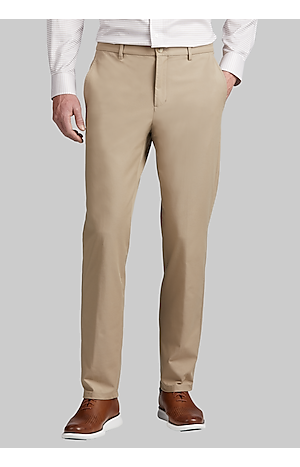
- Break: A slight break (where the pant hem touches the top of the shoe) works for most occasions. No break is preferred for business casual — a clean hem with no stacking reads more polished and works particularly well with loafers and Oxfords.
When in doubt, err shorter. A clean hem with no break is harder to get wrong than a heavy break that drags.
How to Wear Chinos for Business Casual
The core business casual chino outfit: navy or medium grey chinos, a button-down dress shirt or Oxford cloth button-down (tucked), and leather loafers or cap toe Oxford shoes. This combination works in virtually any business casual environment and requires no further thought. If you want to add a layer, a sport coat or unstructured blazer over the shirt pulls the outfit toward the more formal end of the business casual range.

Color logic: navy chinos are the most versatile — they pair with white, light blue, grey, and most solid dress shirt colors. Medium grey chinos are a strong second choice for business casual and substitute well for dress pants in environments that permit it. Olive and tan chinos read more casual and are better suited for smart casual or relaxed office environments.
What to avoid: athletic sneakers undercut the business casual read immediately, regardless of how clean they are. Untucked shirts that extend below the hip create a sloppy silhouette with chinos. Too much break on the hem looks unintentional rather than relaxed. See the full business casual guide for men for a broader look at how chinos fit into the dress code.
How to Wear Chinos for Smart Casual
Smart casual gives chinos more room to work. The outfit formula: chinos in olive, tan, or stone with an Oxford cloth button-down (OCBD) left slightly open at the collar, or a polo shirt in a solid or subtle stripe. Clean leather sneakers or loafers work here — a white leather sneaker with dark navy chinos and an untucked OCBD is one of the most reliable smart casual combinations available. A rolled cuff on the hem adds a casual note and shows off the shoe, which works particularly well with loafers.
Color choices for smart casual lean warmer and more casual than business casual: olive, tan, stone, and off-white chinos all read appropriately relaxed. Navy chinos in smart casual still work, but they push the outfit toward the more dressed end of the spectrum. Read the men’s polo shirt guide for pairing logic with polo shirts specifically — the polo-and-chino combination has enough nuance to merit its own breakdown.
What Shoes to Wear with Chinos
Loafers
The best all-around chino shoe. Penny or tassel loafers for smart casual; bit loafers for business casual. Tan or cognac suede loafers with navy chinos is the combination worth starting with.
Oxford Shoes
Cap toe or wingtip Oxfords elevate chinos into business casual territory immediately. Brown Oxfords with grey or navy chinos are the standard business casual move; black Oxfords with navy chinos work for dressier occasions.
Clean Leather Sneakers
Smart casual only. A white leather sneaker — minimal branding, clean construction — works with chinos for weekend and casual occasions. Do not wear athletic or running sneakers with chinos in any context that reads professional.
Chelsea Boots
Fall and winter option. A black or dark brown Chelsea boot with slim chinos adds structure and seasonality to the outfit. Works for smart casual and pulled-up business casual when paired with a blazer.
Chino Colors and What They Signal
The color of the chino does meaningful work in setting the outfit’s formality register.
- Navy: The most versatile chino color. Leans toward dressed up, pairs with nearly every shirt and shoe combination, appropriate from business casual to smart casual.
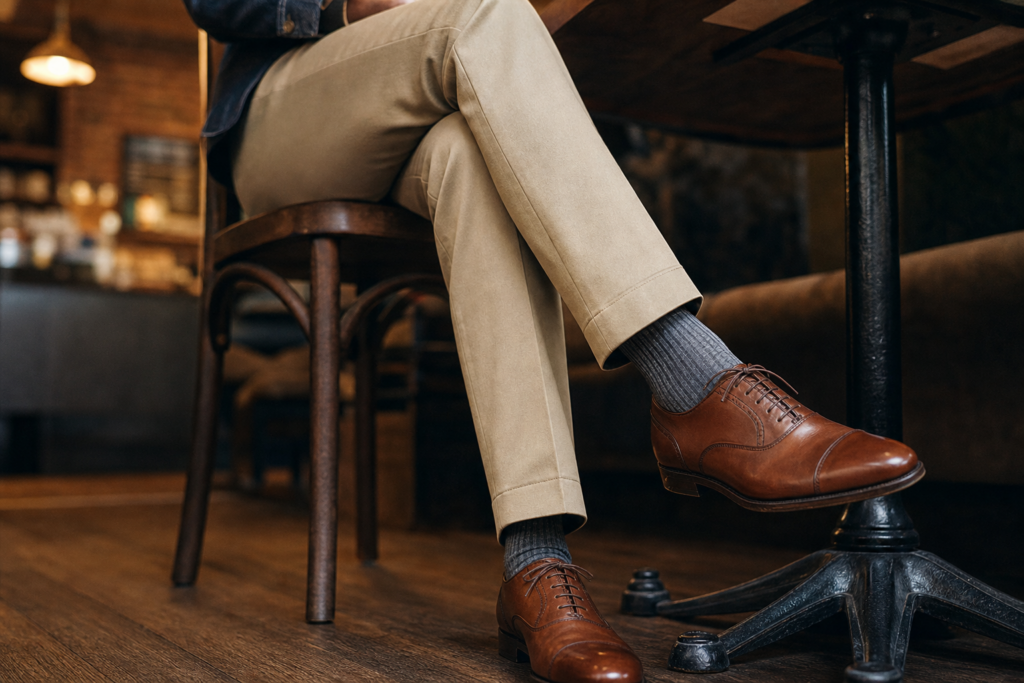
- Tan / Khaki: The classic chino color. Works across casual through business casual; pairs especially well with white, blue, and earth-tone shirts.
- Olive: Reads casual. Works for smart casual and weekend outfits; pairs best with earth tones, cream, and white.
- Grey: Business casual territory. Substitutes for dress pants in environments that permit chinos; pairs well with white, light blue, and navy shirts.
- Stone / Off-white: Summer and smart casual. Pairs well with navy or white — a strong warm-weather combination with a polo or OCBD and loafers.
Best Shirts to Wear with Chinos
The shirt choice does as much as the chino color to set the occasion.
- Oxford cloth button-down (OCBD): The default smart casual shirt. Works tucked for business casual, untucked for smart casual. Its slightly textured weave pairs naturally with the casual construction of chinos.
- Polo shirt: Summer and weekend. Works particularly well with loafers and a slim or tapered chino. See the men’s polo shirt guide for outfit formulas.
- Quarter-zip sweater: Fall and winter layering option. A merino quarter-zip over a dress shirt with navy chinos reads polished without being formal. The quarter-zip sweater guide covers fit and color pairing in detail.
- Dress shirt (tucked): Business casual. A spread-collar dress shirt tucked into grey or navy chinos, with a blazer optional, is a legitimate office outfit in business casual environments. This combination works when the chino fit is clean and the break is minimal.
The right pair of chinos does more work in your wardrobe than almost any other piece. Get the fit right — specifically the break and the seat — and the styling decisions that follow become straightforward. Navy chinos, white OCBD, cognac penny loafers: that single combination covers more occasions than most men realize, and it starts with the fit.