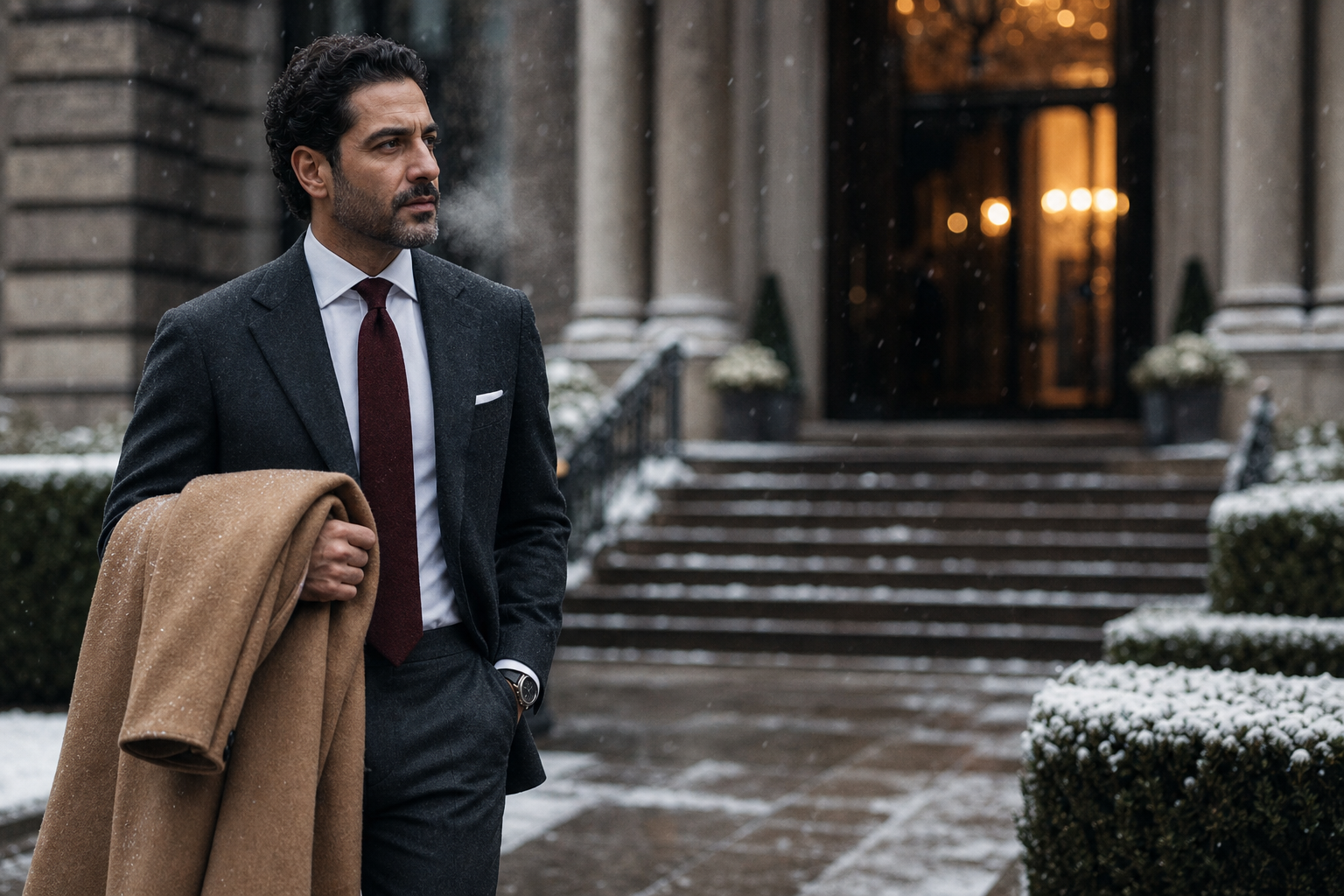
Winter wedding attire for men usually means dark fabrics, heated venues, and one question almost nobody addresses directly: what do you do with your overcoat when you walk inside? Cold weather gives you a better color palette, heavier fabrics that look appropriate, and the opportunity to layer in ways summer weddings do not allow. Here is how to take advantage of all of it.
The Winter Wedding Color Palette
Winter is where the darker end of the suit color spectrum belongs. The season does most of the work for you here – deep, rich tones look right in winter in a way they do not in July.
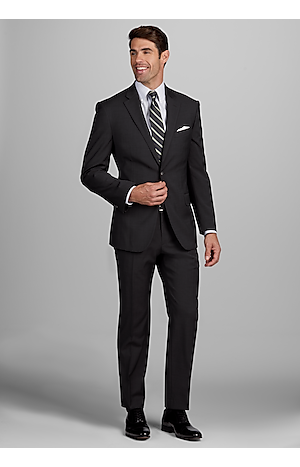
- Charcoal grey: The strongest winter wedding suit color. It reads formal and seasonal in a way that no other color quite matches. Charcoal is the first call for cocktail and formal winter weddings.
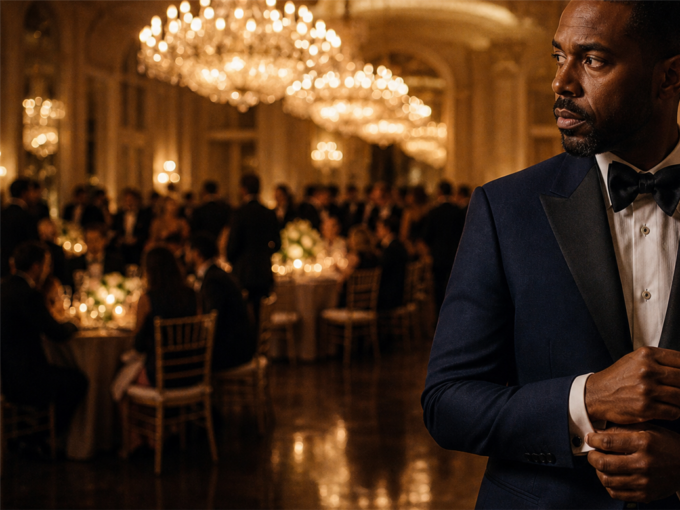
- Midnight navy: Deep navy sits close to black in the color register. It reads formal without the severity of black and photographs well against white winter settings. A strong choice for black tie optional events.
- Black: Appropriate at formal and black tie winter weddings. In a heated winter venue with chandeliers and formal table settings, a well-fitted black suit is a strong visual choice.
- Deep navy (not mid-tone): The key distinction for winter is that mid-tone navy reads slightly casual. Go darker. True midnight or near-black navy is the right choice for winter events.
- Brown and burgundy as accents: Work at rustic or barn winter weddings as the primary color, or as tie and pocket square accents against a darker suit.
- Avoid: Tan, stone, ivory, and light grey. These are warm-weather colors and they look seasonally wrong at a winter wedding regardless of how well the suit fits.
For a full breakdown of suit color decisions across every season and wedding type, the what color suit to wear to a wedding guide covers the decision framework in detail.
Fabrics That Work for Winter Weddings
Winter gives you the widest fabric latitude of any wedding season. Heavier fabrics look right and add genuine warmth in cold-weather settings.
- Mid-weight to heavyweight wool: The foundation of winter wedding dressing. It provides structure and warmth without bulk, and it drapes and photographs well in formal settings.
- Flannel wool: Slightly heavier than standard worsted wool with a soft, matte texture. Appropriate for formal settings and reads exceptionally well in winter photography.
- Avoid linen and cotton-linen blends at winter weddings. These fabrics are not suited to cold weather either practically or visually. They look seasonally out of place in December.
- Velvet: A bold choice for black tie and holiday formal events. Velvet tuxedo jackets and velvet blazers work in very formal winter settings. Not for the faint of heart, but absolutely correct when the setting calls for it.
Layering for Cold Weather Without Overbuilding
Winter weddings invite layering that summer events do not. Here is how to add warmth without adding bulk.

- Dress shirt and tie: The standard base layer. A well-chosen tie in a winter color – deep burgundy, forest green, subtle plaid – adds visual warmth to the overall look.
- Waistcoat or vest: The best cold-weather layering addition for a wedding. A matching or complementary waistcoat adds a formal layer without visible bulk under the jacket. It also keeps the torso warm when the jacket comes off at the reception. A suit vest guide covers fit and formality considerations.
- Pocket square: Adds color and visual warmth without adding bulk. A richer fold and a winter color in the pocket square can anchor the full look.
- Avoid: Turtlenecks under a suit jacket. While the idea is sound, the execution reads too casual for most wedding settings. A dress shirt with a tie is the correct base layer at a winter wedding.
The Overcoat Question
The overcoat is the most practical detail most men do not think through until they are standing outside in January with nowhere to put it.
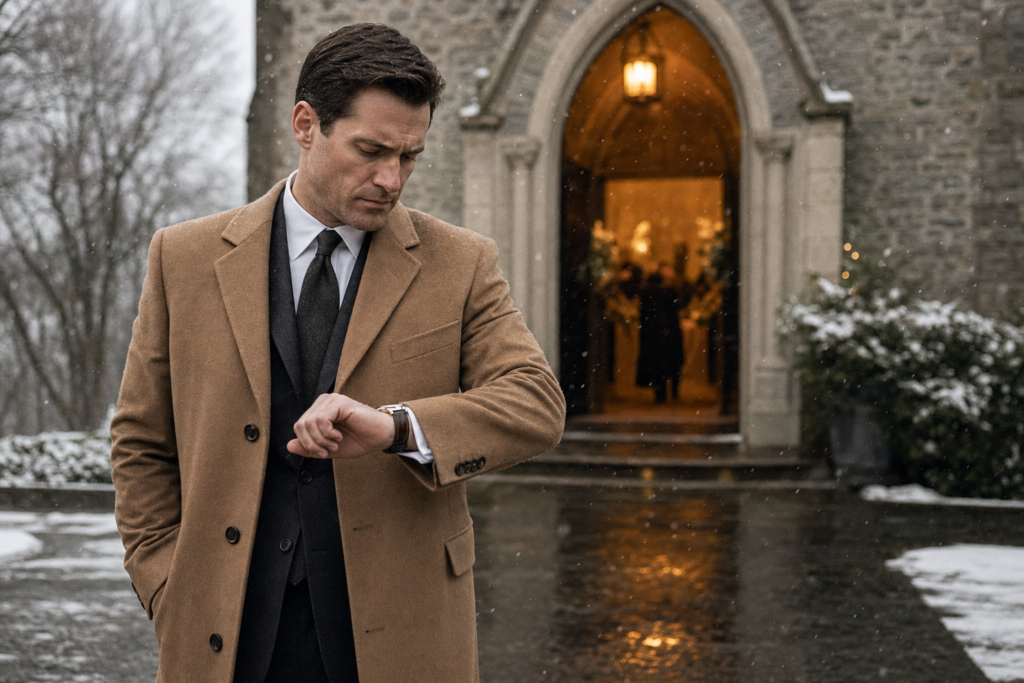
- Bring one. Outdoor winter moments – arrival photography, ceremony entries, departure – require an overcoat. Even a short walk from the car to the venue in January without one is a bad look and a bad experience.
- Wool overcoat: The correct choice. Navy, charcoal, or camel are the three colors that work without competing with the suit underneath.
- Camel coat: The classic formal winter overcoat. A camel coat over a charcoal or navy suit is one of the strongest winter formal looks available. It photographs exceptionally well against winter backgrounds.
- What to do with it inside: Check it at coat check or return it to the car. Do not wear the overcoat during the ceremony or the reception. It belongs outside, not at the table.
- Scarves: A grey or navy wool scarf is appropriate and practical for cold arrivals and departures. Keep it simple – no novelty prints at a formal winter wedding.
Shoes for Winter Weddings
Winter shoe choices are about both formality and practicality. Cold and wet conditions narrow the viable options.
- Polished leather oxfords or derbies: The standard for winter wedding footwear. Black oxfords with charcoal or navy, dark brown leather with navy for a modern alternative.
- Black shoes with charcoal or black: The formal standard combination. No ambiguity, no mismatch risk.
- Dark brown leather with navy: A contemporary choice that reads sharp and intentional. More distinctive than black-on-navy.
- Avoid suede in wet or snowy conditions. Suede absorbs moisture, stains, and does not recover cleanly. Save suede shoes for dry winter settings with no precipitation risk.
Accessories That Complete the Winter Look
Winter gives you the richest accessory palette of any wedding season. Use it.
- Tie: Winter is the right season for richer patterns – a subtle herringbone, a quiet plaid, or a solid in a deep seasonal color. Burgundy, forest green, and midnight blue all work against dark winter suits.
- Pocket square: Keep the fold simple at formal events – a flat fold or a small peak. A pocket square in a richer color or subtle texture adds visual warmth to the look.
- Watch: A dress watch with a leather strap. Winter formal events are the right occasion for a more substantial timepiece.
A winter wedding rewards men who lean into the season. Dark fabrics, rich colors, and the right overcoat make cold weather the best possible backdrop for a sharp suit.