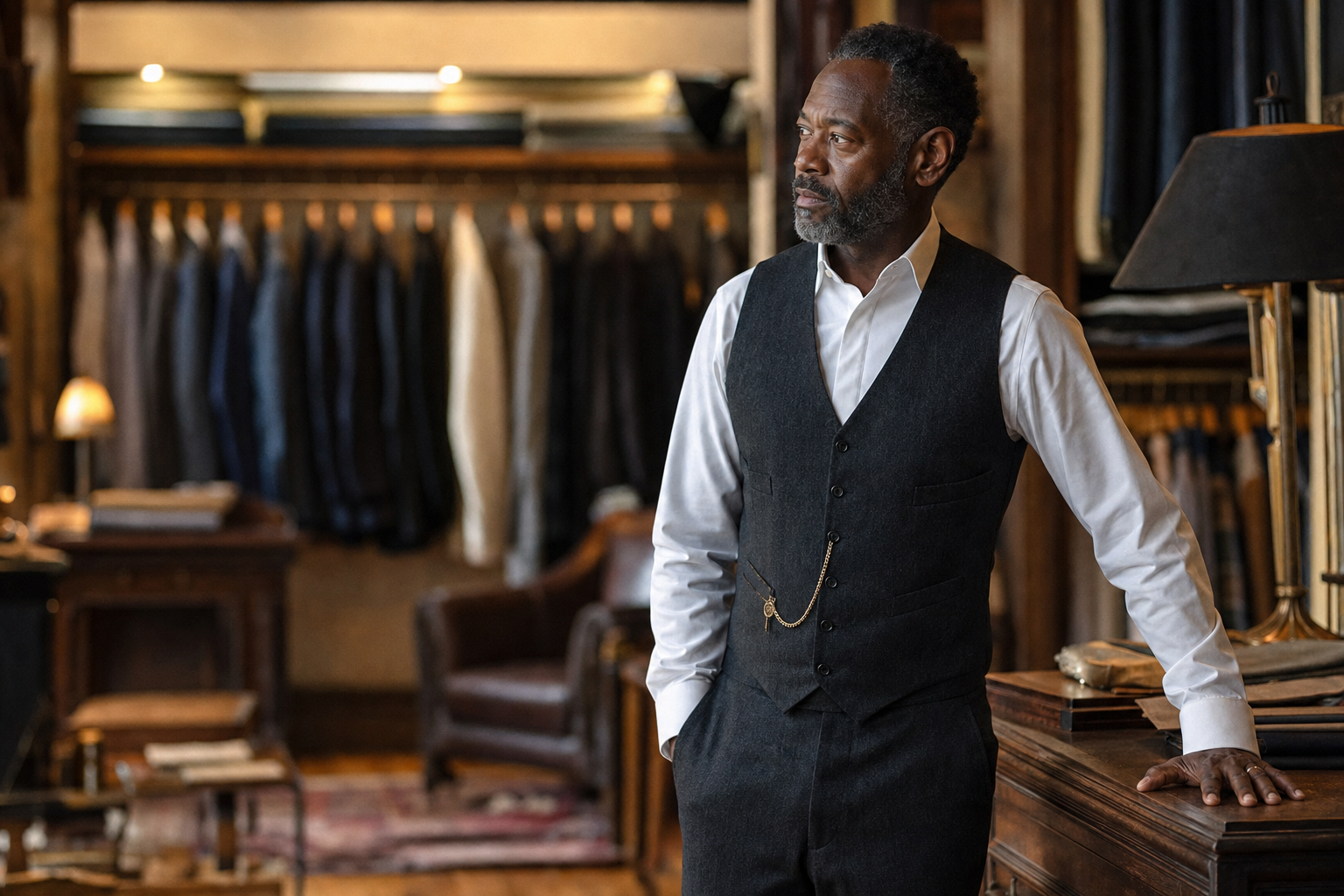
The suit vest is the piece most men skip and few know how to wear correctly when they do put it on. Done right, it adds structure, formality, and a layer of polish that a two-piece suit cannot match. Done wrong, it is a wrinkled fabric rectangle that makes the whole outfit look staged.
Suit Vest vs Waistcoat: Same Thing
In American English, the garment is called a suit vest. In British English, the same piece is called a waistcoat. The words are interchangeable and refer to the same garment: a sleeveless, V-necked, five-button front piece designed to be worn over a dress shirt and under a suit jacket. When you see “waistcoat” in a dress code or style guide, it means vest.
Formal vests are cut to match a specific suit jacket and trousers, making them the third piece of a three-piece suit. Casual vests, including knit vests, tweed vests, and unstructured waistcoats, are cut for wearing separately from a matched suit.
How to Wear a Suit Vest
There are a few rules that apply to every formal suit vest, regardless of color or occasion:
Leave the bottom button undone. This is the same rule that applies to a suit jacket. The bottom button of a vest is meant to remain unfastened. Fastening it creates a pulling, compressed appearance at the waist and looks incorrect to anyone familiar with formalwear.
The vest covers the shirt waistband completely. The hem of the vest should sit at or below the trouser waistband. If any shirt fabric is visible between the bottom of the vest and the top of the trousers when you are standing or moving, the vest is too short or poorly fitted.
The vest is worn under the jacket, not instead of it. In formal contexts, the suit jacket is worn over the vest. The vest is not a substitute for the jacket. The exception is intentional “vest as outerwear” styling in smart casual contexts, which is a deliberate choice that requires the rest of the outfit to support it.
Shirt cuffs still show. With a vest, the shirt cuffs should still extend below the jacket sleeve by about half an inch, the same as without a vest. The vest does not change this relationship.
When to Wear a Suit Vest with the Jacket
Business formal: A three-piece suit in charcoal or navy adds a layer of formality above a two-piece suit. In conservative business contexts, a vest signals attention to dress and detail.

Weddings: Three-piece suits are the most formal non-tuxedo option for a male wedding guest or groomsman. Navy or charcoal three-piece suits are strong choices for formal and semi-formal ceremonies.
Black tie optional: A dark suit with a waistcoat is one of the stronger alternatives to a tuxedo for black tie optional dress codes. The vest adds enough visual formality to hold its own against tuxedos in the room.
Cold weather: The vest adds insulation without adding the bulk of a heavy coat or cardigan. In winter, a vest under a jacket keeps you warmer through the full formal outfit without disrupting the silhouette.

When to Wear a Suit Vest Without the Jacket
Wearing a vest without the jacket is a deliberate style choice that works in smart casual and business casual contexts. It signals that you are aware of how the vest reads, not that you forgot your jacket. The distinction matters: an outfit that looks like a forgotten jacket is a mistake. An outfit built around the vest as the anchor piece is a style choice.
The most reliable version: a vest over a dress shirt with well-fitted dress trousers and leather shoes. The rest of the outfit should be clean, intentional, and appropriately dressed for the context. Vest over a crewneck or with cargo pants is too casual to look intentional.
Before wearing a vest without a jacket, verify the vest fits correctly. A vest that gaps at the buttons or rides up when you sit cannot carry the look on its own.
Fit Rules for a Suit Vest
Fit is more critical for a vest than for almost any other menswear piece. The vest should button cleanly across the chest and abdomen with no pulling at any button. The back should lie flat when the vest is fastened.

The vest hem must cover the trouser waistband completely. This is non-negotiable. Any exposure of the shirt between vest and trousers creates a gap that looks like a sizing error. If the vest is too short, it does not fit.
Slim fit vests are more modern and read as more contemporary. Traditional fit vests are more formal and are the correct choice for traditional business formal environments and more formal weddings. When buying a three-piece suit, the vest is cut to match the jacket and trousers; this is the easiest way to ensure the vest fits correctly within the outfit.
For the foundation of any three-piece look, the suit fit guide covers how fit affects the overall silhouette.
Frequently Asked Questions
Should the last button of a vest be left undone?
Yes. The bottom button of a suit vest is always left unfastened. This is a longstanding convention in formal menswear, following the same rule that applies to single-breasted suit jackets. Fastening the bottom button creates a compressed, pulling appearance at the waist and is visually incorrect in formal contexts.
Can you wear a suit vest without matching trousers?
Yes, in smart casual contexts. A vest worn over a dress shirt with unmatched dress trousers or dark chinos is an appropriate smart casual outfit when the fit is correct and the rest of the outfit is intentional. The vest should not match the trousers in this context; it is being worn as a layering piece rather than as part of a three-piece suit.