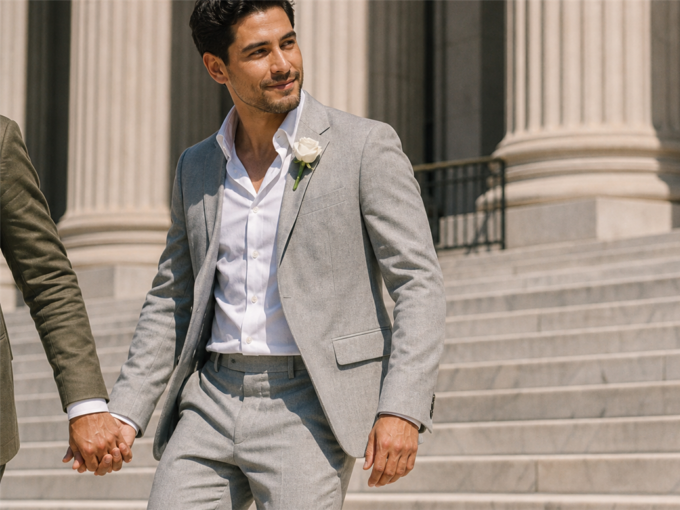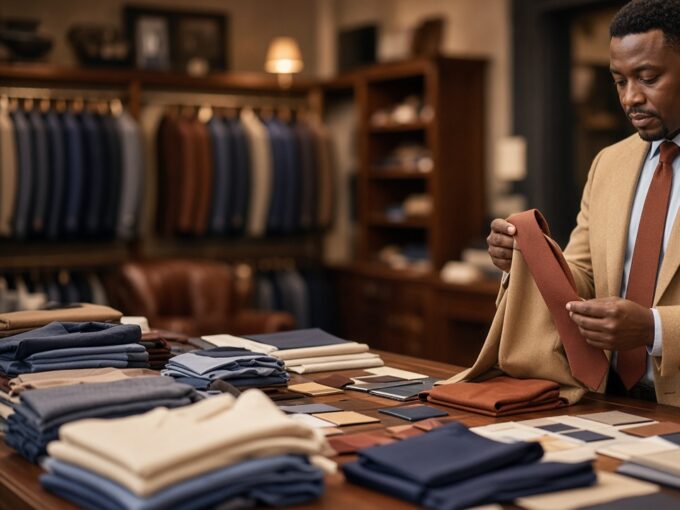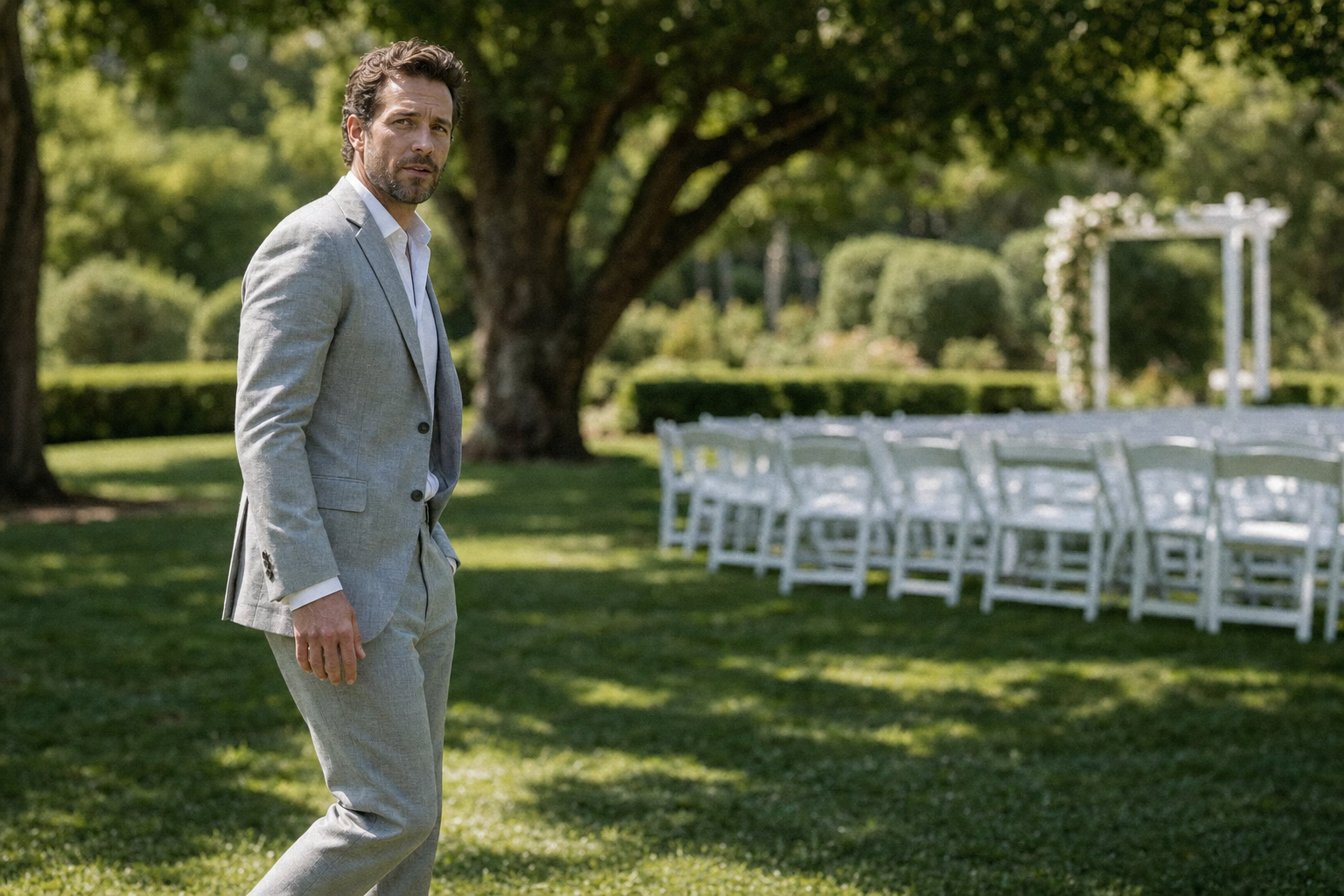
Outdoor wedding attire for men sounds relaxed until you show up in a heavy wool suit at a garden ceremony and spend three hours trying not to sweat through it. Or until you sink a thin-soled dress shoe into soft lawn at the reception. The outdoor setting does not change the formality level – the invitation does that. But it changes the fabric, the footwear, and the practical decisions that determine how comfortable and how sharp you actually look.
Outdoor Wedding Dress Codes and What They Actually Mean
The setting is outdoors. The dress code is still on the invitation, and it takes precedence over assumptions about what outdoor implies.
- Black tie outdoors: Rare, but it happens at estate and vineyard weddings. A tuxedo is still required. Fabric and setting do not change the dress code.
- Cocktail or formal: A suit is required. Lighter fabrics and colors are more appropriate outdoors, but the suit silhouette stays. A tie is expected at cocktail, optional at semi-formal.
- Garden party: The middle zone. A suit or a blazer over trousers both work. This is where linen-blend and lighter color choices make the most sense.
- Casual: Smart casual. A sport coat or blazer with trousers and an open-collar dress shirt is the right formula. No tie required.
When the invitation does not specify, the venue type is your next clue. A vineyard estate implies more formality than a backyard reception. A winery with a private dining room implies more formality than an open-air tent on a farm.
Fabric and Fit for Outdoor Weddings
Fabric choice at an outdoor wedding is not about comfort alone – it affects how you look in photographs and whether your suit holds its shape through a full day outdoors.
- Lightweight wool (super 100s or higher): The versatile choice for formal and cocktail outdoor events. Holds structure, breathes reasonably well, photographs cleanly.
- Linen-blend: Excellent for garden party and casual outdoor settings. Breathes well, wrinkles with character, and reads appropriately relaxed at informal outdoor venues.
- Pure linen: Best for casual and beach-adjacent outdoor events. Wrinkles significantly – acceptable in casual settings, less appropriate at formal outdoor events.
- What to avoid: Heavy tweed, thick flannel, and velvet. They photograph flat, retain heat, and look seasonally wrong at most outdoor settings.
Fit matters as much as fabric. A well-fitted suit in a breathable fabric outperforms a heavier suit with extra length or room. For outdoor events especially, a clean silhouette reads better in photographs against natural backdrops. A linen suit is the strongest choice for warm-weather garden and casual outdoor settings.
Shoes That Work on Grass, Gravel, and Stone
Footwear is the single biggest practical mistake men make at outdoor weddings. The wrong shoe choice is uncomfortable, looks visually mismatched, and can be damaged by the terrain.
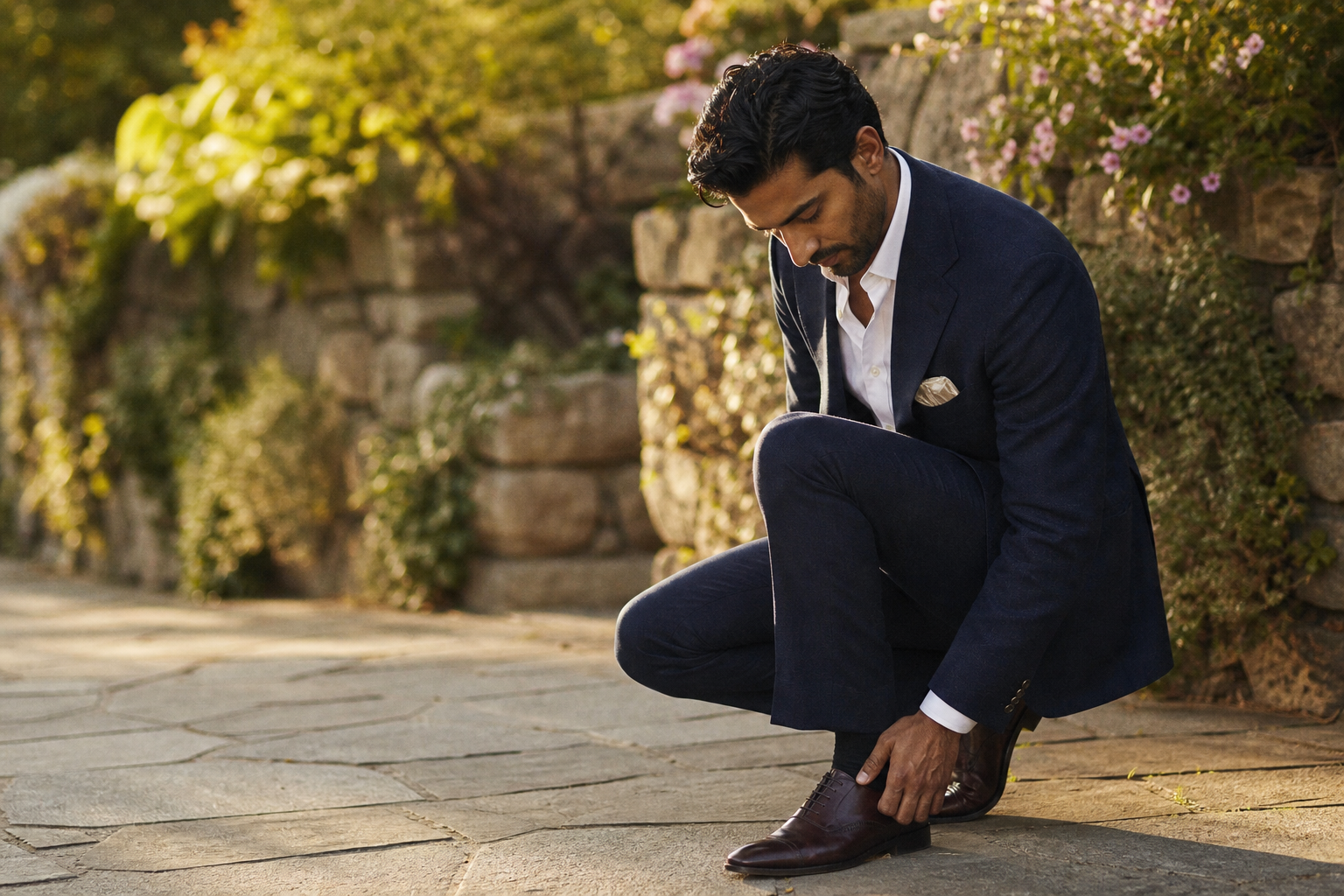
- Loafers: The most versatile outdoor wedding shoe. Slip-on construction makes them practical on varied terrain, and they work across smart casual through garden party formality.
- Derby shoes with a leather or rubber-composite sole: Excellent on stone, hardwood, and gravel. Better grip than a thin leather sole and still reads polished and formal.
- What to avoid on soft ground: Shoes with thin leather soles and narrow heels. They sink in soft lawn and can collect debris in gravel. Save cap-toe oxfords for stone, wood, or hard-surface outdoor venues.
- Suede on wet grass: A poor choice. Suede absorbs moisture and stains easily. Keep suede shoes for dry conditions and hard surface venues.

What to Wear by Outdoor Setting
The setting type gives you the clearest picture of what is expected. Here are outfit formulas for the most common outdoor wedding venues.
- Garden or estate wedding: Navy or grey suit in lightweight wool or linen-blend, dress shirt, tie optional at semi-formal, derby shoes or loafers. The most versatile and photographically reliable choice for formal outdoor settings.
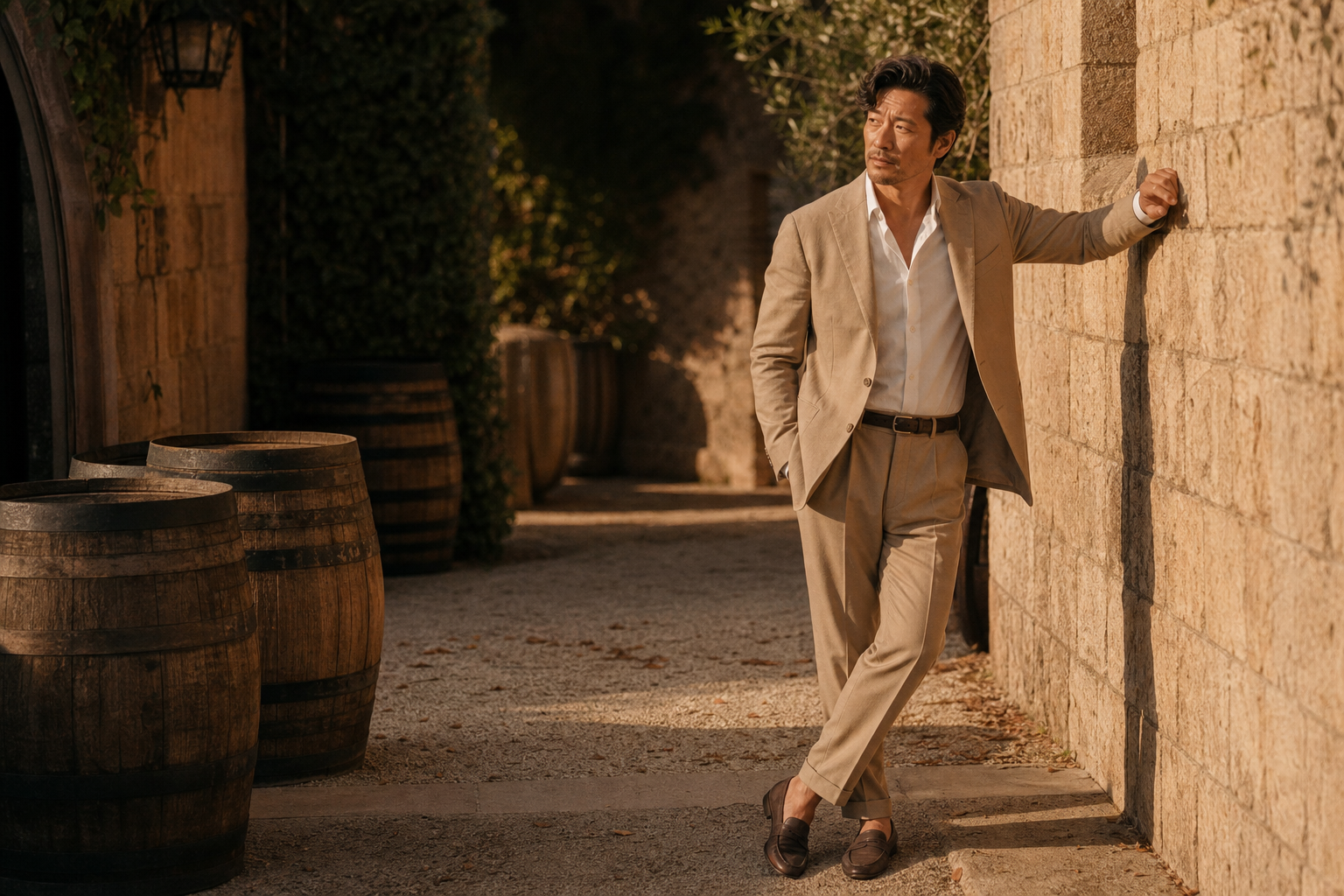
- Vineyard or winery: Medium grey or earth-tone suit, relaxed tie or no tie, leather loafers. Earth tones photograph well against vineyard landscapes. A tan or stone suit reads beautifully at a vineyard ceremony.
- Barn or rustic venue: Tan, olive, or earth-tone suit, open collar or no tie, monk strap shoe or casual dress shoe. Rustic venues call for a slightly more relaxed silhouette without sacrificing polish.
- Backyard wedding: Smart casual – blazer and chinos, loafers, open-collar dress shirt. A full suit can read slightly overdressed at an informal backyard setting unless the invitation specifies otherwise.
- Park or open-air ceremony followed by indoor reception: Dress for the outdoor ceremony and let the indoor reception feel like a bonus. The outdoor photos are the ones that will last.
For semi-formal wedding events held outdoors, the range between a light suit and a blazer-and-trousers look gives you good flexibility to match the setting.
Layering for Outdoor Weddings in Variable Weather
Outdoor events are subject to temperature swings that indoor venues are not.
- Morning ceremonies: Cooler temperatures mean the jacket is essential, not optional. A sport coat or suit jacket keeps you comfortable and polished through the ceremony.
- Afternoon summer ceremonies: Peak heat. Choose the most breathable fabric available. A linen-blend or lightweight wool is the call.
- Evening receptions outdoors: Temperatures drop significantly after sunset. Keep the jacket. A pocket square in the lapel adds visual warmth without adding bulk.
- Fall outdoor weddings: A light overcoat in charcoal or navy worn over the suit is both practical and sharp for outdoor autumn ceremonies. Check the coat at the door once inside.
Colors That Work at Outdoor Weddings
Outdoor settings photograph differently than indoor ones. Colors that look strong in a hotel ballroom can wash out or compete with natural backdrops.
- Navy: The reliable standard for outdoor weddings at any formality level. Photographs well against grass, stone, and sky.
- Earth tones (tan, stone, olive, camel): Excellent at vineyard, barn, and garden settings where natural colors complement the landscape.
- Light grey and medium grey: Work well at daytime outdoor ceremonies. Lighter tones read appropriately seasonal at spring and summer events.
- Avoid all-white: As a guest, white competes with the couple. Keep it limited to your dress shirt.
- Avoid very dark tones in summer heat: Black and very dark charcoal absorb heat outdoors in summer. Save them for evening events or formal settings where the setting manages temperature.
Knowing what color suit to wear to a wedding outdoors comes down to the season and the setting – and the two guides above cover both in detail.
An outdoor wedding asks more of your outfit than a ballroom one does. Choose fabric and footwear with the setting in mind, and everything else follows.