Choosing a tie for a wedding comes down to three decisions: color, fabric, and knot. The color should work with the suit and stay clear of the wedding party’s palette unless you are in it. The fabric sets how formal the tie reads. The knot should suit your collar and the tie’s thickness. This guide covers each, plus when a bow tie is the better call.
Tie Color
For a guest, the tie is where you add a little personality without competing with the couple. Burgundy, forest green, muted gold, and dusty blue all work with a navy or grey suit and photograph well. Avoid any color the couple has named for the wedding party, and avoid an exact match to the bridesmaids’ dresses, which makes you look like part of the party. Black ties are for black-tie events and funerals, not daytime weddings.
For a groomsman, wear the color the couple sets. For the groom, take a tie a step apart from the groomsmen, either a different color or a bow tie against their neckties. Our guide on wedding suit color combinations covers pairing the tie with the shirt and suit.

Tie Fabric
- Silk, smooth finish: the dressiest option, right for a formal or evening wedding
- Silk grenadine: a woven silk with visible texture; formal but with more depth, works nearly anywhere
- Textured or slubbed silk: reads slightly relaxed, good for daytime
- Wool or cashmere: matte and warm, suited to a fall or winter wedding
- Knit: the most casual, with a flat end; right for an outdoor or daytime wedding, not a formal one
- Linen or linen blend: summer only, creases easily
The Knot
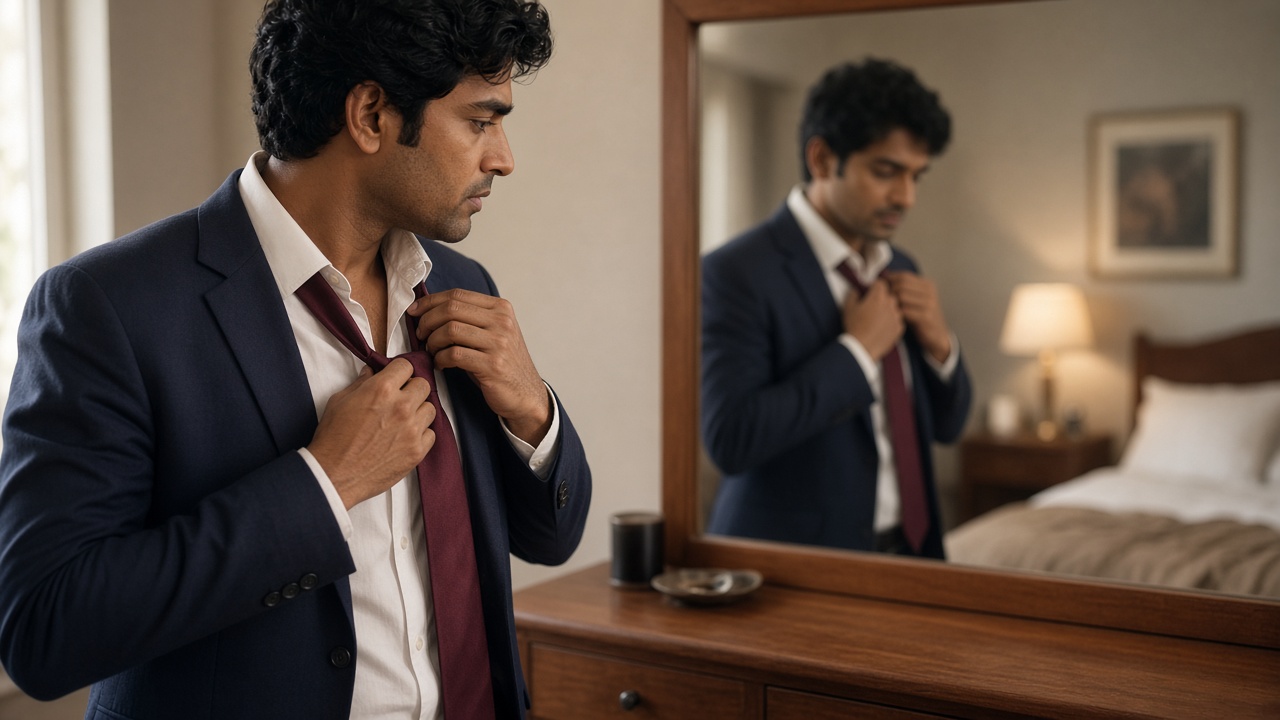
Match the knot to your collar spread and the tie’s thickness. The four-in-hand is a narrow, slightly asymmetric knot that suits most collars and thicker ties like wool or grenadine. The half-Windsor is a medium, symmetric knot that fills a standard or spread collar well and works with medium-weight silk. The full Windsor is a wide, triangular knot for a wide spread collar and a thinner tie; on a thick tie it becomes bulky. When in doubt, a four-in-hand or half-Windsor covers almost every wedding.
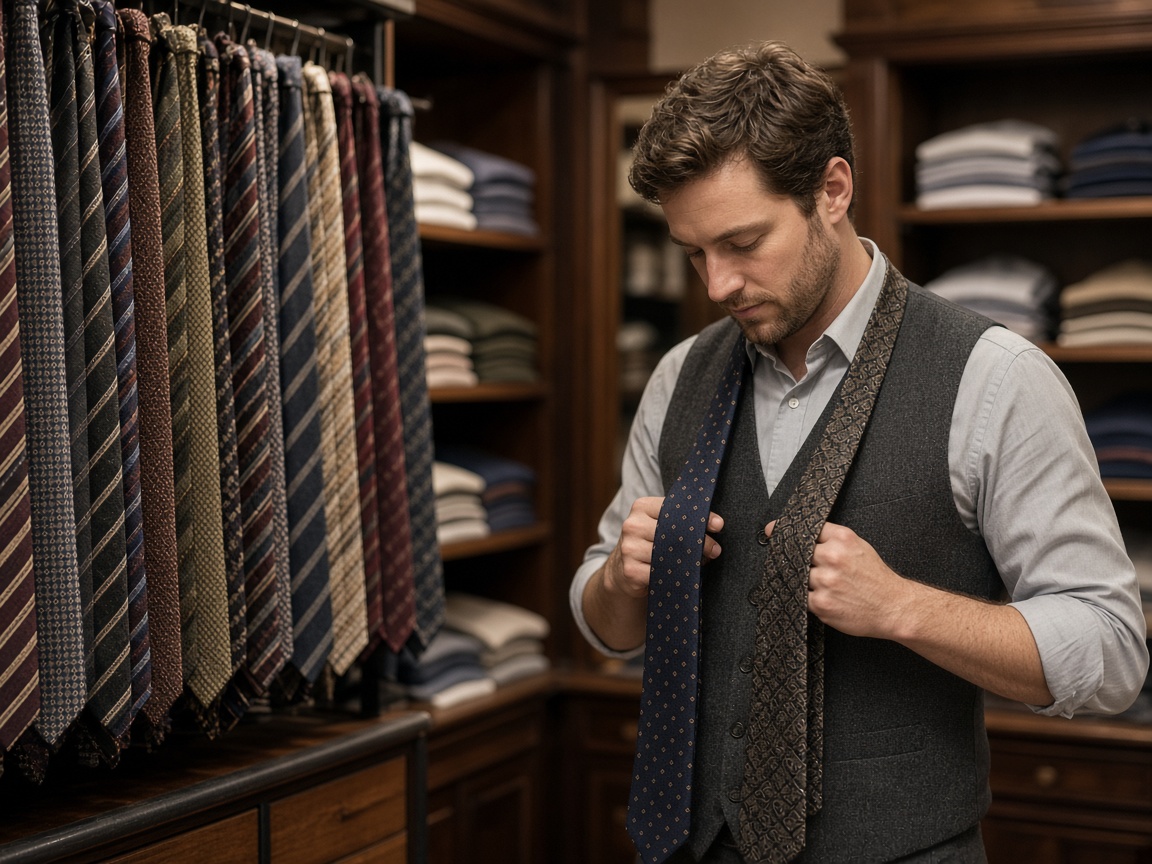
Whatever the knot, the tip of the tie should reach the middle of your belt buckle, and a small dimple below the knot signals it was tied with care.
When to Wear a Bow Tie
A bow tie is required with a tuxedo at a black-tie wedding, where it should be black and self-tie if possible. Outside of black tie, a bow tie is a style choice: it works for a groom who wants a point of difference from his groomsmen, or for a vintage-leaning daytime wedding. It reads as a deliberate statement, so wear it because you want to, not by accident. Our guide on evening wedding attire covers the black-tie case.
Pocket Square Pairing
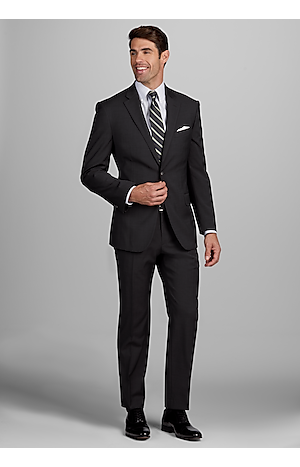
Do not match the pocket square to the tie exactly. Pick a white linen for a formal wedding, or a pocket square that shares one color with the tie in a different pattern for a daytime one. The square is a supporting detail, not a second tie.

A wedding tie is a small decision with a simple rule set: a color that works with the suit and respects the party, a fabric that matches the formality, and a knot that suits your collar. Get those right and the tie disappears into a good outfit, which is exactly what it should do. Browse ties for the range.