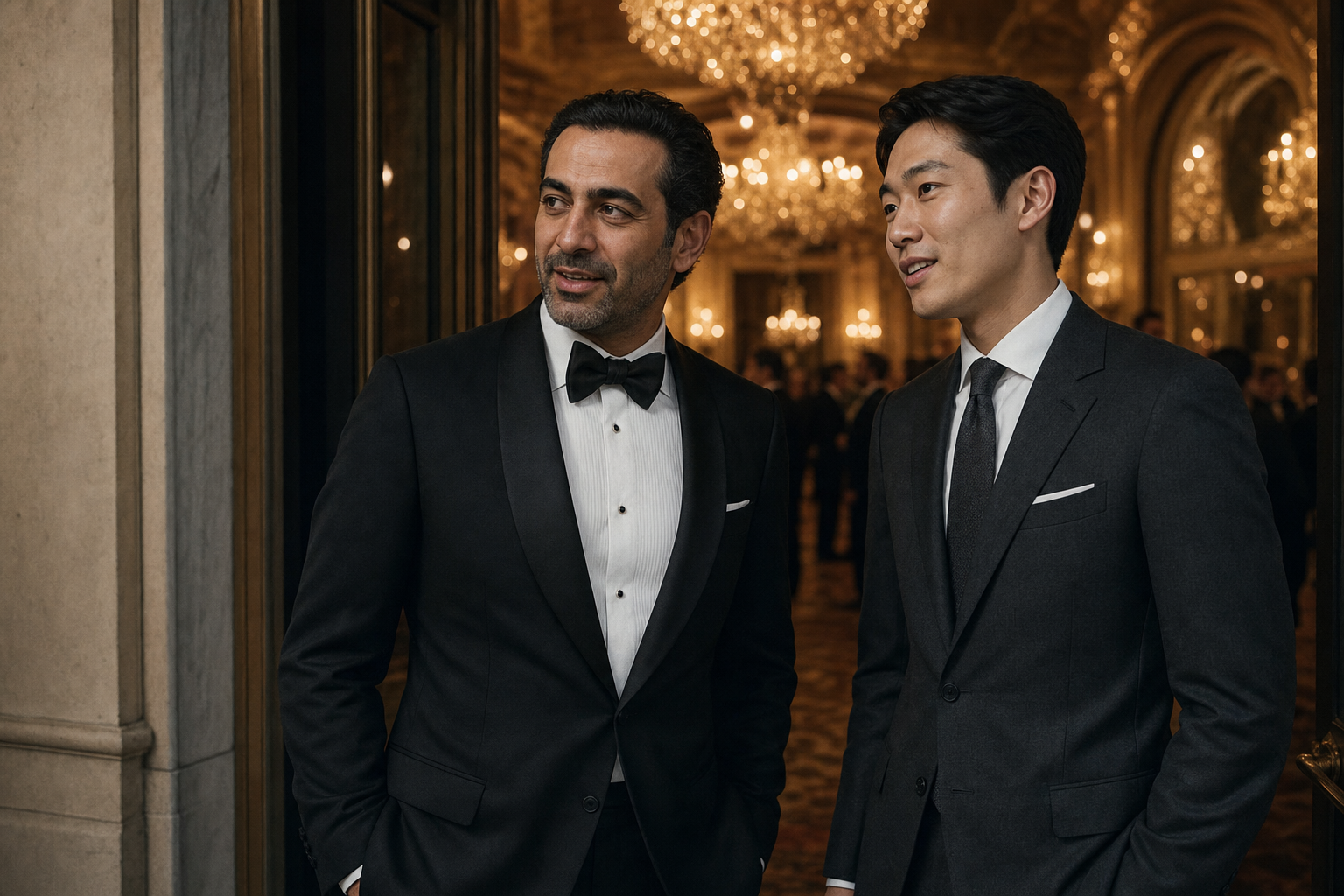
Tuxedo vs suit: both look sharp, both belong at formal events, and both will get you through the door. But wearing the wrong one is a mistake you will feel all night. The difference between a tuxedo and a suit comes down to five things: satin trim, lapels, shirt requirements, accessories, and formality level. Here is how they break down.
Tuxedo vs Suit at a Glance
| Feature | Tuxedo | Suit |
|---|---|---|
| Satin trim | Yes — lapels, buttons, trouser stripe | No satin trim |
| Lapel style | Shawl or peak lapel (satin-faced) | Notch lapel (standard); peak lapel (dressier) |
| Shirt | Tuxedo shirt (pleated or marcella bib) | Dress shirt (any collar) |
| Neckwear | Bow tie | Necktie or no tie |
| Accessories | Studs, cufflinks, cummerbund or waistcoat | Standard buttons, pocket square optional |
| Formality level | Formal (black tie) | Business formal to semi-formal |
| Appropriate events | Black tie, galas, formal weddings | Most weddings, cocktail, business formal |
| Price range | Higher (specialized construction) | Wide range; more options at every price point |
What Is a Tuxedo?
A tuxedo is a formal suit defined by satin trim: satin-faced lapels, satin-covered buttons, and a satin stripe running down the outer seam of each trouser leg. It is always worn with a tuxedo shirt, a bow tie, and formal accessories — studs, cufflinks, and a cummerbund or waistcoat. The tuxedo is purpose-built for black tie occasions. It is not the right choice for events where the dress code stops short of formal.
Tuxedo lapels come in two styles. Shawl lapels — the continuous curved lapel without a notch — are the classic and most traditional choice. Peak lapels, with their upward-pointing tips, are bolder and more contemporary. Both are appropriate for black tie. For a deeper breakdown of every decision you make when choosing a tuxedo, see the complete tuxedo guide.
What Is a Suit?
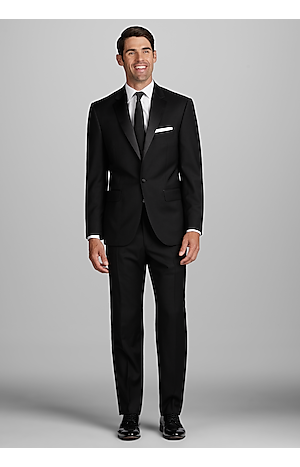
A suit is a matched jacket and trouser set without satin trim. It is the most versatile garment in men’s formal wear — appropriate across business formal, semi-formal events, cocktail parties, and most weddings. A suit is worn with a standard dress shirt and a necktie, or open collar depending on the dress code. Unlike a tuxedo, a suit gives you range: the same suit can work from a Monday board meeting to a Saturday wedding reception depending on how you style it.

For help getting the fit and styling right, the suit fit guide covers everything from break length to jacket button stance.
Key Differences Between a Tuxedo and a Suit
Fabric and Satin Trim
Satin trim is the single biggest visual tell. A tuxedo has satin on the lapels, buttons, and trouser seam. A suit has none. From across a room, you can tell which is which in under a second. This is not a subtle distinction — it is the definition.
Lapels
Tuxedo jackets use shawl or peak lapels, both faced in satin. Suits almost always use notch lapels — the standard cut with a triangular notch where the lapel meets the collar. Notch lapels on a tuxedo are technically incorrect for black tie and signal that you are wearing a suit, not a tuxedo. Peak lapels appear on both tuxedos and high-end suits, but only the tuxedo version has satin facing.
Shirt and Tie
A tuxedo requires a tuxedo shirt. Tuxedo shirts have a bib front — either a pleated bib or a flat marcella front — and the placket is designed for studs rather than buttons. Standard dress shirts are not substitutes. The neckwear with a tuxedo is always a bow tie — not a necktie. A suit takes any dress shirt and pairs with a necktie, no tie, or even a knit tie at more casual dress codes.
Accessories
Tuxedo accessories are specific and required: shirt studs and cufflinks instead of standard buttons, and a cummerbund or waistcoat covering the trouser waistband. These are not optional add-ons — the tuxedo shirt is designed to be worn with them. Suits have no such requirements. A pocket square is a nice addition to a suit but not obligatory, and there is no hardware requirement.
Formality Level
A tuxedo operates at the black tie level of formality. A suit operates below that — from business formal down to smart casual depending on the fabric and cut. Black tie is the only dress code where a tuxedo is the standard and expected choice. At everything below black tie, a suit is the correct call.
When to Wear a Tuxedo vs a Suit
Tuxedo: black tie events, formal galas, and weddings where the invitation states black tie or black tie optional. If the invitation says black tie, a tuxedo is the expected choice — not a suggestion.

Suit: most weddings (cocktail attire, semi-formal, or any dress code that does not say black tie), business formal occasions, and any event where the dress code falls short of formal. A dark suit — navy or charcoal — handles the vast majority of occasions where a tuxedo is not required.
Black tie optional: a tuxedo is preferred. A dark suit is acceptable, but if you own a tuxedo and the event is notable, wear it. Most well-dressed guests at black tie optional events will be in a tuxedo.
White tie: more formal than black tie, and a tuxedo is underdressed. White tie requires a tailcoat. If the invitation says white tie, neither a standard tuxedo nor a suit is correct.
When in doubt about the dress code, check the invitation directly. If it is a wedding, calling the venue or asking the couple is always the right move. Overdressing is always a lesser offense than underdressing at a formal event. For guidance on how to wear the tuxedo once you have one, see how to wear a tuxedo.
Frequently Asked Questions
Can you wear a suit to a black tie event?
Technically yes, but it signals you either did not own a tuxedo or misread the dress code. A very dark suit in charcoal or navy, with a white dress shirt and black bow tie, is the most acceptable suit version of black tie. It will not be mistaken for a tuxedo. At most black tie events, you will be underdressed — but present and covered. If you have any chance of needing to attend black tie events, owning a tuxedo removes the decision entirely.
Is a tuxedo more formal than a suit?
Yes. A tuxedo is specifically designed for black tie, which is one step below white tie on the formality scale. A suit operates across a much wider range of formality — business casual up through formal events. The satin trim, the required shirt, and the bow tie make the tuxedo a more formal and more specialized garment than any suit.
What is the difference between a tuxedo and a dinner jacket?
A dinner jacket is another name for the tuxedo jacket — the terms are often used interchangeably. In British English, “dinner jacket” refers to the jacket worn at black tie; in American English, “tuxedo” refers to the full ensemble (jacket, trousers, shirt, and accessories). A dinner jacket can also describe a standalone formal jacket worn as a creative alternative to the standard black tuxedo jacket — velvet dinner jackets and patterned evening jackets fall into this category.
The right answer between a tuxedo and a suit depends on the event. For black tie, own a tuxedo that fits. For everything else, a well-fitted suit in navy or charcoal is the most versatile garment in your wardrobe.