Golf pants look like a simple category until you have spent four hours on a course in trousers that restrict your swing. The decisions underneath the surface — stretch type, fabric weight, fit, whether the waistband works for walking 18 holes — make a real difference. These are the features worth understanding before you buy mens golf pants, and the course conditions that should influence your choice.
What Makes a Golf Pant Different From a Dress Pant
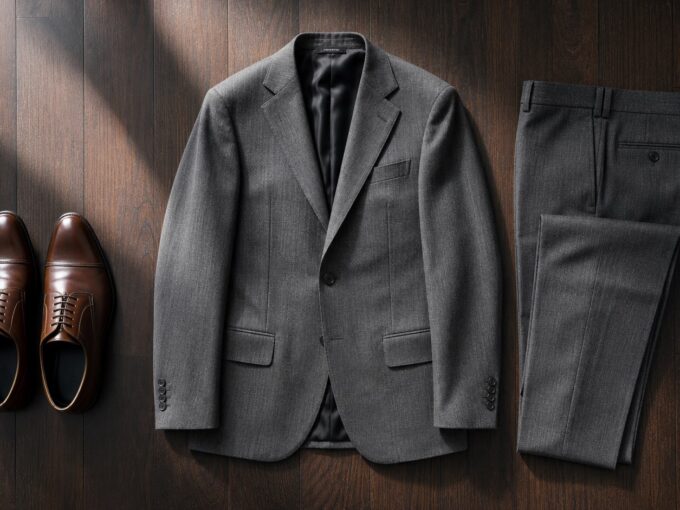
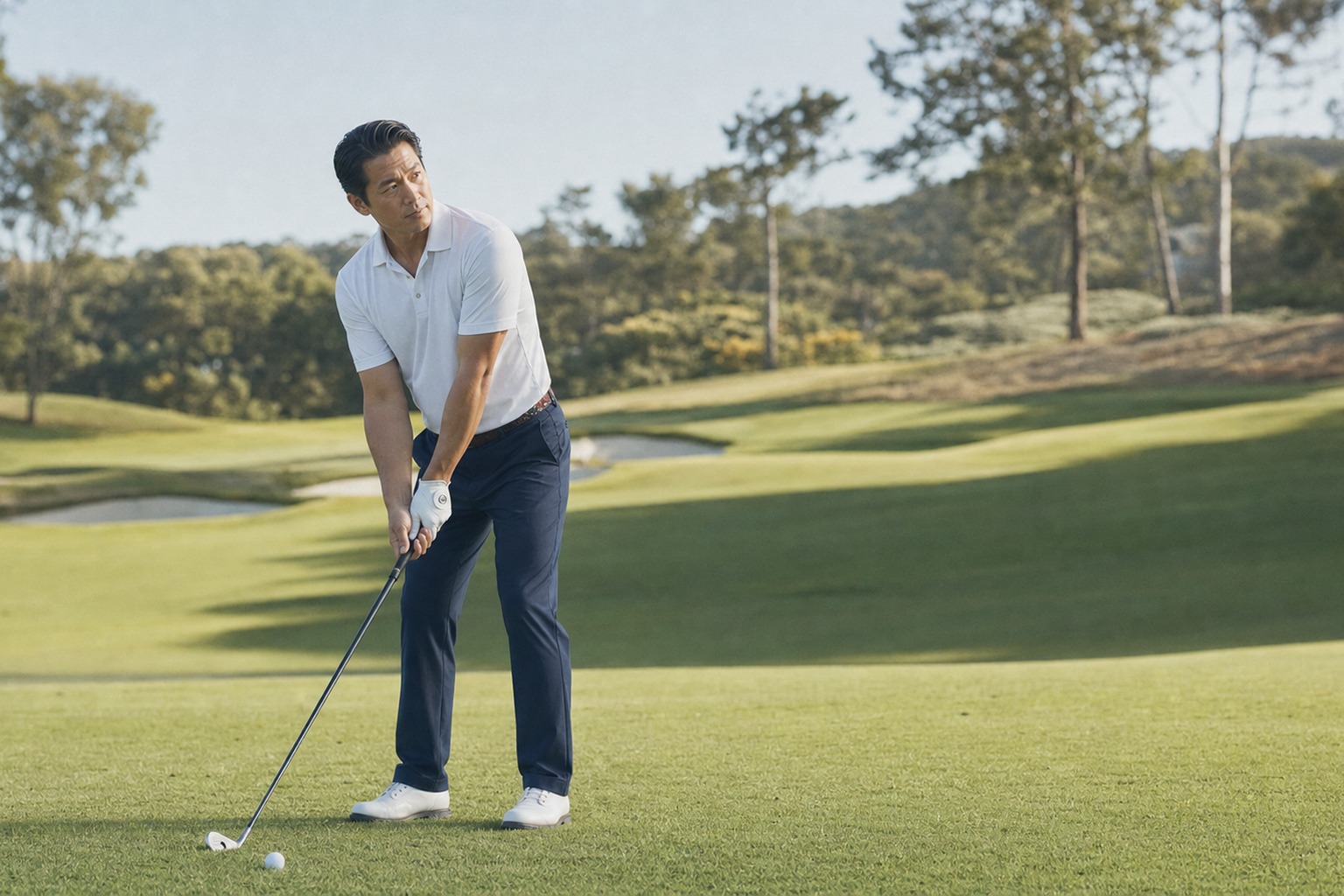
The fundamental difference is mobility. A golf swing requires significant hip rotation, lateral weight shift, and knee bend. A standard dress pant resists all of that. By the top of a normal backswing, you will feel the fabric pulling across the seat and thighs if the trousers are not built for movement.
Purpose-built golf pants are engineered around the swing first. The fabric is chosen for stretch and breathability over a four-hour round, not just for how it sits on a hanger or in an office. That means a different construction from a dress pant even when the visual profile looks nearly identical.
The second difference is moisture management. A full round in warm weather generates real perspiration. Golf pants in moisture-wicking or stays-cool fabrics move sweat away from the body and dry quickly between holes. A standard dress pant absorbs moisture and holds it, which becomes noticeable by the back nine.
Key Features to Look For
4-way stretch. This is the most important technical specification for golf pants worn during active play. 4-way stretch fabric moves with the body in all directions — horizontal, vertical, and diagonally. 2-way stretch is better than nothing but primarily extends in one direction. If you play regularly and value a full, unrestricted swing, 4-way is the standard to meet.
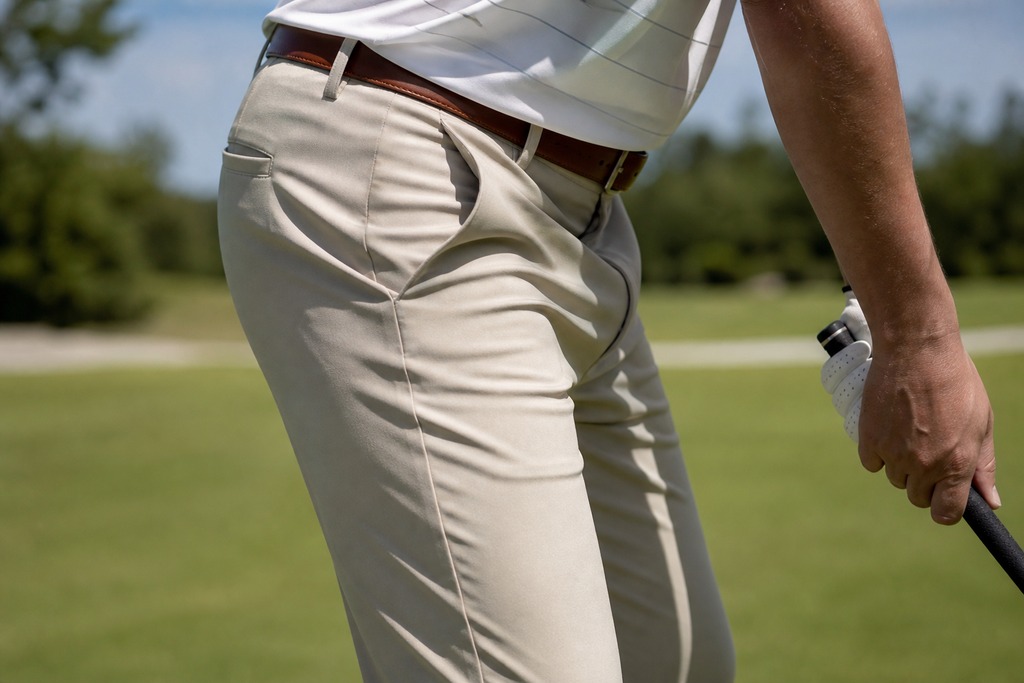
Moisture-wicking or stays-cool technology. Performance fabric treatments pull moisture away from the skin and accelerate evaporation. In summer heat, the difference between a treated fabric and a standard cotton blend is substantial over the back nine. JAB’s Stays Cool collection uses a breathable construction that manages temperature in warm conditions without sacrificing the clean visual profile expected on most courses.
Wrinkle resistance. Golf pants move through several environments in a single day: the car, the locker room, the course, and the clubhouse. Wrinkle-resistant fabrics maintain their appearance through all of that without requiring a pressed crease before every round.
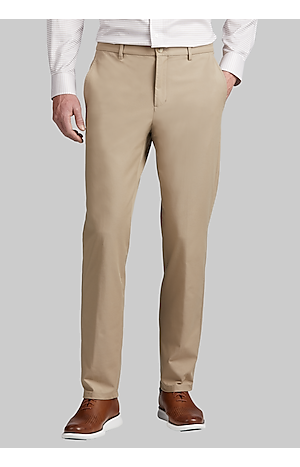
Flat-front vs. pleated. Flat-front trousers work better for slim and tailored fits and keep the silhouette clean. Pleated trousers provide more room through the thigh at address and are the better choice for golfers who prefer more ease through the hip. Neither is categorically better — it depends on body type and preferred swing setup.
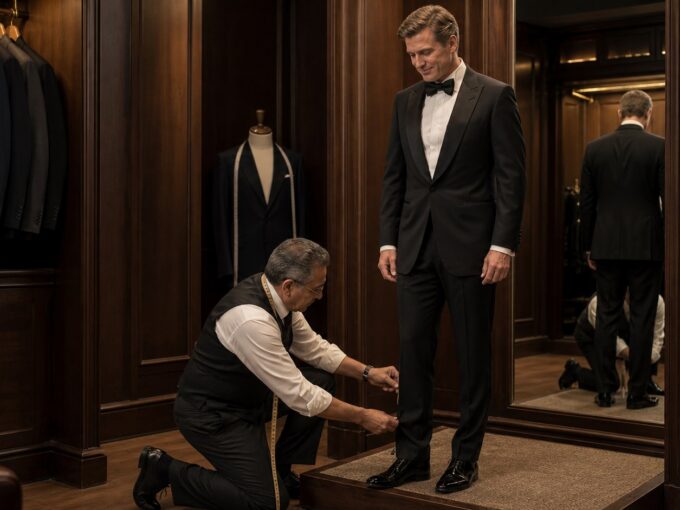
Fit: how each silhouette performs on the course. A slim-fit golf pant sits closest to the body and reads the most modern. It works well for golfers with a longer, narrower build. A tailored fit offers slightly more room through the seat and thigh while still following the body’s natural line — the most versatile choice for most body types. A straight leg provides the most ease through the hip and thigh and is the best choice for golfers who want full freedom of movement without thinking about fit restrictions.

Dress Codes and Course Rules
Most private and semi-private courses require collared shirts and trousers. What that means in practice is that golf pants need to read as trousers rather than as casual bottoms. Denim is banned at virtually every private club and many semi-private facilities, regardless of how the denim is styled or colored.
Athletic-cut jogger pants occupy a grey area at many courses. They are accepted at public courses with relaxed dress codes and rejected at private clubs that require a more traditional silhouette. When in doubt, a flat-front or pleated trouser in navy, grey, or tan is the lowest-risk choice across all course types.
The clubhouse rule is a useful test: if you can go from the 18th green to the bar in the same outfit without drawing a look from the pro shop staff, the pants are doing their job. Golf pants that meet this standard are versatile enough to carry you from the first tee through the post-round meal without a wardrobe change.
Jos. A. Bank’s Leadbetter sportswear pants, developed in partnership with renowned golf instructor David Leadbetter, are built explicitly for this standard: performance on the course with an appearance that holds up at the clubhouse. The Leadbetter collection reflects the input of a professional who has coached major champions and knows what a golf trouser needs to do across a full day on the course.
Choosing the Right Fabric for the Season
Fabric selection changes meaningfully by season for golfers who play year-round.
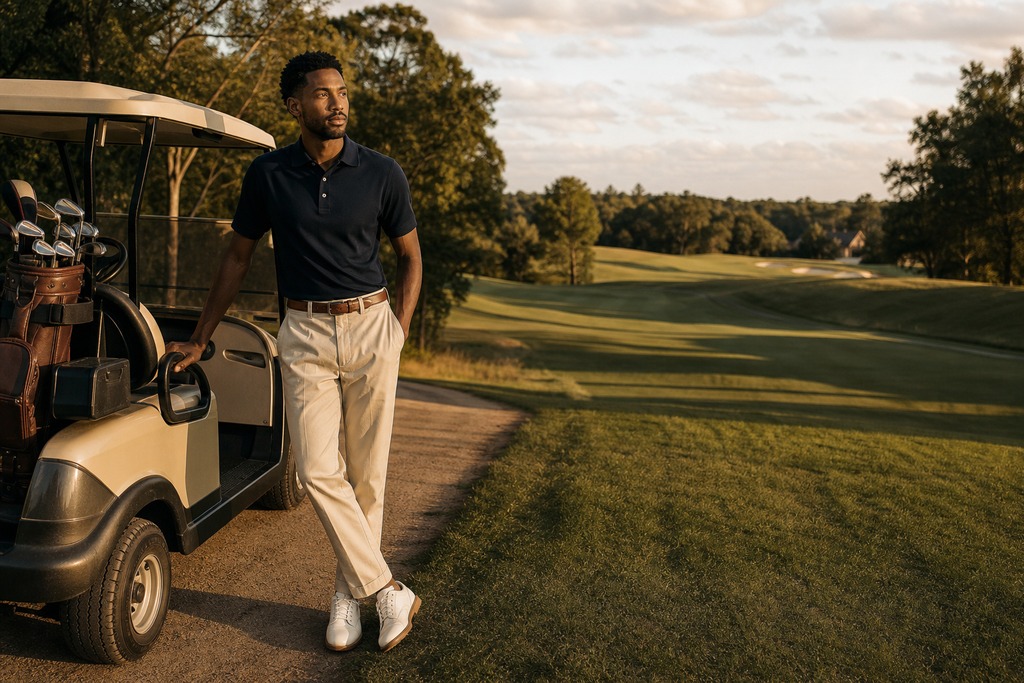
Summer. Lightweight, open-weave fabrics are the priority. A Stays Cool pant in a breathable synthetic blend manages heat and moisture on warm mornings and holds up through afternoon rounds when the temperature climbs. Lighter colors in this range — tan, light grey, white — also reflect rather than absorb heat.
Spring and Fall. Mid-weight stretch wovens balance warmth with mobility. A Comfort Stretch pant in a slightly heavier construction provides the insulation needed for early morning rounds in cooler temperatures while still allowing a full swing. Navy and charcoal are the most versatile color choices for this range since they work across all course dress codes and carry through to off-course wear.
Year-round utility. A single pair of well-chosen golf pants in a mid-weight, 4-way stretch fabric — navy or grey, wrinkle-resistant, flat-front — covers the majority of conditions and course requirements. If you are building a golf wardrobe from scratch, this is where to start before adding seasonal-specific options.