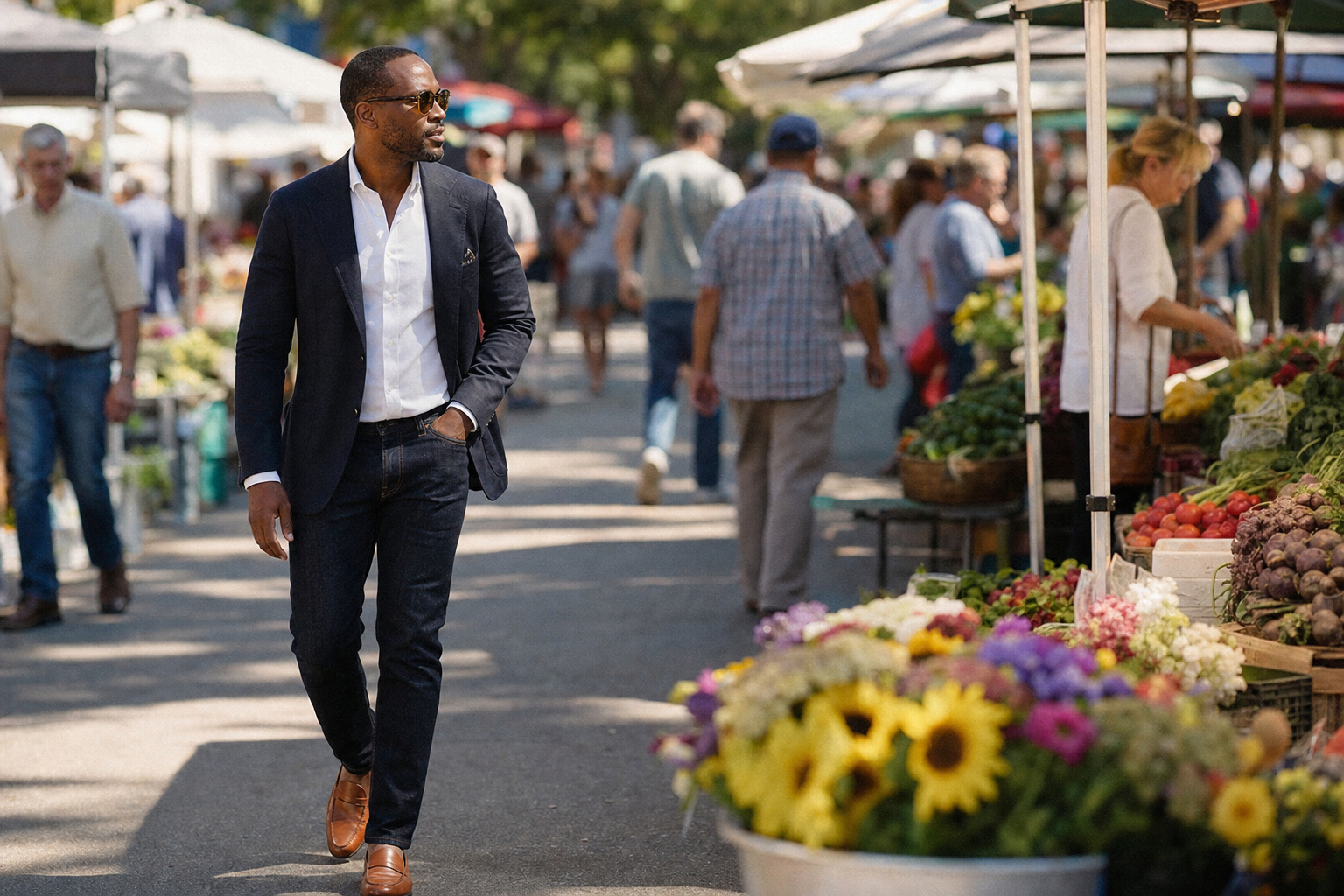
A blazer crosses the line between formal and casual in a way no other jacket can. It gives any outfit more polish than a hoodie or a denim jacket, and it does it without requiring a tie, a matching trouser, or a special occasion. The challenge is knowing where the line is — and how far past it you can take the outfit without losing the effect.
What Makes a Blazer “Casual”
Not every blazer reads the same in a casual context. The elements that move a blazer toward casual are fabric, structure, color, and pattern.
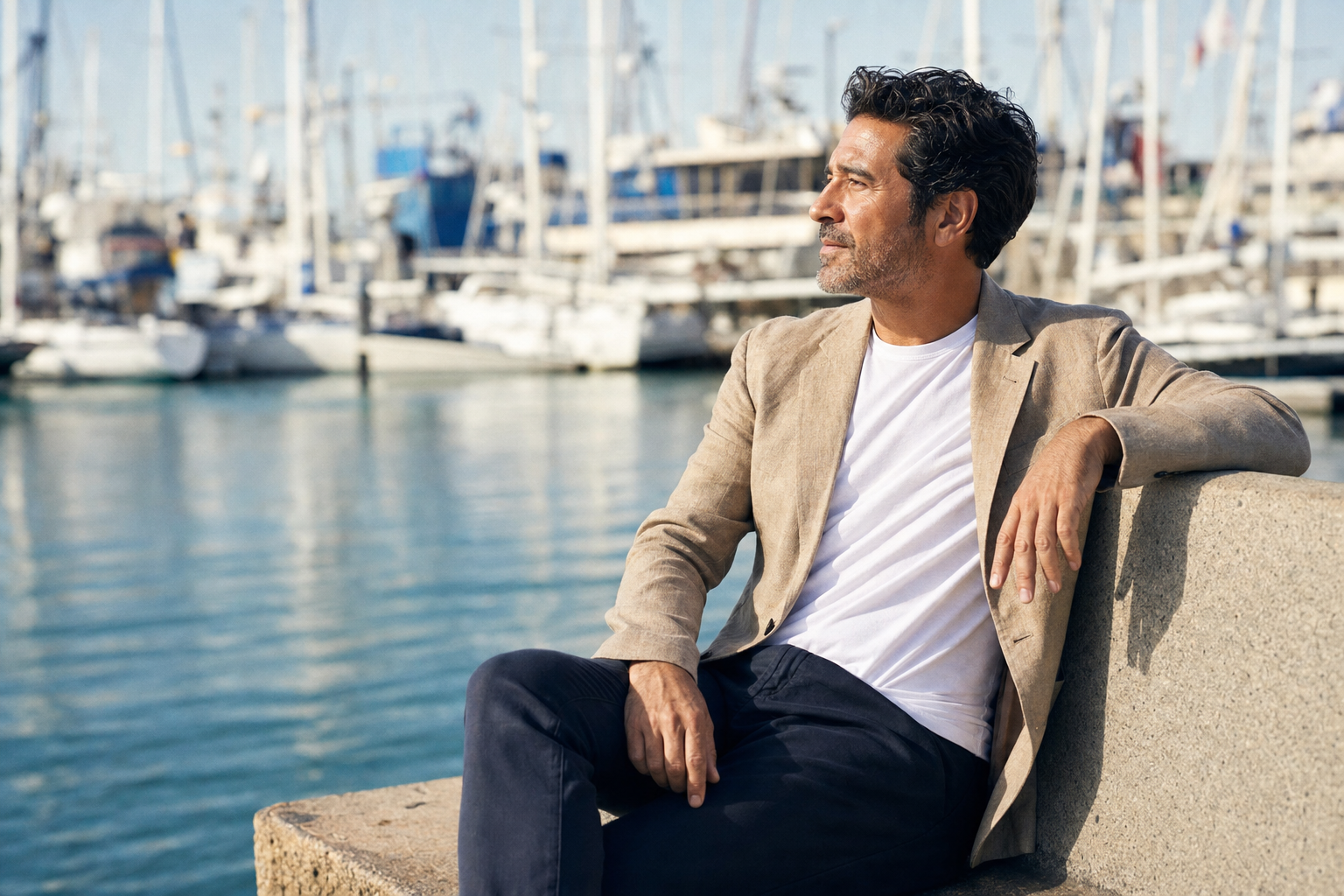
Fabric: Linen, cotton, and textured wool read as more casual than smooth worsted wool. A linen blazer in summer reads deliberately relaxed. A smooth wool blazer in a structured cut reads as business or formal wear no matter what pants you put under it.
Structure: Unstructured and soft-constructed blazers have less padding and canvas in the chest and shoulders. They drape more loosely and look more relaxed than padded, fully-constructed blazers. An unstructured blazer worn over a t-shirt looks intentional. A padded-shoulder blazer over a t-shirt looks like you forgot your dress shirt.
Color: Navy, camel, and grey are the most versatile casual blazer colors. They work with a wide range of casual pants. Black reads as formal in most contexts and should be reserved for evening occasions.
Pattern: Tweed, houndstooth, and subtle checks are more casual than solid dark blazers. Patterned blazers are almost always worn in casual contexts and rarely in formal ones. They pair well with plain chinos and dark jeans.
Blazer with Jeans
The blazer and jeans combination is the most common casual blazer outfit, and also the one most frequently done wrong. The rules are simple: the jeans must be clean and fitted, the blazer must fit, and the combination of formality levels must be coherent.
Dark Wash Jeans
Dark wash jeans are the closest to formal denim. They pair with a blazer, a button-down shirt (tucked or untucked), and dress shoes or loafers for a smart casual look. This is the most dressed-up version of a blazer and jeans outfit and works for restaurant dinners, cocktail events with relaxed dress codes, and date nights.
Medium Wash Jeans
Medium wash jeans with a casual, unstructured blazer and an OCBD or casual dress shirt is an appropriate outfit for casual dining, weekend events, and social settings where a suit is too much but effort is expected. Keep the shoes leather or leather-soled.
What Not to Do
Light wash jeans with a structured blazer creates a conflict between the casual signal of the light denim and the formal signal of the constructed jacket. Commit to one direction. If the jeans are light wash, the blazer must be unstructured and the shirt must be casual. If the blazer is structured, the jeans should be dark wash and the rest of the outfit should lean more formal.
For the full breakdown of how a blazer, sport coat, and suit jacket differ, see the guide on sportcoats vs blazers vs suit jackets.
Blazer with Chinos and Trousers
Chinos: The safest pairing for any blazer. A navy blazer over khaki chinos is a classic combination that works for business casual and smart casual alike. The contrast between the navy jacket and the lighter chinos is clean and always appropriate. Grey, tan, and olive chinos all work with navy blazers; experiment with the contrast rather than always defaulting to khaki.
Unmatched dress trousers: A blazer with unmatched dress trousers (not part of a suit, just plain dress trousers in a different color) reads as smart casual to business casual. This is appropriate for business environments where a full suit is not required and for social occasions that call for effort without formality.
Cargo or technical pants: This pairing works only with very casual, unstructured blazers in linen or cotton. If the blazer has any structure or formal fabric, technical pants will fight it. This combination works in very specific contexts, mostly creative and tech casual environments.
What Shirt to Wear Under a Casual Blazer
Dress Shirt, Open Collar
An open-collar dress shirt under a blazer is versatile across smart casual and business casual contexts. The open collar removes the formality of a tie while keeping the shirt’s structure. This is the right approach for cocktail events, business casual offices, and smart casual dinners.
OCBD (Oxford Button-Down)
The OCBD is the best casual blazer shirt. It is relaxed in fabric and collar construction but keeps enough structure to work under a blazer without looking sloppy. An OCBD with a navy blazer and dark jeans is one of the most reliable casual blazer outfits available.
T-shirt Under a Blazer
This works only with very casual, unstructured blazers in linen or cotton. The t-shirt must be clean, plain (no graphics), and well-fitted. The blazer must be genuinely casual in fabric and construction. A structured wool blazer over a t-shirt reads as an oversight, not a style choice.
Turtleneck
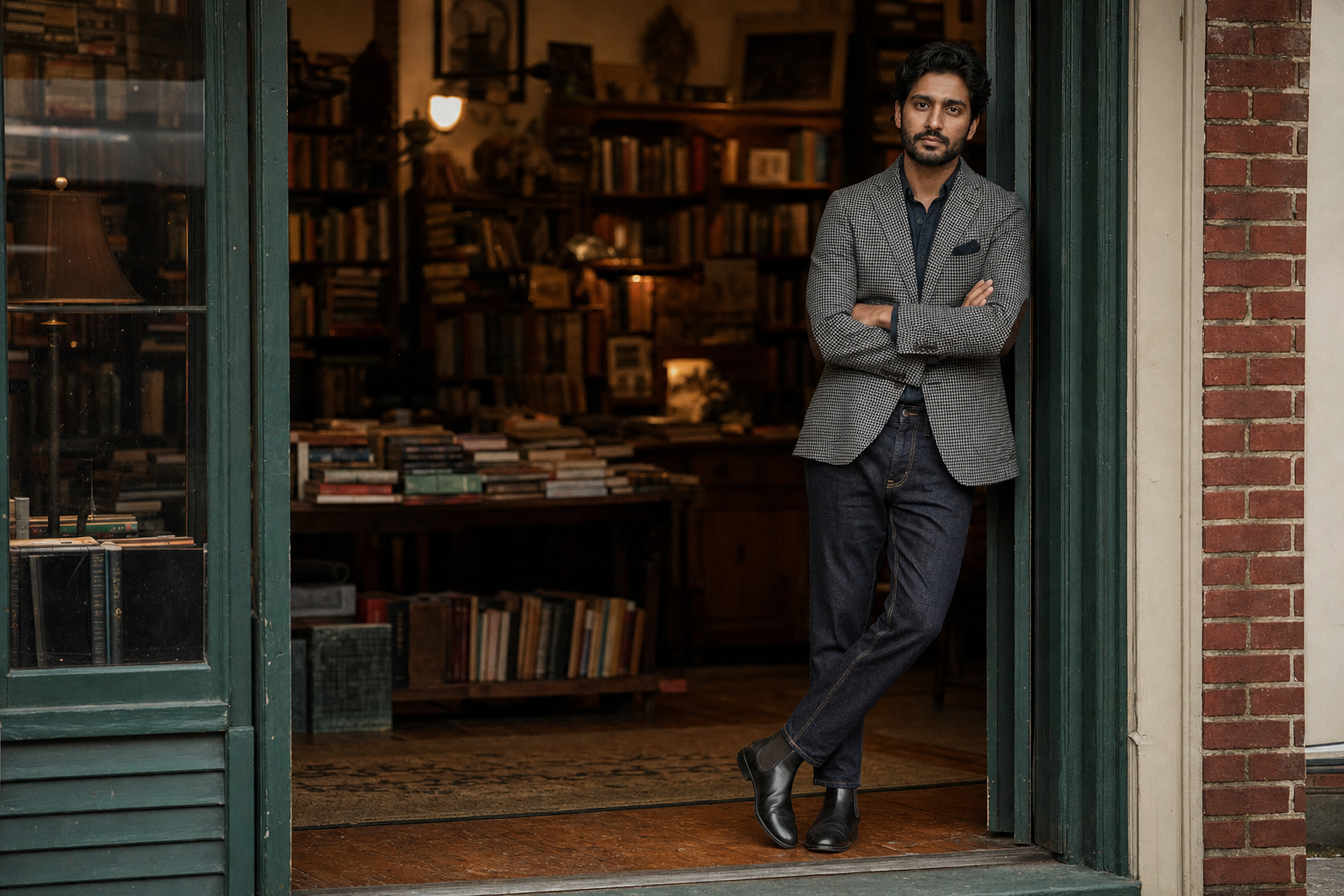
Works in fall and winter. A turtleneck under a tweed or houndstooth blazer is a cohesive, considered look that works for smart casual and casual formal contexts in cold weather. Keep the rest of the outfit clean: dark trousers or well-fitted dark jeans, leather shoes or Chelsea boots.

What Shoes to Wear with a Casual Blazer
Loafers
Loafers are the natural shoe for a casual blazer outfit. They are polished enough to match the blazer’s formality level while being relaxed enough to match the casual pants underneath. Leather loafers work with chinos, dark jeans, and unmatched trousers. Suede loafers add texture and are slightly more casual.
Chelsea Boots
Chelsea boots are a strong choice for fall and winter casual blazer outfits. They are dressier than loafers and pair particularly well with dark jeans and chinos. A navy blazer, dark jeans, and Chelsea boots is a reliable smart casual combination for cooler months.
White Leather Sneakers
White leather sneakers pair only with very casual, unstructured blazers, jeans, or chinos. Clean, plain white leather sneakers with a linen or cotton blazer and dark jeans is an acceptable smart casual combination for summer. This does not work with structured blazers, dress trousers, or any outfit that has more than one formal element.
Oxfords and Dress Shoes
Dress shoes with a casual blazer work only when the rest of the outfit matches the formality of the shoes. A casual blazer with dark jeans and dress shoes creates a mismatch unless the jeans are very dark wash and the overall outfit reads deliberately smart casual rather than accidentally formal.
For help pairing shoes with any outfit, see the guide on matching shoes to suits. The same principles apply to blazer and trouser combinations.
Blazer Colors for Casual Wear
Navy: The most versatile casual blazer color. Works with khaki, grey, olive, and tan pants. Works with white, light blue, and OCBD shirts. Works with loafers, boots, and in some cases clean sneakers. Navy is the first casual blazer worth owning.
Camel or tan: Warm and seasonal. A camel blazer works well in fall with cream and white shirts. It pairs best with dark brown or cognac shoes and darker trousers. Not a year-round choice in the way navy is.
Grey: Works for business casual environments and smart casual contexts. Grey blazers pair well with blue and white shirts and dress trousers. A grey unstructured blazer is a good second casual blazer after navy.
Patterned blazers (tweed, houndstooth, check): The most casual option in the blazer category. Best in textured fabrics. Patterned blazers are for weekend and social wear, not business contexts. They pair best with plain, neutral pants so the pattern is the focus.
To learn how to tell if a blazer fits the way it should, see the guide on blazer fit.
What to Avoid with a Casual Blazer
Matching blazer and pants that are close but not the same. A blazer and trousers that look like they might go together but clearly do not is worse than a deliberate mismatch. The combination reads as a poorly assembled suit, not as a deliberate casual outfit. Either match completely or deliberately contrast.
A blazer that fits like a suit jacket. Casual blazers should have slightly more ease through the chest and shoulders than a formal suit jacket. They need room to layer comfortably over casual shirts. A blazer fitted tightly for formal wear looks uncomfortable and restrictive over casual clothes.
A tie with a jeans-and-blazer outfit. A tie elevates the blazer past the casual threshold the jeans are signaling. The combination works only if you are going somewhere that explicitly wants a blazer-and-tie look without full suits.
Over-accessorizing. A blazer is already an accessory of sorts in a casual outfit. Add one additional element — a pocket square, a watch, a lapel pin — not all three. More than two accessories with a casual blazer overwhelms the look.
Frequently Asked Questions
Can you wear a blazer with jeans to a job interview?
It depends on the industry and company culture. In creative industries, tech, and startup environments, a navy blazer with dark jeans and a dress shirt is appropriate and sometimes preferred over a full suit. In conservative corporate environments, law, finance, or any context where business formal is the standard, a full suit is the correct choice. When in doubt, wear the suit. You can always dress down after you understand the culture.
What is the difference between a blazer and a sport coat?
The terms are used interchangeably in most American retail contexts. Technically, a blazer is a solid-colored jacket often with metal buttons, originally a nautical garment. A sport coat is a patterned jacket intended for casual or semi-casual wear. In practice, both refer to jackets worn separately from a matched suit, and the distinction rarely matters in everyday styling.
Should a casual blazer be fitted or relaxed?
A casual blazer should fit well through the shoulders and chest — the shoulders are the most important fit point — but can have slightly more ease through the body than a business suit jacket. The goal is a fit that allows comfortable movement and layering without looking baggy. An overly tight blazer in a casual context looks like a formal suit jacket borrowed from someone with narrower shoulders.
