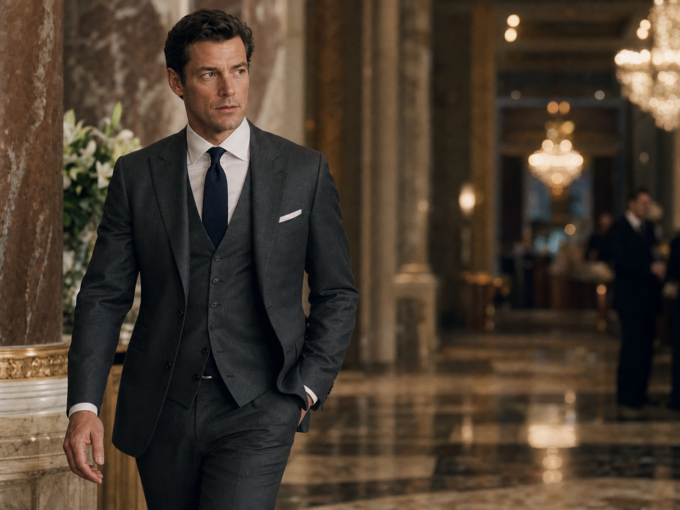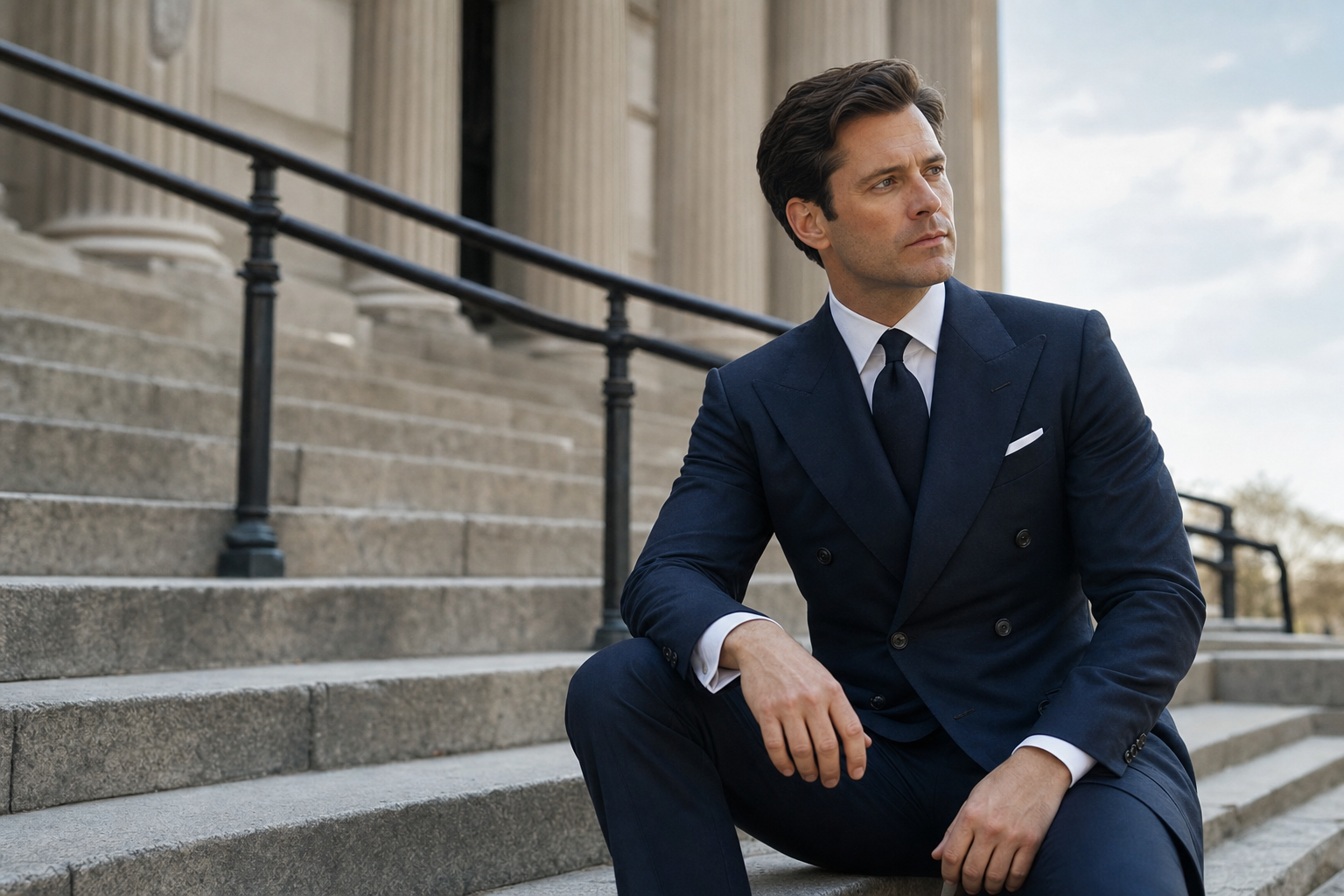
The double-breasted suit is the one cut that announces itself before you say a word — that is either the point or the problem, depending on how you wear it. Most men avoid it out of uncertainty: they have heard it is “bold” or “hard to pull off” without anyone explaining what that actually means in practice. This guide gives you the construction details, buttoning rules, and styling logic you need to wear one correctly.
What Is a Double-Breasted Suit?
A double-breasted suit jacket has two parallel rows of buttons and a wide overlapping front panel — the left side of the jacket crosses over and buttons to the right. This is the structural difference from a single-breasted suit, where the front panels meet at the center and fasten with a single column of buttons.
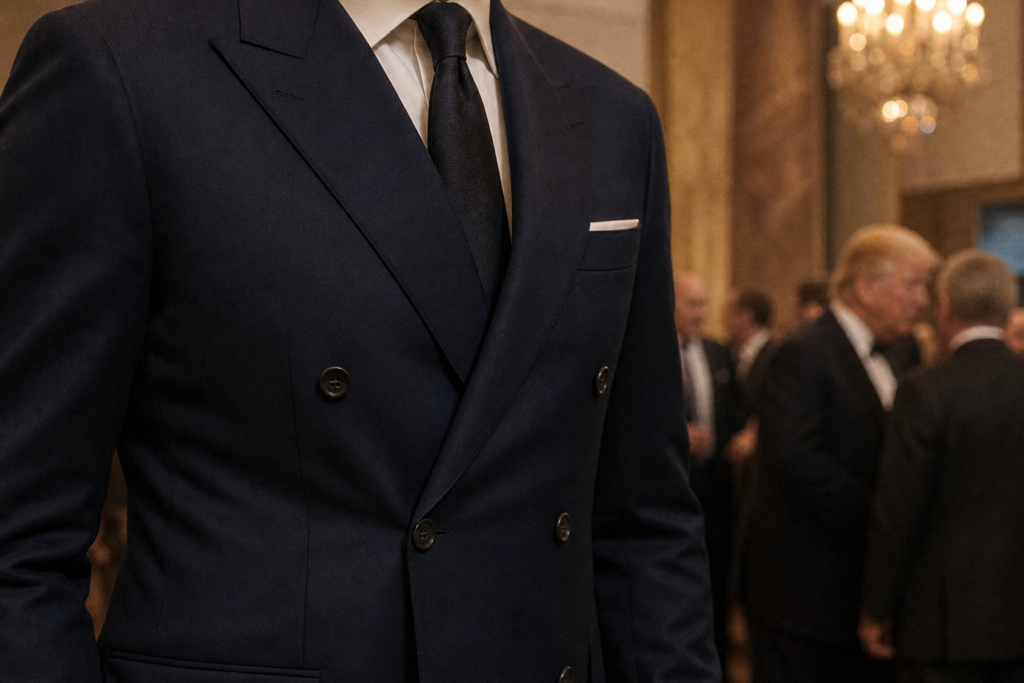
The most common double-breasted configuration is 6×2: six visible buttons arranged in two rows, with two functional buttonholes. The 4×2 configuration (four visible, two functional) is a trimmer silhouette. The 4×1 has one central buttonhole and creates the sharpest, most modern profile. In all configurations, peaked lapels are standard on double-breasted jackets — the broad, pointed lapel shape creates the wide chest appearance that defines the DB silhouette.
A double-breasted suit is more structured and formally intentioned than most single-breasted suits. It has more visual presence, more fabric across the torso, and a stronger visual line. That is precisely what makes it a deliberate choice rather than a default one.
Is a Double-Breasted Suit Still in Style?
Yes. The double-breasted suit never fully disappeared — it cycles in prominence. Currently, DB suits are seeing consistent adoption in both tailored business settings and fashion-forward contexts. The reason men sometimes think it looks dated is not the cut itself; it is the fit. A double-breasted suit with too much fabric across the chest and a boxy drape reads like the 1990s. The same cut in a slim, current fit reads contemporary and considered.
The fix for looking dated in a DB suit is always fit — not avoiding the style. If the jacket pulls across the chest, billows at the sides, or creates a shelf of excess fabric, it looks dated. If it sits close through the body and the overlapping panel lies flat, it looks right.
Double-Breasted Suit Buttoning Rules
The buttoning rules for a double-breasted suit differ from a single-breasted jacket in one critical way: in most double-breasted configurations, all fastened buttons stay fastened. Do not unbutton a double-breasted jacket when seated. The overlapping front panel is designed to be worn closed — opening it creates a sloppy silhouette and defeats the structural purpose of the cut.

In a 6×2 configuration, only the middle anchor button typically fastens. The top and bottom buttons in the row are decorative. In a 4×1, there is one central button that fastens and holds the overlap. Regardless of configuration, the rule is the same: the jacket stays buttoned. The single anchor button at the inside of the overlap (not visible from the outside) holds the jacket closed beneath; without it fastened, the whole front drapes incorrectly even when the outer buttons are closed.
Why this matters: an unbuttoned double-breasted jacket does not look casual — it looks like you do not know how to wear the suit. The buttoning rule is the most important single piece of knowledge for anyone wearing a DB suit for the first time.
How to Wear a Double-Breasted Suit
Fit Is Everything
The overlapping front panel adds visual width to the torso — which means a double-breasted suit punishes poor fit more severely than any other cut. The jacket must sit slim through the body: suppressed at the waist, lying flat across the chest, with no excess fabric puckering around the buttons. How a suit should fit covers the fit checkpoints in detail; apply all of them, then apply them again to the DB silhouette specifically. If the fit is not close through the body, the DB cut looks larger and heavier than it is.
Shirt and Tie Pairings
A solid or subtle-pattern dress shirt is the correct choice with a double-breasted suit. The button rows and peaked lapels create significant visual activity on the jacket front — a bold shirt pattern competes with that rather than complementing it. A white spread-collar dress shirt is the most reliable starting point. For ties, a solid or small-scale pattern in a complementary color keeps the outfit cohesive; a large pattern tie competes with the already-active jacket front.
Color Choices
Navy is the most versatile entry point for a double-breasted suit — it reads formal without being severe, and it works across weddings, evening events, and dressed-up business settings. Charcoal is the second choice for formality-first occasions. Grey reads well in daytime formal contexts. For a first double-breasted suit, avoid busy patterns: a solid builds confidence in how the cut works before adding the complexity of a windowpane or stripe.
Shoes
Oxford shoes or Chelsea boots are the correct footwear for a double-breasted suit. A cap toe Oxford in black or dark brown is the standard pairing. A Chelsea boot in black works for evening and formal occasions where the suit is worn without a tie. Avoid loafers with a double-breasted suit in a formal context — the slip-on construction softens the formality in a way that undermines the DB jacket’s visual authority. Sneakers are never appropriate with a DB suit.

Who Should Wear a Double-Breasted Suit?
Taller, leaner frames carry double-breasted suits most naturally. The vertical button line and peaked lapels elongate the torso, which plays well on a long frame. That does not mean shorter or broader men cannot wear a double-breasted suit — it means the fit work is more exacting. For a shorter frame, a higher button stance and a slimmer cut minimize the visual width of the overlapping panel. For a broader frame, a 4×1 configuration with a closer-cut jacket minimizes the bulk that a 6×2 on a wide chest can create. The instinct is often to avoid the DB cut for “difficult” body types — the better instinct is to find the configuration and fit that works for your specific build.
Double-Breasted Suit vs. Single-Breasted
A double-breasted suit sits above a single-breasted suit in formality. Both belong in a complete wardrobe, but they serve different contexts. The single-breasted suit is more versatile day-to-day: it transitions more easily between business casual and business formal, and it imposes no special buttoning obligations. The double-breasted suit is a deliberate choice for occasions where you want the extra visual statement — formal weddings, black-tie adjacent events, evening galas, and fashion-forward business settings. If you are building toward a full formal wardrobe, the 3-piece suit guide covers the other major formal option worth considering alongside the DB.
The double-breasted suit rewards the man who commits — to the fit, to the occasion, and to keeping the jacket correctly buttoned. Get those three things right and it is one of the most visually complete suits you can own. For the black-tie context specifically, a double-breasted tuxedo makes the strongest possible formal statement — see how to wear a tuxedo for guidance on when the DB tuxedo is the right call versus a standard single-breasted formal jacket.