Oxford shoes for men are the foundation of the dressed-up wardrobe — but most men own one pair, wear them everywhere, and never quite get the pairing right. The Oxford is a specific shoe with a specific construction rule, and understanding that rule is what separates a sharp outfit from a close-but-not-quite one. This guide covers the types, when to wear each, and how to match them to your suits.
What Are Oxford Shoes?
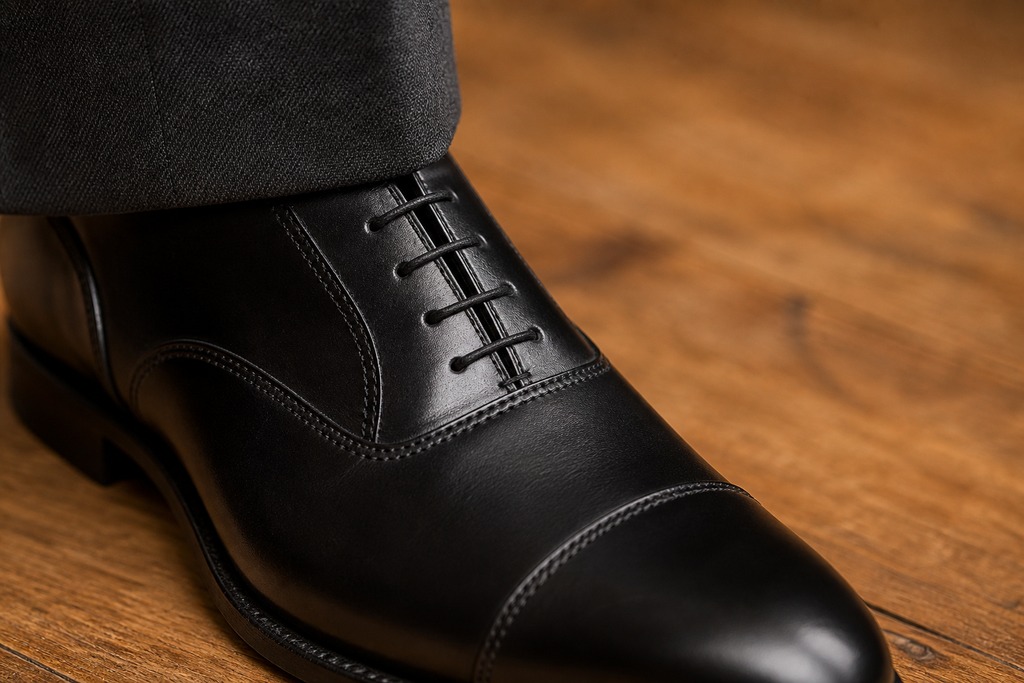
An Oxford is defined by its closed lacing system: the eyelets are sewn underneath the vamp, pulling the sides of the shoe together for a clean, streamlined profile. That single construction detail is what separates an Oxford from a Derby shoe, where the eyelets sit on top and the quarters open wider when unlaced. The closed lacing gives the Oxford a sleeker silhouette and a higher formality ceiling. Oxford shoes work from business professional to black tie, and they look better against a suit than almost any other dress shoe on the market. Derby shoes, by contrast, are slightly easier to put on and slightly less formal — a meaningful difference when dressing for a high-stakes occasion.
Types of Oxford Shoes for Men
Cap Toe Oxfords
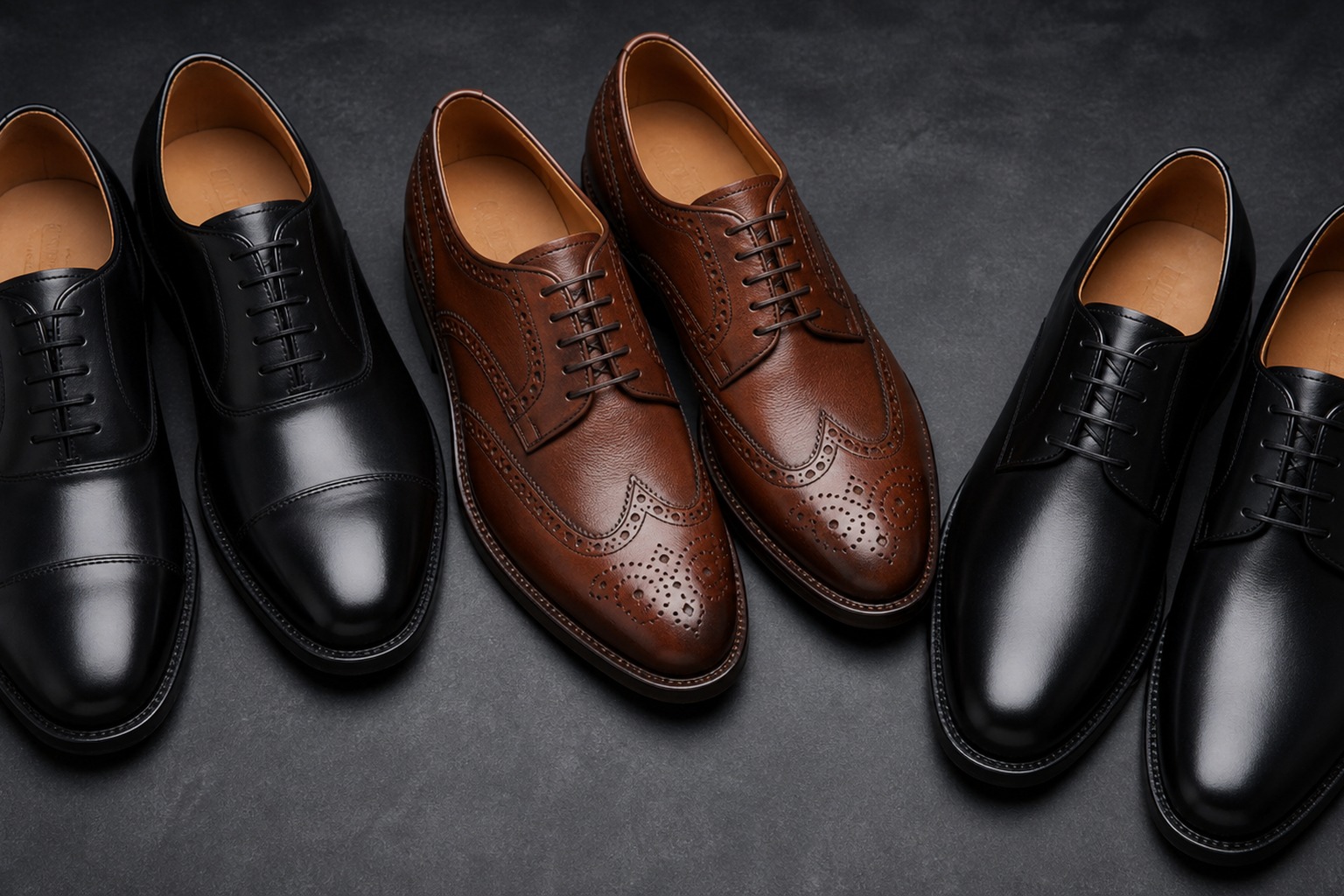
A single horizontal seam across the toe box defines the cap toe Oxford. It is the cleanest silhouette in the category, which is why it is also the most versatile: appropriate for black tie, business formal, and dressed-up business casual alike. A black cap toe in smooth calf leather is the one Oxford every man should own first — it covers more occasions than any other style.
Wingtip Oxfords (Brogues)
The W-shaped toe cap extends along the sides of the shoe, with perforated broguing along the seams. Wingtips sit in the business casual to business formal range — more formal than a loafer, less formal than a plain cap toe. Brown or tan wingtips pair particularly well with grey or navy suits for a business casual look that still reads polished.
Plain Toe Oxfords
No seam at the toe, no decoration — just clean leather from the lace eyelets to the sole. Plain toe Oxfords carry the highest formality of any Oxford style. They belong at black tie events, formal weddings, and anywhere the dress code leaves no room for interpretation. The absence of ornamentation is deliberate.
Saddle Oxfords
A contrasting leather panel across the midfoot gives saddle Oxfords a more casual character. They work well in smart casual settings — chinos, dress pants, a lightweight suit in summer — but stop short of business formal. The contrast detail signals casual intent, which keeps them out of black-tie range.

When to Wear Oxford Shoes
Black Tie and Formal Events
Plain toe or cap toe Oxfords in black patent leather or highly polished calf leather. No broguing, no brown — the formality of the occasion demands the cleanest possible shoe. This is the one context where saddle Oxfords and wingtips step aside.
Business Formal
Black cap toe Oxford in smooth leather is the default correct answer for business formal. Paired with a charcoal or navy suit, it reads authoritative without drawing attention to the shoes — which is exactly the point. See how to match a shoe to a suit for the full breakdown by suit color.
Business Casual
Brown or tan wingtip Oxford with a medium grey or light navy suit. The brogue detail softens the formality just enough for a business casual environment without looking underdressed. Brown Oxfords also open up more suit color pairings — tan, olive, and lighter greys that black shoes can’t complement as effectively.
Smart Casual
Saddle or brogue Oxford with well-fitted chinos or dress pants. The Oxford adds structure to the outfit without requiring a tie or jacket — a combination that works for weekend dinners, gallery openings, or anywhere smart casual is the dress code. Brown suede brogues with dark navy chinos is a reliable starting point.
How to Pair Oxford Shoes with a Suit
The standard pairing logic is straightforward: black Oxford with charcoal or navy suit, brown Oxford with tan or medium grey suit. That combination covers most situations. The rule worth memorizing is that black shoes and brown or tan suits do not work together — the contrast reads as mismatched rather than intentional. Brown shoes are more flexible: dark brown or cognac Oxfords pair well with navy, grey, and earth-tone suits. One more rule that applies regardless of color: the belt must match the shoe. Black belt with black Oxfords, brown belt with brown Oxfords, every time.

If how a suit should fit is still a question, start there before worrying about the shoe — a perfectly matched Oxford cannot save a suit that fits poorly. And for choosing between styles when the occasion isn’t obvious, selecting the right dress shoe by occasion provides a full reference.