Every parent has held up a jacket that looked right on the hanger and sat completely wrong on their kid. Boys suits are genuinely harder to shop than men’s, because sizing is inconsistent across brands, children grow faster than events come up, and the margin between a suit that fits and one that looks like a costume is narrower than it should be. This guide covers what to look for in boys suits by occasion, how separates change the value equation, and what fit checkpoints actually matter.
What Occasion Are You Dressing For?
The occasion determines how much you should spend, whether a full suit or separates makes more sense, and how formal the look needs to be.
Weddings and Formal Ceremonies
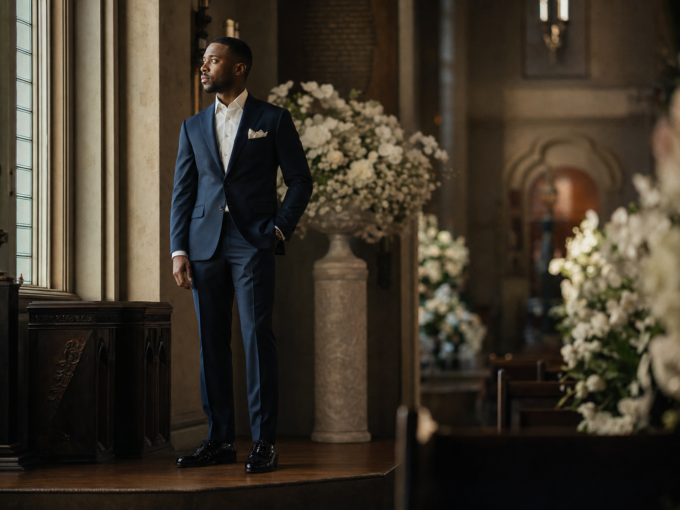
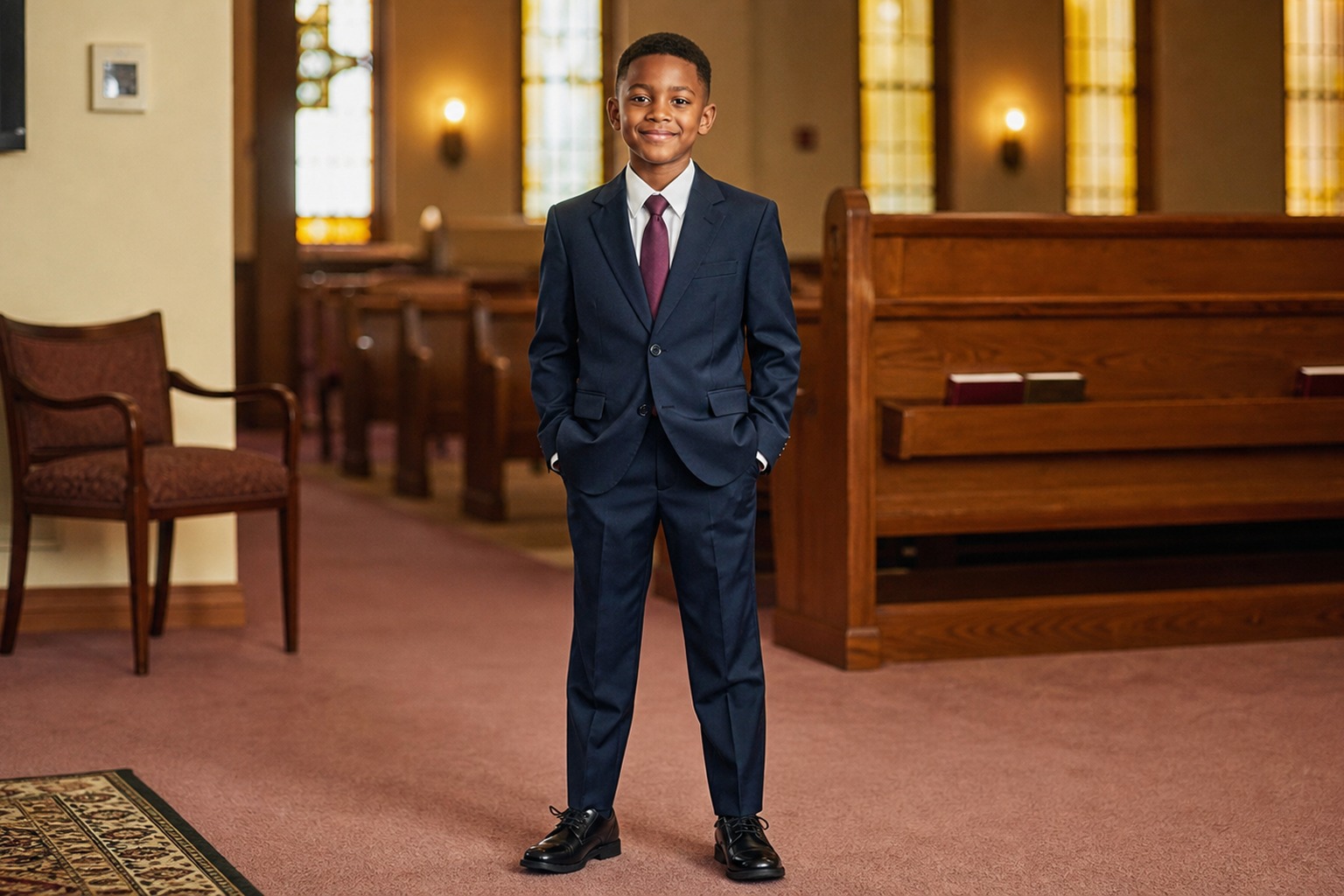
For a wedding, first communion, or confirmation, a two-piece suit with a dress shirt and tie is the standard. Navy and charcoal are the most versatile colors — they photograph well, work across seasons, and pair naturally with almost any bridesmaid palette. A tuxedo is only necessary if the wedding is explicitly black-tie. For ring bearer roles, coordinate the suit color and fabric with the groomsmen rather than buying an entirely separate look. Jos. A. Bank carries boys wedding wear sized to work alongside the adult wedding party.
School Events and Family Photos
For school formals, recitals, and family photo sessions, a blazer with dress trousers is often enough. A sport coat in navy or grey over a dress shirt gives you a polished look without the full-suit commitment. Separates are particularly useful here because the jacket can be worn without the matching trousers at future events, extending the life of the purchase.
Full Suit or Separates: Which Is the Better Buy?
A full suit is easier to coordinate and looks cohesive right out of the box. For a one-time event or a child who is not between sizes, it is the simpler choice. But separates offer a practical advantage that most parents miss: you can size the jacket and trousers independently.
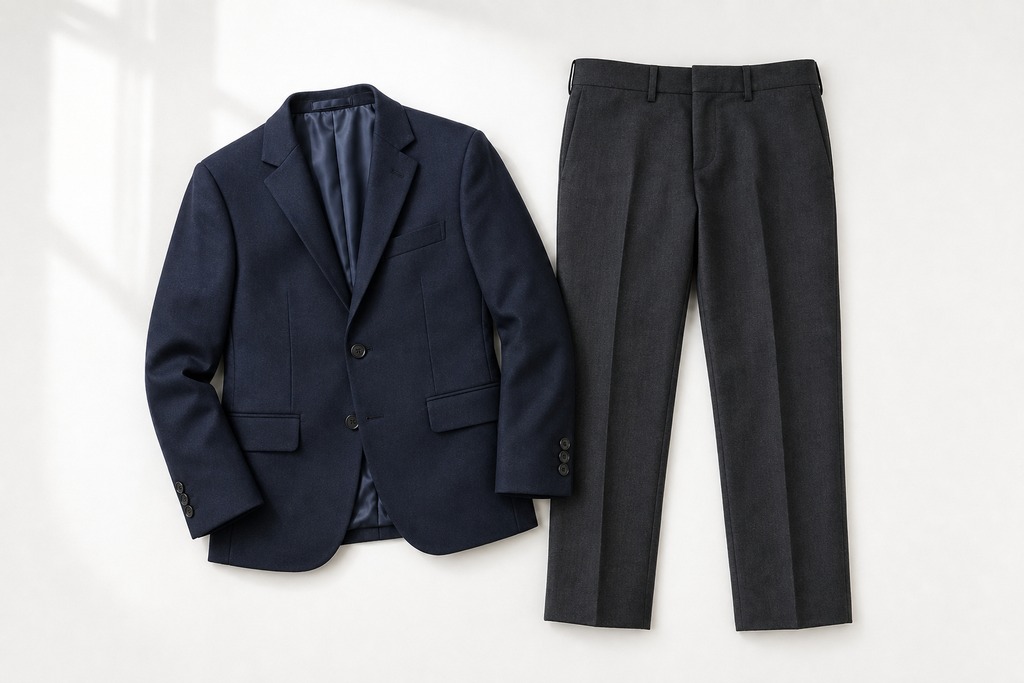
A boy who needs a size 14 jacket and a size 12 trouser can get both right with separates. With a full suit, you are always compromising on one or the other. Separates also extend the wearable life of each piece — a jacket that no longer fits as a suit can still work over dress pants for another season.

How to Get the Right Fit
Boys suit sizing uses age as a rough guide, but body type determines the actual fit. Use the age-based size as a starting point and verify against these checkpoints before buying:
- Jacket shoulder seam should sit at the edge of the shoulder, not hanging over the arm or pulling toward the neck.
- Sleeve length should end at the wrist bone with about a half inch of dress shirt cuff showing.
- Trouser break should be slight, sitting just above the top of the shoe rather than pooling around the ankle.
- Jacket length should cover the seat of the trousers and allow the shirt to stay tucked comfortably.
When two sizes are close, size up in the jacket. A slightly larger jacket can be tailored; one that pulls across the shoulders cannot. If your son falls between a regular and a husky cut, the husky provides more room through the chest and thigh without requiring significant alteration.
What to Look for in Fabric and Construction
Fabric choice matters more for children than most people expect, because boys wear suits for long stretches at a time during events that involve a lot of movement.
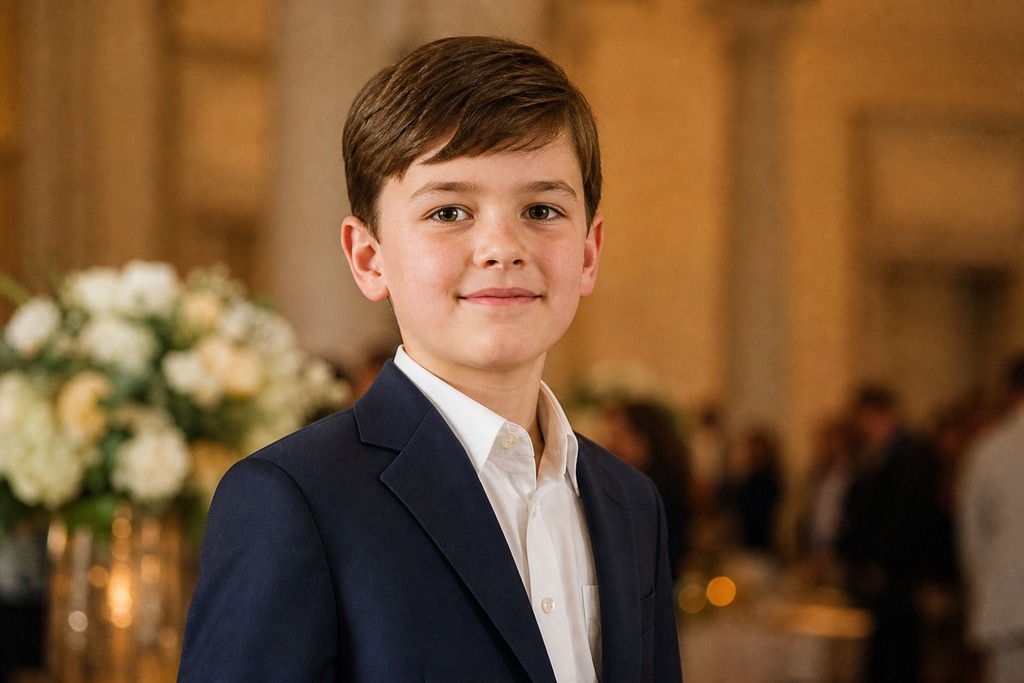
A wool blend holds its shape better than a polyester suit and breathes more naturally over a full day of wear. Wrinkle-resistant finishes are worth prioritizing for travel or multi-hour events. If the suit needs to survive a car ride to a venue, a flight, or a day of photos followed by a reception, wrinkle resistance is not a luxury feature.
Check the care label before buying. Dry-clean-only suits are a real commitment with children. A machine-washable or easy-care suit at the same price point is the practical choice for most families. The dress shirt matters too — wrinkle-resistant cotton blends stay tucked and pressed through the kind of movement that destroys a standard cotton dress shirt by the second hour of a reception.