Prom is one of the first times you get dressed with real intention. The right look depends on your event’s dress code, your budget, and how sharp you want to show up. Here is a complete breakdown of what men wear to prom — from the jacket down to the shoes — so you can put the whole thing together with confidence.
Tuxedo or Suit: Which Is Right for Prom?
The most common prom question comes down to two options: a tuxedo or a suit. Both are correct choices. The difference is in how formal your event is and the look you want to own on the night.
When to wear a tuxedo to prom
- Your invitation says black tie or formal
- You want the sharpest, most traditional prom look available
- You are coordinating with a date in a formal gown
- You plan to buy — a tuxedo you own fits better than a rental and you will wear it again
When a suit works just as well
- Your dress code is semi-formal or dressy casual
- You want a look that is versatile beyond prom night
- You want more color options — navy, charcoal, grey, and even bold colors all work as prom suits
- You are buying your first real suit and want it to pull double duty for graduations and interviews
See our full guide on how to wear a tuxedo if you go that route — it covers fit, accessories, and everything that makes a tux look right versus rental-rushed.
How to Choose the Right Prom Suit
Best colors for a prom suit
The safest and most versatile prom suit colors are:
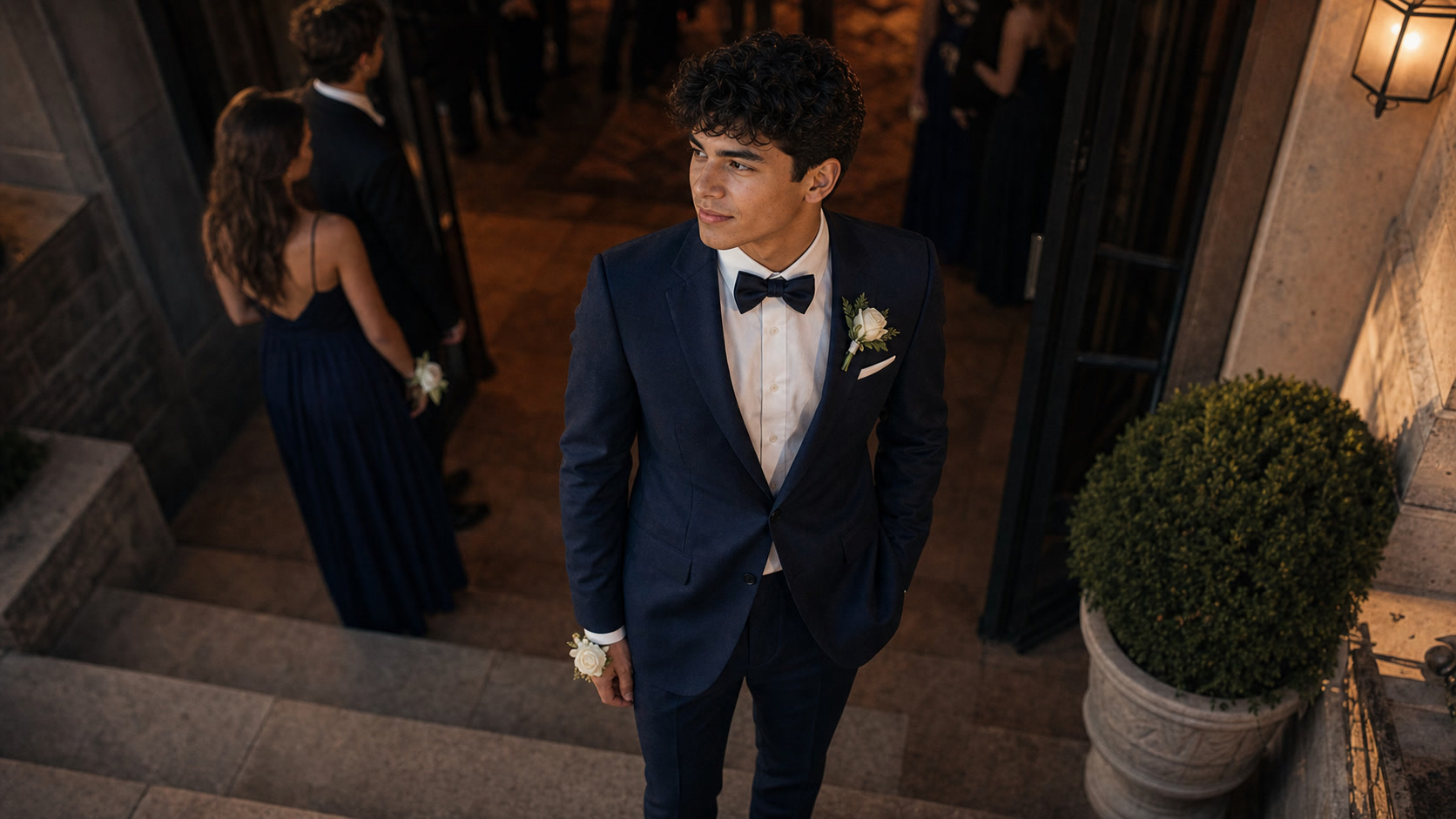
- Navy — photographs well, pairs with almost any tie color, works for evening events
- Charcoal — polished without being as stark as black, pairs well with lighter shirts and ties
- Black — classic, sharp, the closest thing a suit has to a tuxedo look
- Medium grey — lighter option that works well in warmer-weather venues
- Bold colors (cobalt, burgundy, emerald) — high-impact if that is your goal; keep everything else understated
Fit and cut
The fit matters more than the color or price. A slim fit or tailored fit gives you a clean, modern silhouette that photographs well and reads as intentional. Avoid oversized or baggy cuts — they look like a borrowed suit in photos and in person. Browse suits by fit type to find the right cut for your build, and read our full breakdown of suit fit types before you buy.
Two-piece vs. three-piece
- Two-piece (jacket and trousers) — the standard, clean, and versatile
- Three-piece (jacket, trousers, and vest) — adds formality and visual interest; a strong choice if you want to stand out without going loud on color
Building the Complete Prom Look
Dress shirts
A crisp white dress shirt is the right call for most prom looks. It works with every jacket color, every tie, and every dress code. If you want something bolder, a pale blue or subtle pattern works with a navy or charcoal suit. Avoid anything loud enough to compete with your jacket — the shirt is foundation, not the statement.

Neckwear
- With a tuxedo: wear a bow tie — it completes the look and a necktie with a tux reads as unfinished
- With a suit: a standard necktie or slim tie in a complementary color works well; matching the tie color to your date’s outfit is a classic move
- No tie: acceptable at semi-formal proms if your collar button is open and the rest of the look is sharp
Browse ties and bow ties to coordinate before you commit to a look.
Dress shoes
Black leather is the default for prom. Oxford or derby shoes in black work with every suit and tuxedo color and keep the look clean. Key rules:
- Match your belt to your shoes — black shoes, black belt
- Polish them before the night, not the morning of
- Dark brown leather works as an alternative with navy or grey suits
- Avoid sneakers unless your dress code explicitly allows them
Shop dress shoes and see our full guide on matching shoes to a suit for color-pairing specifics.
Accessories
Three accessories complete the look without overcomplicating it:
- Pocket square: A white pocket square in a flat or presidential fold adds polish without trying too hard. It is always correct.
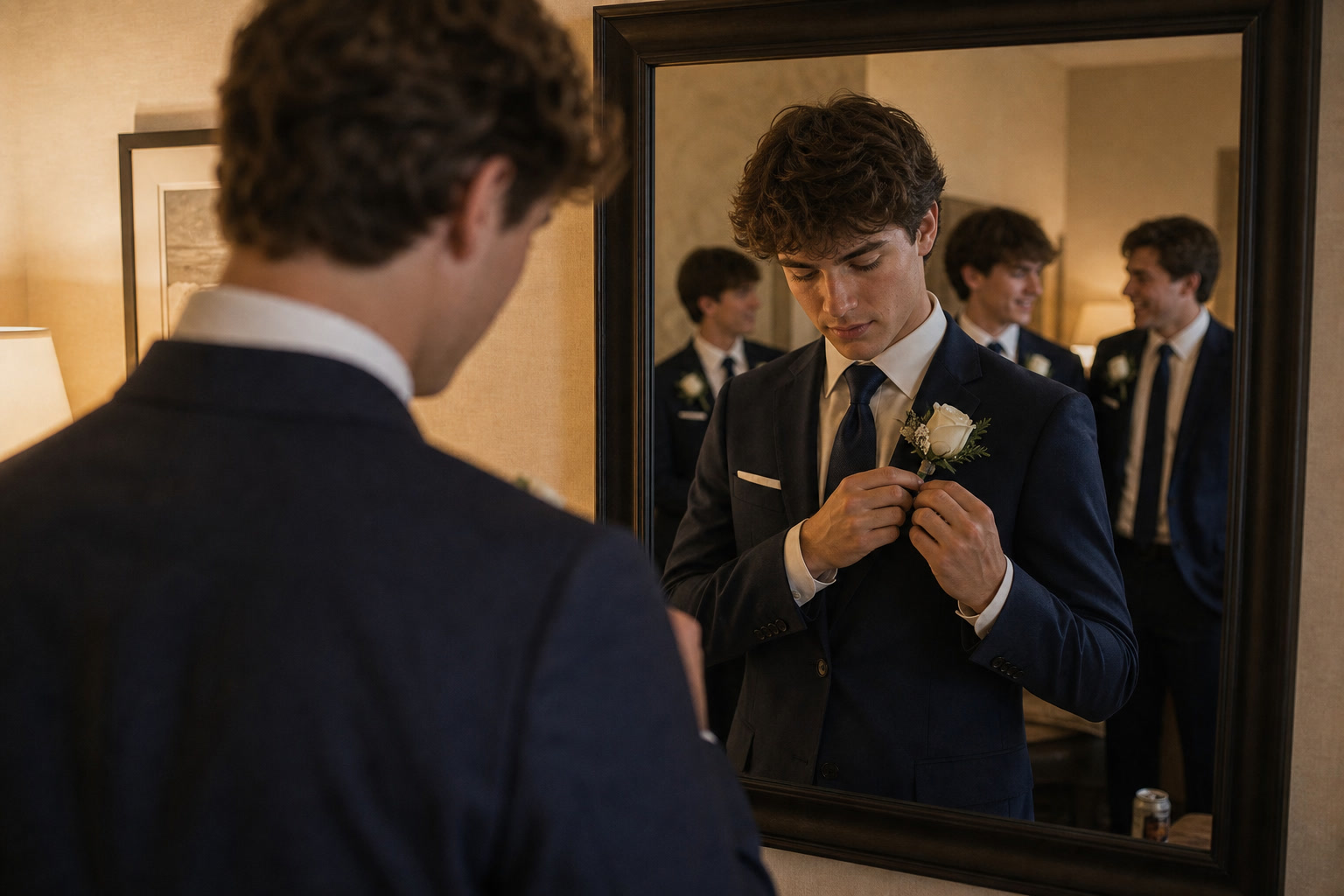
- Boutonniere: Coordinate with your date’s corsage — this is where color enters your look. Keep it simple; one flower, complementary color.
- Belt: Match to your shoes, full stop. Black shoes, black belt. Brown shoes, brown belt.
How to Make Sure Your Prom Suit Fits
A well-fitted mid-range suit beats an expensive suit that does not fit. Here is what to check:
- Jacket shoulders: The seam should sit exactly at the edge of your shoulder — no overhang, no pulling across the back
- Jacket sleeves: About a half inch of shirt cuff should show below the jacket sleeve
- Jacket length: The bottom of the jacket should fall at your knuckles when your arms hang at your sides
- Trouser break: A slight break at the shoe is clean and current; no pooling fabric around the ankle
- Trouser seat: No pulling across the seat when you stand; no bagginess when you walk
Jos. A. Bank includes free alterations with every suit purchased in-store. A tailor can fix the shoulders, take in the waist, adjust the sleeve length, and hem the trousers — all in under a week. Use this. It is the single biggest upgrade available to you.
Should You Rent or Buy Your Prom Suit?
Buy. Here is why:
- A rental is sized to a chart, not your body — you get whatever fits closest, not what actually fits you
- A purchased suit can be tailored to your exact measurements
- After prom, you own a suit that works for graduation, college interviews, internship presentations, and every wedding invitation that follows
- The cost difference between a rented tux and a purchased suit is smaller than most people expect — and the purchased suit lasts years
If your dress code requires a tuxedo and you are certain you will not wear it again, renting a tux and buying your own shirt and accessories is a reasonable middle ground. But for a suit? Buy it, tailor it, and wear it for years.
Frequently Asked Questions
Do I have to wear a tuxedo to prom?
No. A well-fitted suit in navy, charcoal, or black is completely appropriate for most proms. A tuxedo is the better choice if your event is black tie or if you want the most formal look available — but a sharp suit with a dress shirt and tie is never wrong. Check your school’s stated dress code before deciding.
What color suit is best for prom?
Navy, charcoal, and black are the most versatile prom suit colors. Navy photographs well and pairs with nearly any tie color. Charcoal reads as polished and modern. Black is the closest a suit gets to tuxedo formality. Bold colors like cobalt or burgundy can work if that is the look you want — keep the rest of the outfit simple if you go that direction.
Should I rent or buy a prom suit?
Buy. A rental fits a size chart, not your body. A purchased suit can be tailored to your exact measurements, and Jos. A. Bank’s free in-store alterations make the fit precise without extra cost. After prom, a purchased suit works for graduation, interviews, and every formal event that follows. The long-term value of buying far outweighs the short-term convenience of renting.
What shoes should men wear to prom?
Black leather Oxfords or derby shoes are the standard for prom. They work with every suit and tuxedo color and keep the look clean. Polish them before the night. If you are wearing navy or grey, dark brown leather is an acceptable alternative — but black is the safer and more formal choice.
What is the dress code for prom?
Most proms are either black tie, black tie optional, or semi-formal. Black tie means a tuxedo is expected. Black tie optional means a tuxedo is preferred but a dark suit is acceptable. Semi-formal means a suit is appropriate and a tuxedo is optional. When in doubt, check your school’s invitation or event page for the specific dress code — and when choosing between two options, always dress up rather than down.