Here is how to find a tailor worth trusting, and how to get the most out of every alteration.
How to Find a Tailor
Not every tailor delivers the same result. Before you hand over a suit jacket or a pair of dress pants, do the work to find someone who can execute what you need.
Ask for Referrals First
The fastest way to find a reliable tailor is to ask someone who already uses one. Ask colleagues, friends, or anyone whose clothing tends to fit well. A recommendation from someone with similar build and taste removes most of the guesswork.
Review Their Work Before Committing
Ask to see samples or photographs of completed alterations. Examine the stitching closely — it should be clean, even, and consistent. Look at how seams lie flat, how hems fall, and whether the overall silhouette looks intentional. Sloppy finishing on sample work will show up in your clothes.
Communicate Clearly and Expect the Same Back
Tell the tailor exactly what you want before a single pin goes in. Describe the fit you are after, point to specific areas of concern, and ask questions about what is and is not possible on each garment. A skilled tailor listens carefully, asks follow-up questions, and tells you honestly what the fabric will allow. If you leave a fitting with unanswered questions, that is a signal.
How Tailoring Works by Garment
Tailoring is not one-size-fits-all. Each garment type has specific points of adjustment, and understanding what a tailor can change — and what they cannot — helps you shop smarter.
Dress Shirts
A tailored fit dress shirt uses the same neck and sleeve measurements as a standard fit but takes in the waist to follow the body rather than drape away from it. The result is a shirt that stays tucked, does not billow, and reads cleaner under a jacket. If you are working with an existing shirt, a tailor can suppress the side seams and shorten the body. Sleeve length is adjusted from the cuff or, for shirts with detailed cuffs, from the shoulder seam.
Dress Pants
Tailored dress pants use less fabric through the thigh and seat for a slimmer, cleaner line. The rise is typically shorter as well. When altering an existing pair, a tailor can take in the seat, taper the leg, and adjust the hem with or without a cuff. One fit note worth knowing: if the pants are pleated, keep the cuffs. A cuff anchors the pleat and holds the crease line. Remove the cuff on a pleated pant and the front breaks awkwardly.
Suits
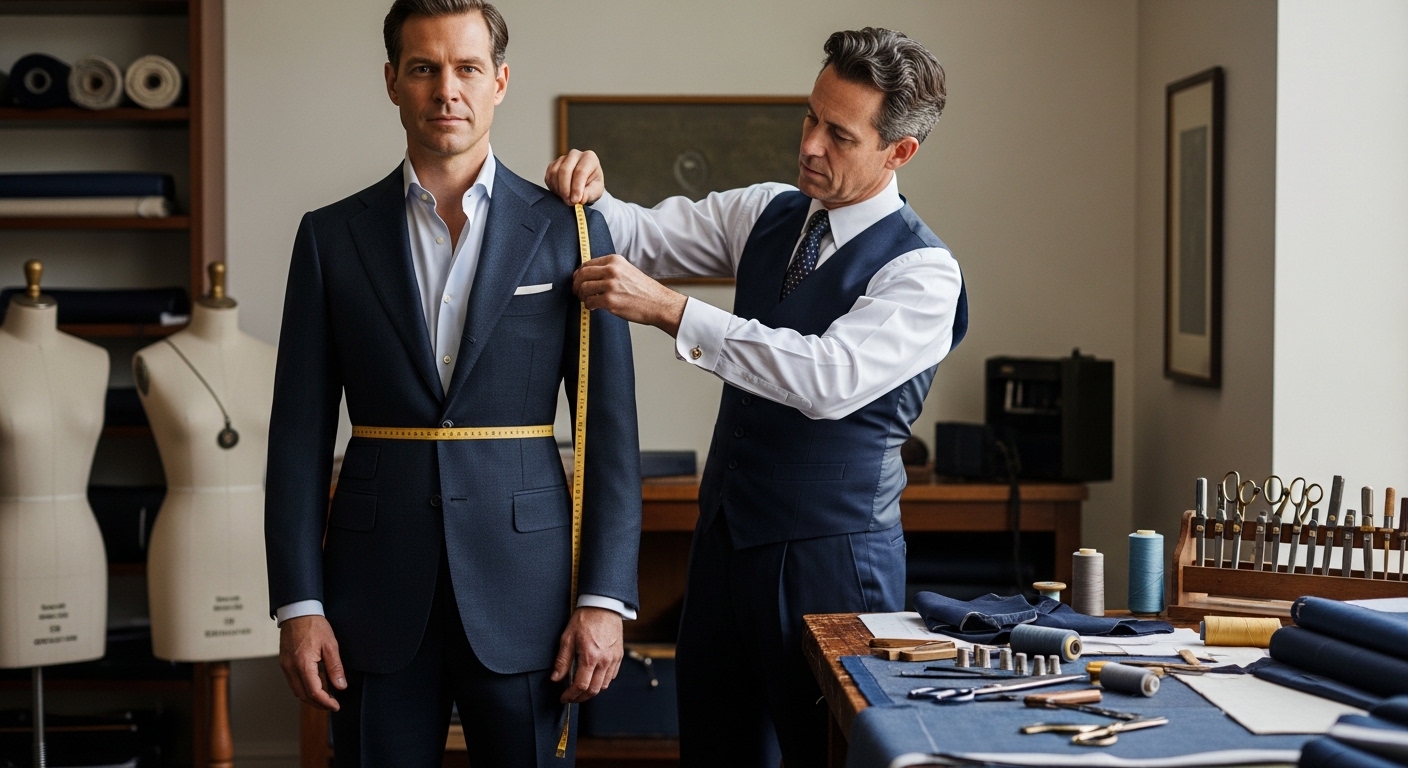
A tailored fit suit has a closer cut through the chest and waist with narrower lapels and a higher two-button stance. When altering an existing suit, the jacket can be suppressed at the waist, shortened in the body, and taken in at the seat. The trousers follow the same adjustments as dress pants. The shoulder seam, however, is the one place a tailor rarely touches — if the shoulder does not fit in the store, the suit is the wrong size.
Sport Coats
Tailored fit sport coats share the same construction principles as suit jackets: narrow lapel, higher button stance, close fit through the body. The alterations available are the same as for a suit jacket. Body suppression, sleeve length, and hem length are all workable. The shoulder seam remains the hard constraint.
Tailoring Tips That Make a Difference
A few details that most men do not know before their first serious fitting.
Cuffs on Trousers
Whether to cuff dress pants is partly preference, partly physics. A cuff adds weight to the hem, which helps the trouser leg hang straight and hold a clean break. On pleated pants, a cuff is functionally required — it holds the pleat together at the bottom. On flat-front pants, a cuff is optional. If you want to appear taller, skip the cuff: an uninterrupted line from trouser hem to shoe adds visual height. A cuff breaks that line and shortens the silhouette slightly.
Shirt Sleeve Length
The standard rule: shirt sleeves should extend a half-inch past the jacket sleeve. This proportion shows cuff below the jacket and anchors the overall look. When having sleeves shortened, a tailor can work from the cuff end on plain cuffs. On shirts with detailed or French cuffs, the adjustment comes from the shoulder — the seam moves up and the sleeve length shortens from there.
How Many Fittings to Expect
A single fitting works for minor adjustments. For significant alterations — suppressing a jacket, restructuring trouser fit, or any work involving multiple points — plan for two fittings. The first fitting pins the adjustments. The second confirms that the changes landed correctly after the tailor has worked on the fabric. Rushing to one fitting on complex work is where errors get locked in.
When to Tailor vs. When to Buy the Right Fit
Alterations improve clothing that fits well in the critical areas. They do not rebuild clothing that does not. The shoulder seam of a jacket and the chest circumference of a shirt are the two measurements that determine whether a garment is the right size for your body. If those fit, a tailor handles the rest. If they do not, no amount of tailoring will produce a clean result.
Jos. A. Bank carries Slim, Tailored, and Traditional fits across suits, sport coats, dress shirts, and trousers. The full fit breakdown is at the fit guide. For detailed measurements by garment, see the suit fit guide and dress shirt fit guide.